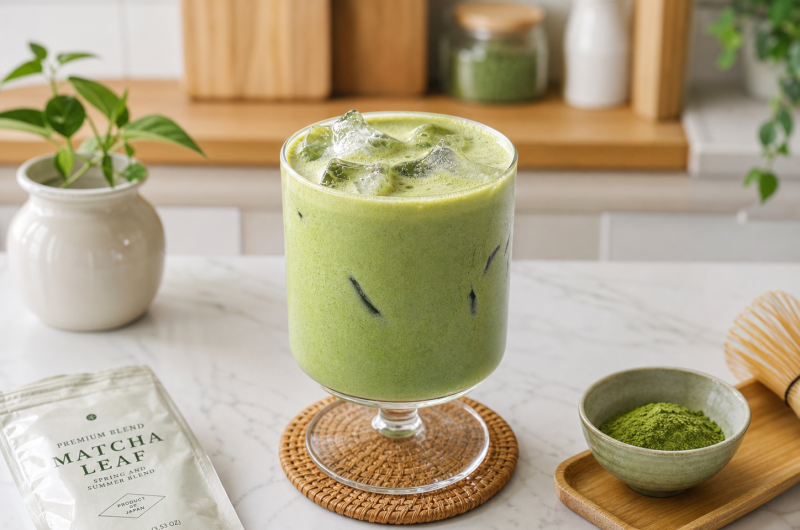
This iced protein matcha latte is a creamy, refreshing drink made with ceremonial grade matcha, vanilla protein powder, unsweetened almond milk, water, and ice. It takes only a few minutes to prepare and gives you a simple way to enjoy matcha at home.
Why Make an Iced Matcha Latte at Home
Quick and Simple
You do not need complicated equipment or a long list of ingredients to make this matcha latte. The matcha is mixed with a small amount of water, while the milk and protein powder are frothed separately.
Once both mixtures are ready, add ice to your glass, pour everything together, and your iced matcha latte is ready to drink. The entire recipe takes about 5 minutes from start to finish.
A Refreshing Alternative to Coffee
Matcha contains caffeine, but many people enjoy its energy differently from coffee. Matcha also contains L-theanine, an amino acid naturally found in tea that is often associated with a calmer feeling of alertness.
This makes an iced matcha drink a popular choice for people who want a refreshing caffeinated beverage without making a traditional cup of coffee. The flavor is earthy, smooth, and naturally distinctive.
Adds Protein to Your Drink
The addition of vanilla protein powder turns a basic matcha latte into a protein-rich drink. The recipe provides 10 grams of protein per serving according to the supplied nutrition information.
Protein powder also gives the milk a thicker texture and adds vanilla flavor. It makes the drink more substantial than a simple matcha and milk combination.
What Is Matcha?
Finely Ground Green Tea
Matcha is a finely ground green tea powder made from tea leaves. Unlike regular green tea, where the leaves are steeped and then removed, matcha powder is whisked directly into water and consumed as part of the drink.
This gives matcha its distinctive green color and earthy taste. High-quality matcha can have a smooth flavor, while lower-quality varieties may taste noticeably more bitter.
Ceremonial Grade Matcha
This recipe specifically calls for ceremonial grade matcha powder. It is a fine, high-quality matcha that is well suited to drinks where the flavor of the tea is easy to notice.
Ceremonial grade matcha is traditionally associated with Japanese tea preparation. Its smooth texture makes it a good choice for a simple matcha latte.
Culinary Grade Matcha
Culinary grade matcha is generally intended for recipes such as baked goods, desserts, smoothies, and other foods where matcha is combined with several stronger flavors.
It can have a more pronounced bitter taste than ceremonial grade matcha. For this particular drink, the original recipe uses ceremonial grade matcha, so that is what should be used when following the recipe as written.
Ingredients
Warm Water
The recipe uses 2 ounces of water to dissolve the matcha powder. Starting with a small amount of liquid makes it easier to create a smooth matcha mixture before adding the milk.
The water should be warm rather than boiling. Very hot water is not necessary for this quick preparation and can make the drink less pleasant.
Ceremonial Grade Matcha Powder
The recipe uses 1/2–1 teaspoon of ceremonial grade matcha powder. If you are new to matcha, starting with 1/2 teaspoon gives you a milder introduction to its earthy flavor.
You can gradually increase the amount to 1 teaspoon if you prefer a stronger matcha taste. This range is already included in the original ingredient list and should be adjusted according to your preferred intensity.
Unsweetened Almond Milk
Six ounces of unsweetened almond milk provide the creamy base for the latte. Almond milk keeps the drink light and gives the matcha a smooth texture.
The recipe also allows milk of choice. Oat milk, soy milk, coconut milk, or dairy milk can be used as alternatives, but the recipe card retains the original ingredient wording.
Vanilla Protein Powder
Two tablespoons of vanilla protein powder add sweetness, vanilla flavor, and protein to the drink. The supplied nutrition information lists 10 grams of protein per serving.
The powder also helps create a thicker texture when it is frothed with the milk. Mixing it well is important so that the finished latte does not have dry pockets of protein powder.
Ice
Ice is what turns the prepared matcha mixture into a cold and refreshing iced latte. Add enough ice to chill the drink according to your preference.
The original ingredient list simply specifies ice, so no exact quantity is added. Using a chilled glass can also help keep the drink cold for longer.
How to Make an Iced Protein Matcha Latte
Mix the Matcha
Begin by placing the water and ceremonial grade matcha powder in a small bowl or cup. Use a milk frother to mix the matcha until the powder has been fully incorporated.
This step is important because adding dry matcha directly to a large glass of milk can leave small clumps floating in the drink. Mixing it separately gives you a smoother base.
Froth the Milk and Protein Powder
Pour the unsweetened almond milk into your drinking glass and add the vanilla protein powder. Froth the mixture until the protein powder is well incorporated and the milk has a smooth consistency.
The goal is not necessarily to create a large amount of foam. The main purpose is to combine the protein powder evenly with the milk.
Add Ice and Matcha
Once the milk mixture is ready, add ice to the glass. Pour the prepared matcha mixture over the chilled milk.
Give the drink a gentle stir if needed so the matcha and milk combine evenly. Serve immediately while the latte is cold and refreshing.
How to Prevent Matcha Clumps
Start With a Small Amount of Water
One of the easiest ways to make smoother matcha is to mix the powder with a small amount of warm water first. The original recipe uses 2 ounces of water for this purpose.
Whisking or frothing the matcha before adding milk helps break up the powder. This is much easier than trying to dissolve matcha after it has already been mixed into a full glass of milk.
Sift the Matcha
If your matcha powder tends to form clumps, sifting it before mixing can help. Fine powder can stick together inside the container, especially if it has been sitting for a while.
A small fine-mesh sieve is enough. Sifting is not required, but it can make the mixing process easier and improve the texture of the finished drink.
Use a Frother or Blender
A milk frother is convenient for mixing both the matcha and protein powder. It helps distribute the ingredients quickly without requiring traditional matcha equipment.
If you do not have a frother, the original recipe suggests using a shaker bottle or blender. Either option can help create a more evenly mixed drink.
Choosing the Right Matcha Amount
Start With Half a Teaspoon
If matcha is new to you, begin with 1/2 teaspoon. This creates a milder flavor while allowing you to become familiar with the earthy taste of green tea powder.
Once you know that you enjoy matcha, you can increase the amount. The original recipe gives a range of 1/2–1 teaspoon, so there is room to adjust the strength.
Use One Teaspoon for More Flavor
One teaspoon gives the latte a stronger matcha presence. It is a good option if you already enjoy the flavor of matcha or want the green tea to stand out more clearly against the milk and vanilla.
Avoid adding more simply because you want a stronger color. Matcha has a distinct flavor, and increasing the quantity will also make the drink more intense.
Protein Powder and Matcha
Why They Work Together
Vanilla protein powder adds a mild sweetness that can balance matcha’s natural earthy flavor. It also gives the drink a creamy texture and increases the protein content.
The combination is especially useful when you want a beverage that can fit into breakfast or a snack. Instead of having a plain iced tea drink, you get a protein-containing latte.
Mix the Powder Thoroughly
Protein powder can sometimes settle or form small lumps if it is not mixed properly. Frothing the almond milk and protein powder together helps distribute the powder throughout the liquid.
If you are using a shaker bottle instead, shake until the mixture looks smooth. This step is worth taking a little extra time to ensure every sip has an even texture.
Choosing Milk for Your Matcha Latte
Unsweetened Almond Milk
Unsweetened almond milk is the original milk used in this recipe. It has a light flavor that allows the matcha and vanilla protein powder to remain noticeable.
Because the recipe specifically uses unsweetened almond milk, the drink does not need additional sweetener. The vanilla protein powder provides the sweetness described in the original recipe.
Other Milk Choices
The recipe states that milk of choice can be used. Oat milk can create a richer drink, soy milk provides another plant-based option, and dairy milk can make the latte especially creamy.
Coconut milk can also be used according to the original serving suggestion. The choice of milk may slightly change the final flavor and nutrition.
Do You Need a Matcha Bowl?
No Special Bowl Required
You do not need a traditional matcha bowl to make this iced latte. A small bowl or cup works perfectly well for mixing the matcha with water.
The important part is creating a smooth matcha mixture before combining it with the milk. The recipe is designed to be simple enough for everyday preparation.
Traditional Matcha Tools
If you already own a matcha bowl and bamboo whisk, you can certainly use them. They can make the preparation feel closer to traditional matcha preparation.
However, they are optional for this recipe. A milk frother, shaker bottle, or blender can also produce a smooth drink without special tea equipment.
Making the Latte Less Bitter
Use the Right Amount
Too much matcha can make a latte taste stronger and more bitter. Starting with 1/2 teaspoon is a good option for anyone who is still learning to enjoy the flavor.
If you like the taste, increase it gradually to 1 teaspoon. This keeps the drink balanced rather than immediately making the matcha overpowering.
Choose Good Quality Matcha
The original recipe recommends ceremonial grade matcha. Since the matcha is one of only a few ingredients in this latte, its flavor has a major effect on the final drink.
A good-quality matcha can provide a smoother and more pleasant flavor. Culinary grade matcha may work in other recipes but can taste more bitter in a simple drink.
How to Turn It Into a Hot Matcha Latte
Change the Temperature
The same basic method can be used to prepare a hot version. Instead of adding ice, use hot liquid and serve the drink warm.
The original recipe suggests changing the balance of hot water and milk for the hot version so the drink contains more hot water and is less milky.
Adjust the Protein Powder
The source also suggests using about half the amount of protein powder in the hot version. This is a preference rather than part of the iced recipe.
For the iced version, keep the original 2 tablespoons of vanilla protein powder. The hot variation can be adjusted separately according to taste.
When to Drink an Iced Protein Matcha Latte
Morning Drink
This iced matcha latte can be served in the morning when you want caffeine along with some protein. It takes about 5 minutes, making it practical when you do not have much time to prepare breakfast.
The drink is also easy to take with you in a suitable cup. Prepare the matcha mixture, combine the ingredients, add ice, and enjoy it fresh.
Afternoon Pick-Me-Up
The drink can also work well in the early afternoon. Matcha provides caffeine, while the vanilla protein powder adds 10 grams of protein according to the provided nutrition information.
Because the recipe has only 1 gram of sugar in the supplied nutrition data, it can be a simple alternative to sweeter flavored coffee drinks.
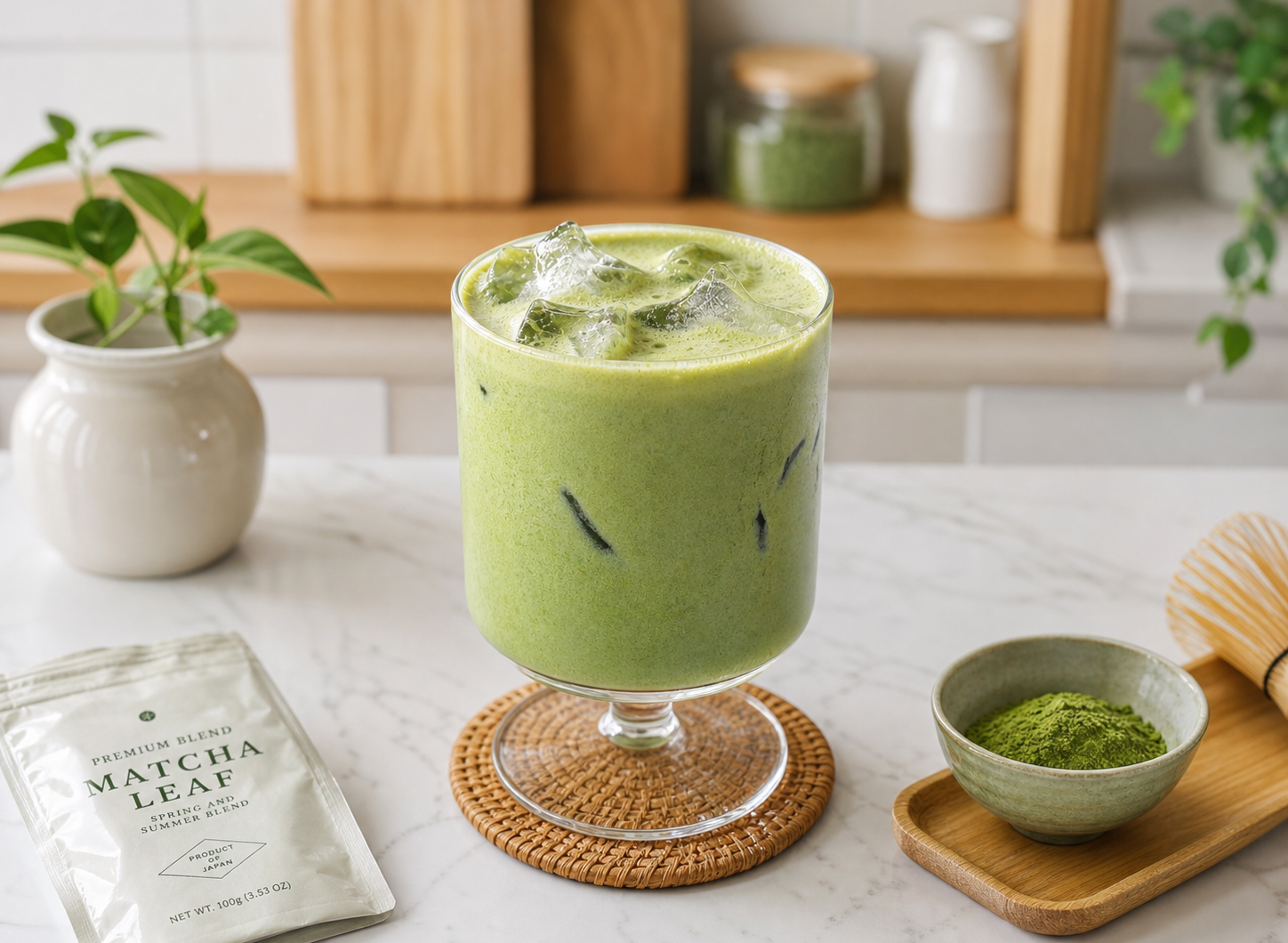
High Protein Iced Matcha Latte Recipe
This creamy iced protein matcha latte combines ceremonial grade matcha, vanilla protein powder, and unsweetened almond milk for a refreshing drink with 10 grams of protein. It takes only 5 minutes to prepare and can be enjoyed as a morning drink or afternoon snack.
1
servings5
minutes74
kcal5
minutesIngredients
2 ounces water
1/2–1 tsp ceremonial grade matcha powder
6 ounces unsweetened almond milk, or milk of choice
2 tbsp vanilla protein powder
Ice
Directions
- In a small bowl or cup, mix the water with the matcha powder using a frother until it is fully combined.
- In your drinking glass, froth the milk with the protein powder. Add ice, pour in the matcha mixture, and enjoy!
Notes
- Froth Before Adding Ice
Mix the protein powder with the milk before adding the ice. This makes it easier to create a smooth mixture without the ice getting in the way. Once the milk and protein powder are combined, add ice and pour in the matcha. This simple order keeps the preparation quick and easy. - Adjust Matcha Gradually
New matcha drinkers can begin with 1/2 teaspoon and work toward 1 teaspoon. This lets you find the strength that suits your taste without making the drink too intense. There is no need to use more matcha simply because you want a stronger drink. A balanced latte should allow the matcha, milk, and vanilla flavors to work together. - Use a Shaker if Needed
A dedicated milk frother is useful but not essential. A shaker bottle or blender can also combine the matcha and protein powder effectively. If using a shaker bottle, make sure it is suitable for the ingredients and that the liquid is not extremely hot. For this iced recipe, the ingredients are already suitable for cold preparation.
Nutrition Facts
- Calories: 74kcal
- Fat: 3g
- Carbohydrates: 3g
- Fiber: 1g
- Sugar: 1g
- Protein: 10g
- Calcium: 206mg