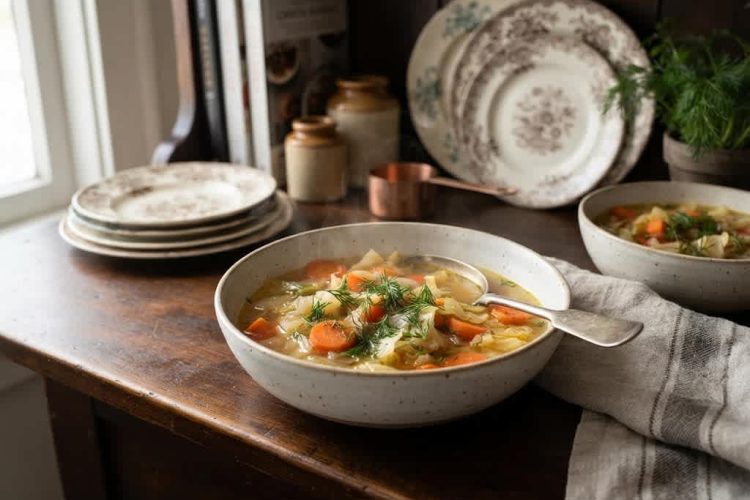
There is nothing quite like a bowl of homemade vegetable soup when you want something warm, satisfying, and full of natural flavor. This Slow Cooker Rustic Cabbage and Onion Soup is a wonderful choice for anyone who enjoys simple homemade meals prepared with fresh vegetables and aromatic herbs. Made with cabbage, potatoes, carrots, celery, onion, tomato puree, and vegetable stock, this soup delivers a delicious combination of textures and flavors without requiring complicated cooking techniques. The slow cooker makes preparation especially convenient because most of the work involves chopping the vegetables and adding them to the cooking pot. After that, the ingredients slowly simmer together until everything becomes tender and flavorful. Whether you serve it for lunch, dinner, or prepare it ahead for busy weekdays, this rustic cabbage soup is an easy and comforting addition to your regular meal rotation.
What Makes This Rustic Cabbage and Onion Soup Special
This homemade cabbage soup stands out because it combines everyday vegetables in a simple but satisfying way. Fresh cabbage provides a mild sweetness and soft texture, while potatoes make the broth feel more substantial. Carrots contribute natural sweetness, celery adds a savory vegetable flavor, and onion creates a delicious aromatic foundation. Tomato puree gives the broth a gentle tanginess and attractive color, while vegetable stock brings all the ingredients together. The herbs are equally important because parsley and marjoram provide a pleasant savory background without overpowering the vegetables. Fresh dill is stirred in after cooking, adding a bright and refreshing finish. These ingredients work together to create a soup that tastes wholesome and comforting. Despite its simple preparation, the finished dish has enough depth and character to be enjoyed as a complete light meal.
Why You Should Make Cabbage Soup in a Slow Cooker
Using a slow cooker is one of the easiest ways to prepare homemade cabbage soup, especially when you have a busy schedule. Unlike traditional stovetop recipes that require frequent attention, this method allows the vegetables to cook gradually with very little supervision. Once the cabbage, potatoes, carrots, celery, onion, tomato puree, herbs, and vegetable stock are combined, the slow cooker maintains a steady temperature and allows their flavors to develop naturally. This gentle cooking process softens the vegetables and creates a delicious broth without requiring complicated preparation. You can assemble everything in the morning and let the soup cook while attending to other responsibilities. By the time you are ready to eat, you will have a warm pot of homemade vegetable soup waiting. It is a practical cooking method for families, busy households, and anyone who appreciates convenient homemade meals.
A European-Inspired Homemade Vegetable Soup
Cabbage soup has a long-standing place in European home cooking, where different regions have developed their own comforting versions using locally available vegetables and herbs. Many traditional recipes combine cabbage with potatoes, onions, carrots, tomatoes, and different types of stock. Polish cooking, for example, is known for kapusniak, a traditional cabbage soup that may use fresh cabbage or sauerkraut depending on the preparation. Other European variations include additional vegetables, herbs, and sometimes meat. This rustic slow cooker recipe takes inspiration from that general style of cooking while keeping the ingredients straightforward and vegetable-focused. Fresh cabbage forms the main ingredient, supported by potatoes, carrots, celery, onion, tomato puree, parsley, and marjoram. The result is a flavorful homemade soup with a gentle tomato base and a refreshing herbal finish. It is an approachable way to enjoy the comforting character of traditional European vegetable soups.
Understanding the Main Ingredients
Every ingredient in this slow cooker cabbage soup has a purpose, and together they create a balanced combination of flavors. Cabbage is the main vegetable and becomes pleasantly tender during the slow cooking process. Potatoes provide body and make the soup more filling, while carrots add a naturally sweet taste that balances the acidity of the tomato puree. Celery contributes a subtle savory flavor, and Vidalia onion provides a mild aromatic sweetness. Tomato puree gives the broth its characteristic color and gentle acidity. Vegetable stock supplies the liquid needed to cook the vegetables and helps distribute their flavors throughout the soup. Fresh parsley and marjoram add herbal depth, while salt and pepper allow you to adjust the seasoning. Finally, fresh dill adds a distinctive aroma when stirred in just before serving. Optional Spanish smoked paprika and extra virgin olive oil provide additional flavor at the table.
Choosing and Preparing Fresh Cabbage
Fresh cabbage is the foundation of this rustic vegetable soup, so choosing a good-quality head makes a difference. Look for cabbage that feels firm and heavy for its size, with leaves that appear fresh and free from significant discoloration. Remove any damaged outer leaves before cutting the cabbage. For this recipe, half a head of new cabbage is used, chopped into manageable pieces. The pieces should be large enough to maintain some texture during the extended cooking period but small enough to fit comfortably on a spoon. There is no need to create perfectly uniform pieces because the recipe is designed to have a rustic, homemade appearance. Once chopped, the cabbage can be placed directly into the slow cooker with the other vegetables. As it cooks, it softens and absorbs the tomato and vegetable stock flavors, creating a delicious foundation for the finished soup.
Preparing the Potatoes, Carrots, and Celery
The supporting vegetables are just as important as the cabbage because they contribute texture, sweetness, and flavor to the broth. Medium yellow potatoes are ideal for this recipe because they provide a satisfying texture and help make the soup more substantial. Cut four medium potatoes into cubes that are reasonably similar in size so they cook evenly. Two medium carrots should be washed, peeled if desired, and chopped into bite-sized pieces. The celery sticks can be chopped into small sections, allowing their savory flavor to spread throughout the broth. Avoid cutting these vegetables extremely small because they will spend several hours cooking. Larger, evenly prepared pieces are better suited to a rustic soup and are less likely to lose their texture completely. Once everything is chopped, transfer the vegetables to the slow cooker, where they will gradually become tender and blend with the cabbage, onion, and tomato-based liquid.
The Importance of Onion in Homemade Cabbage Soup
Onion provides an important flavor foundation for this recipe. Half of a large Vidalia onion is used, offering a naturally mild and slightly sweet taste that complements cabbage and tomatoes particularly well. Chopping the onion into manageable pieces allows it to soften during the slow cooking process and release its flavor into the vegetable stock. One advantage of Vidalia onions is that their sweetness helps balance the gentle acidity of the tomato puree. If you have additional preparation time, you can optionally sauté the chopped onion in extra virgin olive oil until softened and fragrant before adding it to the slow cooker. This small step can give the finished soup a slightly deeper aroma. However, sautéing is not essential, and the onion can be added directly with the remaining vegetables. Both approaches produce a comforting soup with a delicious vegetable flavor.
How Tomato Puree Creates a Flavorful Broth
Tomato puree gives this slow cooker cabbage soup a distinctive character by adding color, gentle acidity, and depth to the vegetable stock. One 15-ounce can is used in the recipe, creating a flavorful base that surrounds the cabbage, potatoes, carrots, celery, and onion as they cook. The tomato flavor is noticeable without completely covering the natural taste of the vegetables. It also complements the herbs, particularly parsley and marjoram, creating a savory broth that feels balanced rather than overly rich. An important cooking detail is that tomato products are acidic. When acidic ingredients are added at the beginning of slow cooking, some vegetables, especially potatoes and carrots, may take longer to become completely tender. The original method allows you to add the puree at the beginning or wait until approximately the final hour. Either approach can work, depending on your preferred preparation method and available cooking time.
Vegetable Stock and Seasoning for Balanced Flavor
Vegetable stock is the liquid foundation that brings this entire recipe together. Eight cups provide enough liquid to surround the vegetables and allow them to cook slowly without becoming dry. A good vegetable stock should have a pleasant savory flavor without being excessively salty. Since different packaged and homemade stocks contain different amounts of sodium, it is best to season the soup according to taste rather than automatically adding a large quantity of salt. Black pepper adds gentle warmth and balances the vegetable flavors. Fresh parsley and half a teaspoon of marjoram provide additional herbal character, giving the broth a pleasant aroma as it cooks. The seasoning can be adjusted near the end once all the ingredients have softened and their flavors have blended. Tasting before serving is particularly helpful because slow cooking can change how strongly salt and herbs are perceived in the finished dish.
Why Fresh Dill Should Be Added at the End
Fresh dill is one of the ingredients that gives this rustic cabbage soup its refreshing final character. Unlike some dried herbs that benefit from spending several hours in a slow cooker, fresh dill is best added after the vegetables have finished cooking. Its distinctive aroma can become less noticeable during prolonged heating, so stirring it in at the end helps preserve its fresh herbal quality. The recipe uses half a cup of chopped fresh dill, which provides a noticeable but pleasant flavor throughout the soup. Dill pairs naturally with cabbage and potatoes, making it a particularly suitable finishing ingredient for vegetable-based dishes. Once the slow cooker has completed its cooking cycle, stir the dill into the hot soup and allow it to distribute evenly through the broth. This simple finishing step gives the soup a brighter taste and makes the final bowl feel fresh, fragrant, and well balanced.
Preparing the Vegetables Before Slow Cooking
Good preparation makes the cooking process much easier and helps ensure that the vegetables cook evenly. Begin by washing the cabbage, potatoes, carrots, celery, and onion. Remove any damaged cabbage leaves and cut the remaining cabbage into manageable pieces. Cube the potatoes, chop the carrots and celery, and roughly chop half of the large Vidalia onion. You do not need professional knife skills or perfectly matching vegetable pieces because the rustic appearance is part of the recipe’s appeal. However, keeping the potatoes and carrots reasonably similar in size helps prevent some pieces from becoming tender much earlier than others. Once everything is prepared, arrange the vegetables in your slow cooker. Add the tomato puree, fresh parsley, marjoram, vegetable stock, salt, and pepper. Give the mixture a gentle stir if needed, making sure the ingredients are distributed throughout the pot before covering it.
Step-by-Step Slow Cooker Cooking Method
The standard preparation method is wonderfully simple and requires very little active cooking time. Start by placing the chopped cabbage, cubed yellow potatoes, carrots, celery, and onion into the slow cooker. Pour in the tomato puree and eight cups of vegetable stock, then add the fresh parsley and marjoram. Season with salt and pepper according to your preference. Stir gently to distribute the ingredients and make sure the vegetables are surrounded by the liquid. Cover the slow cooker and cook until the vegetables are completely tender. The recipe directions specify approximately five hours on the high setting or nine hours on the low setting. Cooking appliances can vary, so check the vegetables near the end of the expected cooking period. Once everything is tender, stir in the chopped fresh dill and taste the broth. Adjust the seasoning if necessary before serving the soup hot.
Two Ways to Develop More Flavor
Although this recipe is designed to be simple, there are a couple of ways to approach the preparation depending on your available time. The easiest method is to add all the main vegetables, tomato puree, stock, and herbs to the slow cooker at the beginning. This requires minimal effort and is especially convenient when you want to prepare dinner in advance. Another option is to sauté the chopped Vidalia onion in extra virgin olive oil until it becomes soft and fragrant. The softened onion can then be transferred to the slow cooker with the other ingredients. This optional step introduces a deeper aromatic quality and can make the broth taste slightly richer. You can also delay adding the tomato puree until approximately the final hour if you prefer to allow the vegetables to soften before introducing the acidic ingredient. Neither adjustment is compulsory; choose the approach that best suits your schedule.
How to Know When the Vegetables Are Ready
The best way to determine whether your cabbage soup has finished cooking is to check the texture of the vegetables rather than relying entirely on the clock. Potatoes should be tender when pierced with a fork, and carrots should have softened without becoming completely mushy. The cabbage should be cooked through and pleasantly soft while still maintaining some recognizable texture. Celery and onion will become much softer as they simmer in the stock. If the potatoes or carrots remain firm, continue cooking and check them again after a little more time. Slow cookers can differ in temperature and performance, so the exact cooking duration may vary. Once the vegetables have reached the desired tenderness, stir in the fresh dill and taste the broth. The finished soup should have a balanced tomato flavor, a pleasant vegetable aroma, and enough seasoning to bring out the natural sweetness of the ingredients.
Serving Slow Cooker Rustic Cabbage and Onion Soup
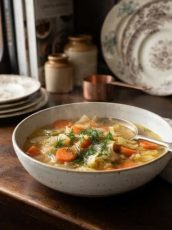
Serve this homemade cabbage soup while it is hot, allowing each bowl to contain a generous combination of cabbage, potatoes, carrots, celery, and flavorful broth. Ladle the soup carefully into serving bowls and finish with a pinch of Spanish smoked paprika if desired. The paprika adds a gentle smoky character that works beautifully with the mild cabbage and tomato-based broth. A drizzle of extra virgin olive oil is another optional finishing touch, providing a smooth texture and a little additional richness. Fresh dill should already be incorporated into the soup, but a small amount of extra chopped dill can also be used as a garnish if you enjoy its flavor. For a traditional, comforting meal, serve the soup with crusty bread. The bread is perfect for soaking up the savory vegetable broth and makes a simple bowl of soup feel like a complete homemade dinner.
Delicious Side Dishes to Serve Alongside
This rustic cabbage soup is flavorful enough to enjoy on its own, but a simple side dish can make the meal even more satisfying. Crusty bread is an especially good choice because its firm exterior and soft interior complement the tender vegetables and warm broth. Toasted slices of rustic bread can also be served alongside the soup for extra texture. If you prefer a lighter meal, a simple green salad can provide a fresh contrast to the warm vegetable soup. You can also serve it as a starter before a larger family meal. Because the soup already includes potatoes and several different vegetables, there is no need to prepare an elaborate accompaniment. The goal is to keep the meal easy and balanced while allowing the homemade cabbage soup to remain the main attraction. These simple serving ideas make it suitable for everyday lunches, relaxed dinners, and family gatherings.
A Convenient Meal for Busy Weekdays
One of the best reasons to prepare slow cooker cabbage soup is its suitability for busy weekdays. The preparation requires approximately fifteen minutes, making it manageable even when you have limited time in the kitchen. Once the vegetables and remaining ingredients have been added, the slow cooker takes care of the longer cooking process. This makes the recipe useful for people who prefer to prepare meals in advance rather than cook everything immediately before dinner. It also produces eight servings, which is helpful for larger households or anyone who enjoys having homemade meals ready for the next day. You can prepare the soup as part of your weekly meal planning and divide the finished portions into suitable containers. Having a vegetable-based meal available in the refrigerator can make lunchtime and dinner much easier, particularly when your schedule becomes busy. Its simple ingredients also make grocery shopping straightforward.
Enjoying Cabbage Soup Throughout the Year
Although cabbage soup is often associated with colder weather, there is no reason to enjoy it only during winter. Cabbage, potatoes, carrots, celery, and onions are common ingredients that can be found in grocery stores throughout much of the year. During cooler months, the warm tomato broth and tender vegetables provide a comforting meal that feels especially satisfying. During warmer weather, a smaller serving can work well for lunch or as a light evening meal. The recipe is also flexible enough to fit different meal-planning routines because it does not depend on complicated seasonal ingredients. Its fresh dill finish gives the soup a pleasant herbal flavor that keeps it from feeling too heavy. Whether you prepare it for a cold evening, a relaxed weekend lunch, or a convenient weekday dinner, this slow cooker vegetable soup is a practical way to include more vegetables in your regular meals.
Is This Cabbage Soup Vegan and Gluten-Free?
This recipe is naturally suitable for many people following vegan and gluten-free eating preferences, provided that the ingredients used are compatible with those requirements. The listed ingredients consist of vegetables, vegetable stock, tomato puree, herbs, seasonings, and optional olive oil and paprika. There are no meat, dairy, or egg ingredients in the original recipe. For a vegan preparation, check the vegetable stock and tomato puree labels to ensure that they do not contain unexpected animal-derived ingredients. For a gluten-free preparation, select vegetable stock and other packaged ingredients that are labeled gluten-free or otherwise verified as suitable. It is also important to check for cross-contact if you are preparing food for someone with a medical need to avoid gluten. With appropriate ingredient selection, this homemade cabbage soup can be a convenient option for a variety of dietary preferences without changing its original vegetable combination.
Understanding the Difference Between Rustic Cabbage Soup and Cabbage Soup Diet Recipes
Cabbage soup is sometimes associated with restrictive cabbage soup diet plans, but this recipe is intended as a normal homemade vegetable meal rather than a short-term weight-loss program. It contains potatoes, carrots, celery, onion, tomato puree, vegetable stock, and fresh herbs, making it more substantial than many simplified cabbage soup variations. The combination of vegetables creates a satisfying dish that can be served as part of a balanced eating routine. Its nutritional information lists approximately 158 calories, five grams of fat, 25 grams of carbohydrates, five grams of fiber, six grams of sugar, and four grams of protein per serving. Actual nutritional values can vary depending on the vegetable stock, ingredient brands, and portion sizes used. Rather than treating the soup as a restrictive diet food, enjoy it as a flavorful way to prepare vegetables and include a warm homemade meal in your everyday menu.
How to Store Leftover Cabbage Soup
Because this recipe makes eight servings, you may have some soup left after the first meal. Proper storage helps preserve its flavor and texture so you can enjoy it later. Allow the soup to stop steaming heavily and transfer the portions into clean, airtight food-storage containers. Refrigerate promptly rather than leaving the finished soup at room temperature for an extended period. For best food safety, refrigerate cooked soup within two hours and use refrigerated leftovers within three to four days. If you have prepared a particularly large batch, freezing individual portions is another convenient option. Use freezer-safe containers and leave a little space for expansion. Label the containers with the preparation date so you can keep track of storage time. Dividing the soup into smaller portions also makes it easier to reheat only what you need instead of repeatedly warming the entire batch.
Reheating and Refreshing the Leftovers
Reheating cabbage soup is straightforward, and the process can also give you an opportunity to refresh its flavor. For stovetop reheating, transfer the desired portion into a saucepan and warm it over medium-low heat, stirring occasionally until thoroughly hot. You can also use a microwave-safe bowl and heat individual portions in intervals, stirring between each interval to distribute the heat evenly. The potatoes may absorb some of the broth while the soup rests in the refrigerator, making the texture thicker than it was immediately after cooking. If this happens, add a little vegetable stock or water until you reach your preferred consistency. Taste the reheated soup before serving because the seasoning may seem slightly different after refrigeration. A pinch of Spanish smoked paprika or a little fresh dill can bring back some of the original aroma and make leftover portions taste freshly prepared.
Helpful Notes for the Best Results
A few simple preparation details can help you get the best results from this slow cooker cabbage soup. First, cut the potatoes and carrots into reasonably similar pieces so they cook at a consistent rate. Avoid chopping the vegetables too finely because the long cooking period can make small pieces lose their shape. Second, remember that vegetable stock can contain different amounts of salt, so season carefully and adjust the flavor near the end. Third, add the fresh dill after cooking rather than at the beginning to maintain its bright aroma. If you prefer a deeper onion flavor, use the optional sautéing method before adding the onion to the slow cooker. You can also delay adding the tomato puree until approximately the final hour if you find that the vegetables need additional time to soften. Most importantly, check the vegetables for tenderness because slow cooker temperatures and cooking performance can vary between appliances.
Common Questions About Slow Cooker Cabbage Soup
Can I put raw cabbage directly into the slow cooker? Yes. The original recipe places the chopped cabbage directly into the slow cooker with the other vegetables, tomato puree, herbs, and stock. It does not require separate boiling or pre-cooking.
Can I cook this soup on low instead of high? Yes. The recipe directions specify approximately five hours on high or nine hours on low. Check the vegetables before serving to make sure they are completely tender.
When should I add fresh dill? Add the chopped fresh dill after the cooking process is finished. This helps retain its distinctive herbal aroma and refreshing flavor.
Do I need to sauté the onion first? No. Sautéing the onion in extra virgin olive oil is optional. You can add the chopped onion directly to the slow cooker.
Can I add the tomato puree later? Yes. The preparation notes suggest adding it during approximately the final hour if you want to give the vegetables more time to soften before introducing the acidic tomato ingredient.
What can I serve with cabbage soup? Crusty bread is a particularly good accompaniment because it can be used to soak up the vegetable broth.
Why This Recipe Deserves a Place in Your Meal Plan
Slow Cooker Rustic Cabbage and Onion Soup is a wonderful example of how ordinary kitchen ingredients can create a delicious homemade meal. It does not depend on expensive ingredients, complicated techniques, or constant attention. Instead, it uses fresh vegetables, vegetable stock, tomato puree, and a carefully selected combination of herbs to create a comforting soup with plenty of natural flavor. The slow cooker makes preparation convenient, while the generous eight-serving yield makes it practical for family meals and leftovers. Its mild tomato broth, tender potatoes, sweet carrots, and fresh dill finish create a balanced combination that is easy to enjoy. Whether you are looking for a simple cabbage soup recipe, a vegetable-based slow cooker dinner, or a make-ahead lunch, this recipe offers a reliable option. Serve it with crusty bread, add the optional smoked paprika and olive oil, and enjoy a warm bowl of homemade goodness.
Slow Cooker Rustic Cabbage and Onion Soup
Description: A comforting, homemade slow cooker vegetable soup prepared with fresh cabbage, yellow potatoes, carrots, celery, Vidalia onion, tomato puree, vegetable stock, and aromatic herbs. Finished with fresh dill, this rustic European-inspired soup is naturally vegan and can be prepared gluten-free with suitable ingredients.
Preparation & Cooking Duration:
- Preparation Time: 15 minutes
- Cooking Time: 5 hours on high or 9 hours on low, according to the recipe directions
- Total Time Listed in Original Recipe: 4 hours 15 minutes
- Difficulty: Easy
Serving: 8 servings
Course: Soup
Cuisine: European
Ingredients:
- 1/2 head new cabbage, chopped
- 4 medium yellow potatoes, cut into cubes
- 2 medium carrots, chopped
- 2 celery sticks, chopped
- 1/2 large Vidalia onion, chopped
- 1 can tomato puree, 15 oz
- 4 sprigs fresh parsley
- 1/2 teaspoon marjoram
- 8 cups vegetable stock
- Salt and pepper, to taste
- 1/2 cup fresh dill, chopped
- Spanish smoked paprika, optional, for serving
- 3 tbsp extra virgin olive oil, optional, for serving
Step-by-Step Instructions:
- Prepare the Vegetables: Wash and prepare the vegetables. Chop half a head of cabbage, cube the potatoes, chop the carrots and celery, and roughly chop the Vidalia onion.
- Fill the Slow Cooker: Place the chopped cabbage, cubed potatoes, carrots, celery, and onion into the slow cooker.
- Add the Tomato and Stock: Pour in the 15-ounce can of tomato puree and eight cups of vegetable stock.
- Season the Soup: Add the fresh parsley and marjoram. Season with salt and pepper according to your taste.
- Cook Until Tender: Cover the slow cooker with its lid. Cook on high for approximately 5 hours or on low for approximately 9 hours, until all the vegetables are completely tender.
- Add Fresh Dill: Once cooking is complete, stir in the half cup of chopped fresh dill. Taste the broth and adjust the seasoning if necessary.
- Prepare for Serving: Ladle the hot cabbage soup into individual serving bowls.
- Add Optional Toppings: Sprinkle each serving with Spanish smoked paprika and drizzle with extra virgin olive oil if desired.
- Serve Warm: Enjoy immediately with crusty bread for a comforting homemade meal.
Nutritional Information:
Approximate nutritional values per serving:
- Calories: 158 kcal
- Fat: 5 g
- Carbohydrates: 25 g
- Fiber: 5 g
- Sugar: 6 g
- Protein: 4 g
Notes:
- Cut the vegetables into reasonably similar pieces to encourage even cooking.
- Fresh dill should be added after cooking to preserve its aromatic flavor.
- Sautéing the chopped onion before adding it to the slow cooker is optional.
- Tomato puree can be added during approximately the final hour if you prefer to let the vegetables soften before introducing the acidic ingredient.
- Adjust salt according to the sodium content of your vegetable stock.
- Serve with crusty bread for a satisfying meal.
- Refrigerate leftovers promptly in airtight containers and use within three to four days.
- Add a little vegetable stock or water when reheating if the soup becomes too thick.
- The original recipe lists a total time of 4 hours 15 minutes, but its cooking instructions specify 5 hours on high or 9 hours on low. Follow the cooking instructions and check the vegetables for tenderness.