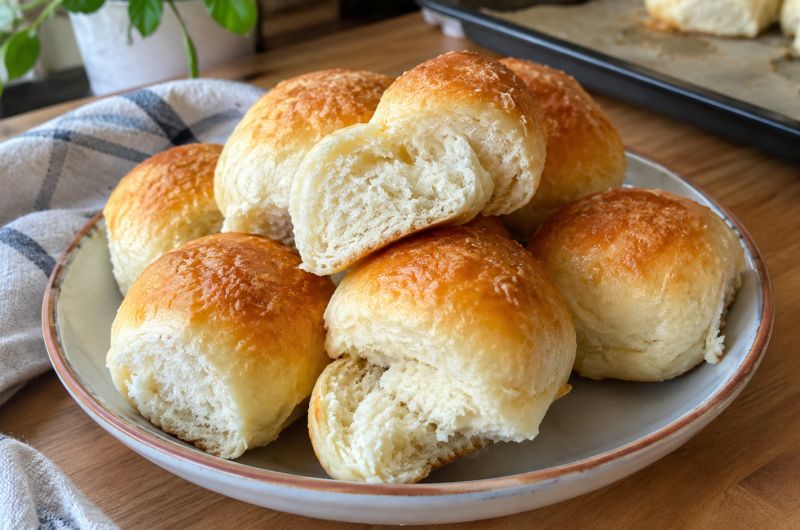
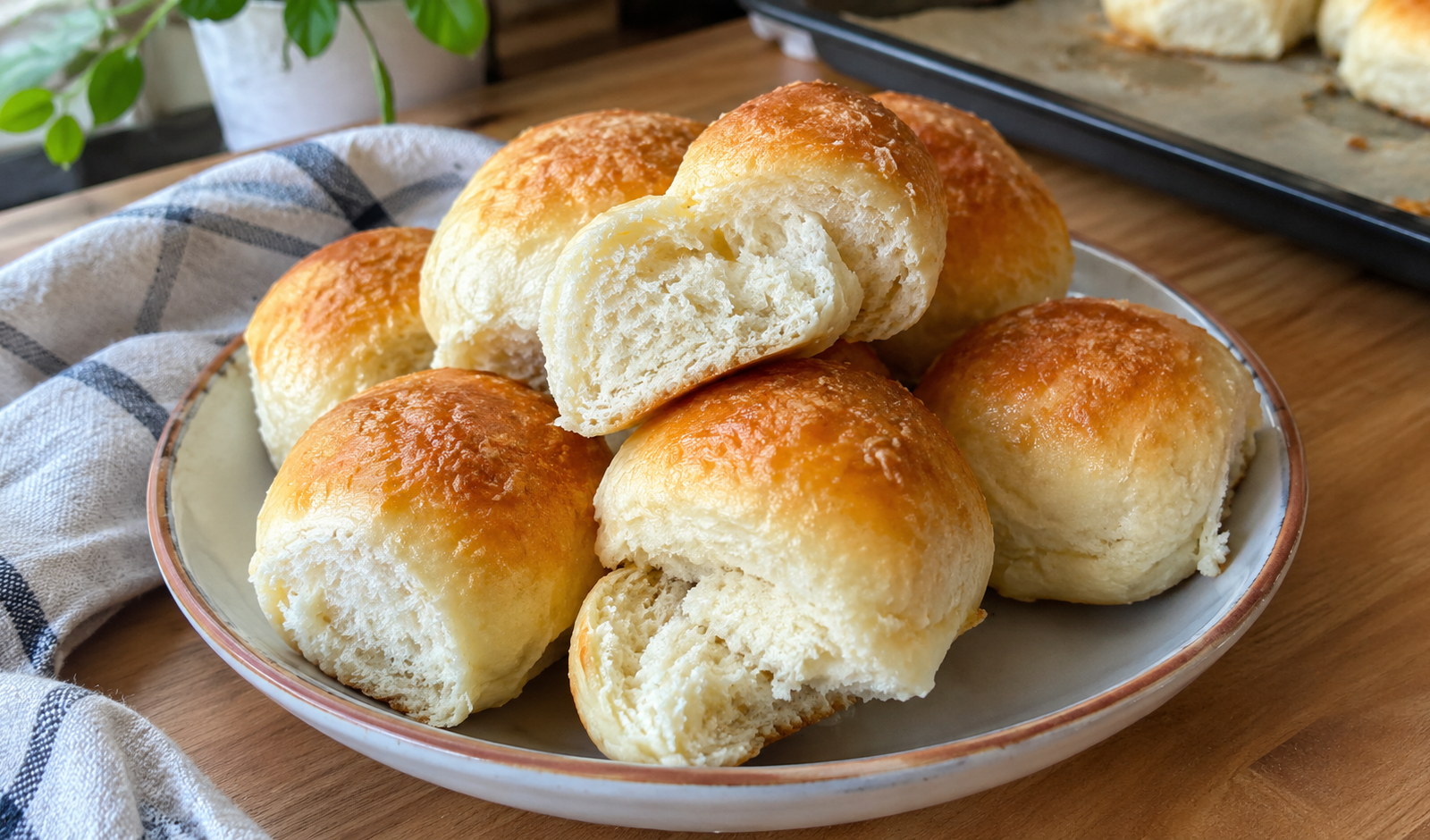
Homemade sourdough dinner rolls are a delicious addition to almost any meal. These soft, buttery bread rolls have tender centers, lightly golden tops, and a delicate sourdough flavor that makes them especially satisfying when served warm.
Unlike traditional dinner rolls made with commercial yeast, this recipe relies on an active sourdough starter to help the dough rise naturally. The result is a batch of pull-apart rolls that look beautiful on the dinner table and taste wonderful alongside everyday family meals or special holiday dinners.
One of the best things about making sourdough dinner rolls at home is their texture. When prepared correctly, the inside stays soft and airy, while the outside develops a delicate golden crust during baking. A little melted butter brushed over the hot rolls adds richness and helps keep the surface tender. Because the rolls bake together in a single dish, their sides remain soft and easy to pull apart, making them perfect for sharing with family and guests.
This sourdough dinner rolls recipe is also convenient for anyone who enjoys preparing homemade bread ahead of time. Although sourdough requires patience, much of the preparation involves letting the dough rest and rise without constant attention.
You can mix the dough in the evening, allow it to ferment overnight, shape the rolls the next day, and bake them when you are ready to serve. There is also a make-ahead option that allows the shaped rolls to rest in the refrigerator before baking.
What Makes These Sourdough Rolls Special?
Naturally Leavened Bread with a Gentle Tang
The active sourdough starter is responsible for the dough’s fermentation and characteristic flavor. As the starter works, it helps the dough develop its structure and rise gradually. This slower process gives the rolls a mild tang that complements their buttery richness without overpowering the flavor of the bread. For the best results, use a starter that is bubbly, active, and has risen to at least twice its original size after feeding.
A Soft, Pillowy Interior
Bread flour is an excellent choice for this recipe because its higher protein content supports gluten development and helps the rolls hold their shape. When the dough is mixed and kneaded properly, it becomes smooth, elastic, and soft enough to produce a light interior. All-purpose flour can also be used, although the finished rolls may not rise quite as tall. Both options work well for homemade bread, depending on the texture you prefer and the flour available in your kitchen.
Simple Ingredients and Everyday Preparation
You do not need a long list of ingredients to make flavorful sourdough dinner rolls. Flour, active sourdough starter, milk, butter, sugar, and salt create the foundation of the dough. Each ingredient has a purpose, from supporting fermentation to improving tenderness and flavor. Since the recipe uses familiar pantry and refrigerator staples, it is a practical choice for home bakers who want fresh bread without complicated techniques or specialty ingredients.
How to Speed Up Sourdough Proofing
A Warmer Environment for the First Rise
If you need the dough to ferment more quickly, place the covered bowl in a warm location, such as an oven with only the light switched on. Depending on the temperature and starter activity, the first rise may take around two to three hours rather than the usual overnight period. Check the dough regularly and remove it once it has expanded sufficiently. Keep the environment gentle and avoid excessive heat, because temperatures that are too high can damage the sourdough culture and affect the dough’s development.
Helping the Shaped Rolls Rise Faster
You can also shorten the second proof by placing the covered baking dish in a comfortably warm area. The original method suggests a temperature around 80–90°F for a quicker rise. Keep the environment below 100°F, and check the rolls frequently so that they do not become overproofed. Remember that a warm spot can speed up fermentation, but it cannot guarantee an exact finish time. The rolls are ready for baking when they have become noticeably fuller and have expanded well in the dish.
Choosing the Best Flour and Baking Dish
Which Flour Works Best?
Bread flour is the preferred choice when you want taller sourdough dinner rolls with a fluffy, slightly chewy texture. Its higher protein content helps develop the gluten network needed to hold the gases produced during fermentation. All-purpose flour is also suitable and can produce soft, tasty rolls, although they may not have quite the same height. For a dependable result, use one flour consistently throughout the recipe and avoid making unnecessary changes to the quantities while preparing the dough.
Glass, Ceramic, Metal, or Cast Iron?
A glass baking dish is a useful option because you can observe the sides and bottoms of the rolls as they bake. Ceramic dishes retain heat well and can help create evenly baked bread with a tender texture. Metal pans generally heat more quickly and may produce a firmer crust, so start checking the rolls around five minutes earlier. Cast iron can create a more deeply browned bottom and a rustic finish, but it also retains considerable heat. The material you choose can affect the baking time and final crust.
Make-Ahead Sourdough Dinner Rolls
One of the most practical features of this recipe is the option to prepare the rolls ahead of time. After dividing and shaping the dough, arrange the rolls in a buttered baking dish and cover it with oiled plastic wrap. Place the dish in the refrigerator for approximately 8 to 24 hours. This approach makes it easier to plan fresh bread for a holiday dinner, family gathering, or weekend meal without having to complete every step on the same day.
When you are ready to bake, remove the dish from the refrigerator about three to five hours beforehand. Let the rolls come closer to room temperature and continue proofing until they appear visibly puffed. The exact timing depends on the temperature of your kitchen and how much the dough has risen during refrigeration. Do not bake them simply because the planned waiting period has passed; check their appearance first. Once they are ready, bake according to the regular instructions.
What to Serve with Sourdough Dinner Rolls
Soft homemade dinner rolls pair naturally with many main dishes because their mild flavor complements savory sauces, vegetables, and proteins. Serve them alongside spaghetti and meatballs to soak up tomato sauce, or offer them with chicken noodle soup, tomato soup, or a hearty beef stew. Their tender centers make them particularly satisfying with meals that include a rich broth or gravy. For a simple weeknight dinner, place the warm rolls in a basket and serve them alongside roasted vegetables and your favorite main course.
These rolls also work well with roasted chicken, pork tenderloin, or baked salmon. Their buttery flavor balances the savory seasoning of roasted meats and fish without competing with the main dish. For casual gatherings, you can split the rolls and use them to make small sandwiches or sliders. Fill them with cooked meat, cheese, or other favorite sandwich ingredients for an easy party option. Because the rolls pull apart individually, they are convenient for buffets and shared meals.
How to Store and Reheat Sourdough Dinner Rolls
Storing at Room Temperature
Allow leftover rolls to cool completely before placing them in a resealable bag or airtight container. Store them at room temperature for up to two days to help preserve their softness. Refrigeration is generally not recommended for these rolls because it can cause bread to become stale and firm more quickly. Keep them away from direct sunlight, excess heat, and moisture so that they maintain their best texture during storage.
Freezing for Longer Storage
For longer storage, freeze the rolls after they have cooled completely. If possible, keep them together in their original pull-apart arrangement, then place them in a freezer-safe bag with as much air removed as practical. Freezing the rolls on the day they are baked helps preserve their freshness and flavor. When you need them, thaw the rolls at room temperature before reheating. This method is useful when preparing bread for a future dinner or saving leftovers from a larger batch.
Reheating Without Drying Them Out
To warm individual rolls quickly, microwave them for a few seconds at a time. Covering them with a slightly damp paper towel can help reduce moisture loss, but avoid overheating because that may make the bread tough. For several rolls, arrange them in an oven-safe dish and warm them at 350°F for about 7–10 minutes. Check that they are heated through before serving. A small amount of butter brushed over the surface can restore some of the richness and softness of freshly baked rolls.
Troubleshooting Common Sourdough Roll Problems
Why Are My Rolls Dense?
Dense rolls can result from an inactive starter, insufficient fermentation, or inadequate proofing after shaping. Make sure your starter is bubbly and has risen well after feeding before using it in the dough. Give the first rise enough time to expand, and do not rush the second proof simply because the rolls have been sitting for a particular number of hours. Adding too much extra flour can also make the dough heavy, so aim for a soft, slightly tacky consistency throughout kneading.
Why Did My Rolls Not Rise Evenly?
Uneven rolls may be caused by inconsistent portion sizes, uneven shaping, or differences in temperature across the baking area. Divide the dough into 12 equal pieces and arrange them with reasonably even spacing in the baking dish. Try to keep the dough in a location with a stable temperature during both fermentation stages. If some rolls are noticeably smaller than the others before baking, give the dough more time to proof rather than expecting the oven to correct the difference.
How Can I Keep the Rolls Soft?
The most effective approach is to avoid adding unnecessary flour, allow proper fermentation, and remove the rolls from the oven once they are baked through. Brushing their hot tops with melted butter adds flavor and helps soften the crust. After baking, let the rolls cool before storing them in a sealed bag or container. If you are serving them later, reheat them gently instead of using excessive heat, which can quickly dry out the interior and make the crust harder.
Sourdough Homemade Dinner Rolls
These homemade sourdough dinner rolls are soft, buttery, and fluffy, with golden-brown tops and a mild sourdough flavor.
12
servings15
minutes30
minutes162
kcal600
10
hours45
minutesIngredients
2 tablespoons unsalted butter, melted, plus extra for greasing the baking dish
1 cup whole milk, at room temperature
2 tablespoons granulated sugar
1 teaspoon fine sea salt
3 cups bread flour or all-purpose flour
½ cup active sourdough starter
1 teaspoon salted butter, melted, for brushing the rolls
Directions
- Combine the milk, melted unsalted butter, sugar, and salt in a large mixing bowl. Stir until the sugar is dissolved and the ingredients are well combined.
- Add the flour and active sourdough starter. Mix with a sturdy spatula or stand mixer paddle until a rough dough forms. Cover with a damp kitchen towel and rest for 30 minutes.
- Knead with a dough hook for 10–12 minutes or by hand for 8–10 minutes, until the dough becomes smooth, soft, and elastic.
- Transfer the dough to a buttered bowl and cover it with a damp kitchen towel. Leave it at room temperature for 8–12 hours, or until it has nearly doubled in size.
- Divide the dough into 12 equal portions, approximately 65 grams each. Shape each portion into a smooth ball by pinching the edges underneath and rolling it gently on a clean surface.
- Arrange the dough balls in a buttered 9 × 13-inch baking dish. Cover with a damp tea towel and let rise for about 2 hours in a warm place or 3–4 hours at room temperature, until visibly puffed.
- Preheat the oven to 375°F (190°C). Bake the rolls on the upper-third rack for 25–30 minutes, until golden brown and the internal temperature reaches approximately 190°F (88°C).
- Brush the hot rolls with melted salted butter. Allow them to cool slightly before pulling them apart and serving warm.
Notes
- Active starter: Use a bubbly starter that has risen to at least double its original size after feeding.
- Faster rising: Place the covered dough in a warm location, such as an oven with the light on. Monitor the temperature and avoid excessive heat.
- Make-ahead option: After shaping, cover the rolls with oiled plastic wrap and refrigerate for 8–24 hours. Remove them 3–5 hours before baking and allow them to finish proofing.
- Flour choice: Bread flour generally produces taller rolls, while all-purpose flour works well for a slightly softer structure.
- Storage: Keep cooled rolls in an airtight bag at room temperature for up to 2 days.
- Freezing: Freeze cooled rolls in a freezer-safe bag and thaw at room temperature before reheating.
- Reheating: Warm in a 350°F (175°C) oven for 7–10 minutes, or microwave individual rolls briefly.
Nutrition Facts
- Calories: 162kcal
- Fat: 3g
- Carbohydrates: 28g
- Protein: 5g