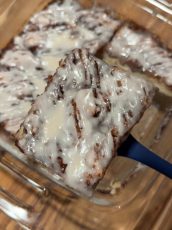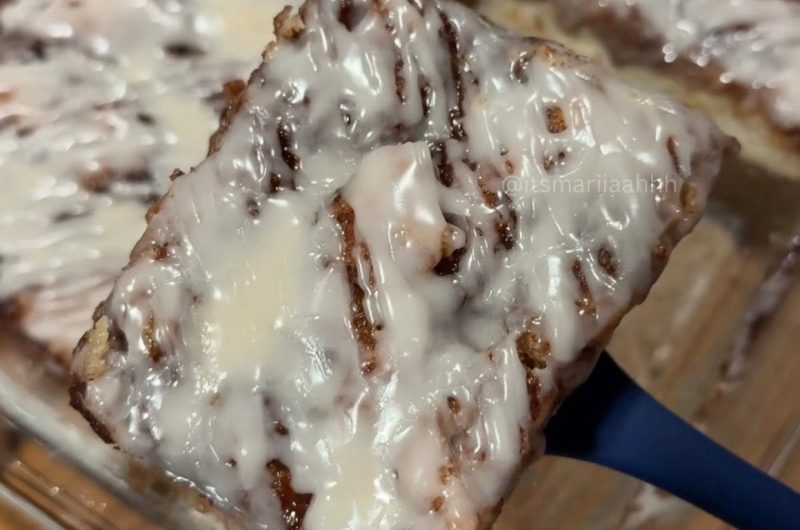
If you have a jar of sourdough discard waiting in the refrigerator, these 30-Minute Sourdough Discard Cinnasticks are an easy and delicious way to use it. Soft in the center, buttery around the edges, and covered with a sweet cinnamon-sugar topping, these homemade cinnasticks come together without the long fermentation time usually associated with sourdough baking. The dough is mixed quickly, pressed into a baking dish, sliced into convenient sticks, coated with cinnamon butter, and baked until warm and lightly golden. A simple powdered sugar icing is added while the cinnasticks are still warm, allowing it to melt slightly over the surface. The result is a cozy homemade treat with the familiar flavor of cinnamon rolls but a much simpler preparation. Because this recipe uses sourdough discard rather than an active, bubbly starter, it is particularly useful when you want something sweet without planning a full sourdough baking project.
Why These Sourdough Discard Cinnasticks Are Worth Making
There are plenty of reasons to keep this recipe close whenever you have extra sourdough discard. First, it is fast. Instead of waiting for yeast dough to rise, the ingredients are simply combined and baked, making these cinnasticks a practical choice when a craving for something warm and cinnamon-filled strikes. The sourdough discard contributes flavor while also giving you a useful way to reduce kitchen waste. The combination of butter, brown sugar, and cinnamon creates a rich topping that becomes soft and slightly gooey as it bakes into the dough. Once the cinnasticks come out of the oven, a quick icing made with powdered sugar, milk, and vanilla adds a sweet finishing touch. They are excellent for breakfast, brunch, an afternoon snack, or a casual dessert when you want something homemade without spending hours in the kitchen.
What Makes the Texture So Appealing
The texture of these homemade sourdough discard cinnasticks is one of their biggest attractions. The dough is soft enough to press into the baking dish and holds the cinnamon butter topping beautifully as it cooks. Because the dough is cut into sticks before baking, the finished pieces are easy to separate and serve. The butter topping melts into the surface during baking, while the brown sugar and cinnamon create a sweet, fragrant layer. Baking at 375°F for 15 to 18 minutes gives the dough enough time to cook through while keeping the finished cinnasticks tender. Letting them rest for five minutes after baking is also useful because the hot dough needs a short period to settle before the icing is drizzled over the top. The result is a warm, soft, cinnamon-rich bite with a lightly sweet glaze.
Understanding Sourdough Discard in This Recipe
Sourdough discard is simply the portion of sourdough starter that is removed during the feeding process. Rather than throwing it away, you can use it in pancakes, crackers, muffins, quick breads, biscuits, cookies, and recipes such as these cinnasticks. This recipe is especially convenient because the discard does not need to be active or recently fed for the dough to be useful. The recipe also does not depend on a lengthy fermentation period. Instead, baking powder provides the leavening included in the original ingredient list. The discard mainly becomes part of the dough and adds its characteristic sourdough flavor. If your discard has been stored properly and is suitable for baking, it can turn an otherwise ordinary sweet dough into something with a little more depth and character.
The Dough Comes Together Quickly
The dough for these cinnasticks uses a short list of ingredients: sourdough discard, sugar, baking powder, salt, all-purpose flour, melted butter, and warm milk. These ingredients are mixed together until combined, making this a particularly straightforward dough for beginner bakers. There is no complicated kneading process or extended preparation stage. The important goal is simply to bring the ingredients together into a workable mixture. Once combined, the dough is transferred to a buttered 8×8 baking dish. Pressing it into the dish creates an even base for the cinnamon topping and allows the finished cinnasticks to bake in a compact, easy-to-handle shape. Keeping the preparation simple is one of the reasons this recipe works so well when you want a quick homemade cinnamon treat.
How the Buttered Baking Dish Helps
Preparing the 8×8 baking dish with butter before adding the dough is a small step that can make serving easier. The butter helps prevent the dough and cinnamon topping from sticking excessively to the sides and bottom of the dish. It also adds another touch of richness to the baking process. Once the dough is pressed into the prepared dish, it should form an even layer rather than being concentrated in the center. An even thickness helps the cinnasticks cook more consistently from one side to the other. Since the recipe is designed around an 8×8 baking dish, keeping the dough in that size pan also helps maintain the intended thickness and baking time. After pressing the dough into place, it is ready for cutting and topping.
Cutting the Dough Into Cinnasticks
Before adding the cinnamon butter topping, the dough is cut into sticks, but the cuts should not go all the way through the bottom. This technique creates individual portions while keeping the dough connected during baking. It makes the finished dish easy to separate into pieces after baking without requiring you to handle individual strips of dough before they are cooked. The partially cut surface also allows the cinnamon butter mixture to settle over the individual sections. When serving, the sticks can be pulled apart or cut apart more completely if needed. For neat results, try to make the cuts reasonably even in size. The exact shape does not need to be perfect; these are meant to be a relaxed homemade treat rather than a precision pastry.
Making the Cinnamon Butter Topping
The topping is where the classic cinnamon-sugar character really comes forward. Melted butter is combined with brown sugar and cinnamon to make a rich mixture that can be spread across the prepared dough. The brown sugar provides a deeper sweetness than plain granulated sugar, while cinnamon gives the topping its familiar warm spice. Once mixed, the topping is spread evenly over the surface so that each section receives some of the buttery cinnamon mixture. The recipe calls for letting the topping sit for three minutes before baking. This short pause gives you time to make sure the mixture has settled across the dough before the baking dish goes into the oven. Because the topping contains butter and sugar, it becomes beautifully fragrant as it heats.
Why Cinnamon and Brown Sugar Work So Well Together
Cinnamon and brown sugar are a classic combination for a reason. Cinnamon provides warmth and spice, while brown sugar brings a rich sweetness that pairs naturally with butter. In these cinnasticks, the combination forms a topping that complements the mild dough and sourdough flavor. As the cinnasticks bake, the topping warms and spreads across the surface, creating a sweet layer that makes every piece feel like a small cinnamon pastry. The melted butter helps distribute the sugar and spice, while the cinnamon provides the unmistakable flavor associated with homemade cinnamon treats. The finished topping is particularly enjoyable when combined with the icing, because the slightly spiced brown sugar layer and sweet powdered sugar drizzle provide contrasting flavors without requiring a complicated filling.
Baking the Cinnasticks at the Right Temperature
The cinnasticks are baked at 375°F for 15 to 18 minutes. Since ovens can vary, it is useful to begin checking toward the shorter end of the baking range rather than automatically leaving the dish in the oven for the full time. The goal is to bake the dough through while maintaining its soft texture. The surface should look baked and the topping should be hot and fragrant. Avoid relying solely on color because the cinnamon and brown sugar topping naturally make the surface appear darker as it cooks. The size and thickness of the dough can also affect the final baking time. Using the specified 8×8 baking dish and following the original baking temperature and range provides the best starting point for achieving the intended texture.
Give the Cinnasticks a Short Rest
After baking, these sourdough discard cinnasticks should rest for five minutes. It may be tempting to add the icing immediately, especially when the cinnamon aroma is filling the kitchen, but a brief rest helps the freshly baked dough settle. This is also the perfect time to prepare the icing. Five minutes is long enough to mix the powdered sugar, milk, and vanilla while the cinnasticks remain warm. The icing is intended to be drizzled generously over the warm baked dough, so there is no need to wait until the cinnasticks have cooled completely. The slight warmth allows the icing to soften and spread naturally across the surface, creating the familiar glazed appearance associated with cinnamon pastries.
Preparing the Simple Vanilla Icing
The icing uses just powdered sugar, milk, and a splash of vanilla. It is a deliberately simple finishing mixture that requires no stovetop cooking and no special equipment. Powdered sugar forms the base, while milk provides the moisture needed to create a drizzleable consistency. Vanilla adds a gentle flavor that works particularly well with cinnamon and brown sugar. When mixing the icing, the goal is to achieve a consistency that can be drizzled easily over the warm cinnasticks. If the mixture appears too thick to drizzle, it can be adjusted carefully, but the original recipe should be followed as written. Once prepared, the icing is poured or drizzled generously over the warm cinnasticks, where it creates a sweet finishing layer.
The Best Way to Serve Warm Cinnasticks
These cinnasticks are especially enjoyable while still warm because the cinnamon topping remains soft and the icing has a chance to melt slightly into the surface. They can be served directly from the baking dish after the short resting period. For breakfast, place the warm pieces on a plate alongside coffee, tea, or another favorite morning drink. They can also be served as part of a relaxed weekend brunch or enjoyed as an afternoon sweet snack. Because the dough is cut into sticks, each piece is convenient to pick up and eat. The combination of soft dough, buttery cinnamon topping, and vanilla icing gives the recipe the comforting appeal of cinnamon rolls without requiring the same amount of preparation.
A Convenient Recipe for Sourdough Discard
One of the most useful things about this recipe is that it turns sourdough discard into something people actually look forward to eating. Instead of treating discard as something that has to be thrown away, recipes like this give it a practical place in everyday baking. The 120g of sourdough discard becomes part of a quick dough that requires no long proofing schedule. That makes these cinnasticks suitable for days when you have discard available but do not want to commit to a traditional sourdough recipe. The simplicity also makes the recipe approachable for bakers who are still learning how to use sourdough discard in sweet recipes. With a few basic ingredients and a short baking time, you can create a warm homemade treat with very little preparation.
When to Make These Easy Cinnamon Cinnasticks
This recipe fits naturally into busy mornings, lazy weekends, and last-minute baking plans. Because the preparation and baking process takes about 30 minutes, it is convenient when you want something homemade without a lengthy waiting period. These cinnasticks can also be a useful recipe to remember after feeding a sourdough starter, particularly when you have extra discard that you want to use. Their simple format makes them suitable for breakfast tables, brunch spreads, snack plates, and casual desserts. They are also easy to serve because the dough is cut into sticks before baking. Rather than preparing individual cinnamon rolls, you bake one compact dish and divide it into portions. That makes the recipe practical as well as comforting.
Notes for Consistent Results
For the most reliable results, begin by preparing the baking dish and gathering all of the ingredients before mixing the dough. Make sure the butter used for the dough is melted and the milk is warm as specified. Combine the dough ingredients until they come together, then press the mixture evenly into the buttered 8×8 baking dish. When cutting the dough, stop before reaching the bottom so the pieces remain connected. Spread the cinnamon butter mixture evenly rather than placing it in only one area. After baking, allow the cinnasticks to rest for the stated five minutes before adding the icing. These simple details help preserve the intended texture and make the recipe easier to follow from beginning to end.
Notes on the Sourdough Discard
The recipe specifically calls for sourdough discard rather than active starter. This makes it a convenient option for using extra starter that has accumulated during routine feeding. The discard is incorporated directly into the dough, so there is no need to build a separate levain or wait for the mixture to become bubbly. Since sourdough discard can vary in consistency depending on hydration and storage, the dough may look slightly different from one batch to another. The recipe’s ingredient quantities should remain unchanged when preparing it. For best results, use discard that has been stored appropriately and is suitable for baking. The purpose of the discard here is to contribute flavor and make the recipe a useful addition to your collection of quick sourdough discard desserts.
Notes on the Cinnamon Topping
The cinnamon butter topping should be mixed thoroughly before being spread across the dough. Because the topping contains melted butter, brown sugar, and cinnamon, it should be easy to distribute over the surface. Try to cover the dough evenly so the baked cinnasticks have a balanced cinnamon flavor throughout. The three-minute resting period after spreading the topping is part of the original method and should be retained. There is no need to complicate the topping with additional ingredients because the combination already provides the buttery, sweet, spiced flavor that defines the recipe. When baked, the topping becomes an important part of the final texture, while the icing adds another layer of sweetness after the cinnasticks leave the oven.
Notes on the Icing
The icing should be prepared while the baked cinnasticks are resting. This keeps the process efficient and means the glaze is ready when the five-minute resting period is over. The mixture consists of powdered sugar, milk, and a splash of vanilla, giving it a simple sweet flavor that works well with the cinnamon topping. The finished icing should be loose enough to drizzle generously across the warm surface. Because the cinnasticks are still warm, the icing may soften and spread after it touches the topping. That is part of the appeal of serving them warm. Instead of waiting for a firm glaze to set completely, these cinnasticks are intended to be enjoyed with the icing fresh and slightly melted into the cinnamon topping.
Frequently Asked Questions About Sourdough Discard Cinnasticks
A common question about these cinnasticks is whether sourdough discard needs to be active. The recipe is specifically designed around sourdough discard, so it does not require the long fermentation process associated with naturally leavened sourdough bread. Another common question is whether the dough should be cut completely through before baking. According to the method, the dough should be cut into sticks without cutting all the way through to the bottom. This keeps the portions connected while they bake. Bakers may also wonder when to add the icing. The method calls for allowing the baked cinnasticks to rest for five minutes while the icing is mixed, followed by a generous drizzle over the warm pieces. Following these steps keeps the preparation simple and close to the intended result.
Can These Cinnasticks Be Made Ahead?
These cinnasticks are designed primarily as a quick, freshly baked treat, so their greatest appeal is the short preparation time from mixing to serving. The warm texture and freshly drizzled icing are important parts of the experience. If preparing them for a gathering, it is helpful to plan the baking so they can be served relatively soon after coming out of the oven. The recipe does not include separate make-ahead or storage instructions, so additional storage methods should not be treated as part of the original directions. If you do have leftovers, handle them according to your normal food-storage practices and consider the ingredients and your kitchen conditions. For the intended experience, however, these cinnasticks are best appreciated warm with the icing freshly added.
A Simple Alternative to Traditional Cinnamon Rolls
Traditional cinnamon rolls often involve yeast, kneading, proofing, rolling, filling, shaping, and another rise before baking. These sourdough discard cinnasticks take a much shorter route. There is no lengthy shaping process, and the dough is simply pressed into an 8×8 baking dish before being cut into sticks. The cinnamon topping is mixed separately and spread across the dough, while a quick icing completes the recipe after baking. This streamlined approach makes the cinnasticks an appealing option for anyone who enjoys cinnamon rolls but does not always have the time or patience for a full yeast-based recipe. They offer familiar cinnamon-and-sugar comfort in a format that is much easier to fit into a busy day.
Why This Recipe Belongs in Your Sourdough Collection
A useful sourdough recipe collection needs more than bread. While sourdough starter is famous for naturally fermented loaves, discard can be used in many quick recipes that do not require extended fermentation. These cinnasticks demonstrate how a relatively small amount of discard can become the foundation of a sweet baked treat. The recipe is uncomplicated enough for everyday baking, yet the combination of brown sugar, cinnamon, butter, and vanilla icing makes the finished result feel special. If you regularly maintain a sourdough starter, having a selection of discard recipes available can make feeding routines more enjoyable. Instead of wondering what to do with the leftover starter, you can turn it into something warm, sweet, and shareable.
30-Minute Sourdough Discard Cinnasticks
Description
Soft and sweet sourdough discard cinnasticks made with a simple dough, buttery brown sugar cinnamon topping, and a light vanilla icing. This quick baked treat is an easy way to use sourdough discard and enjoy homemade cinnamon goodness without a long preparation or fermentation process.
Preparation & Cooking Duration
Total Time: Approximately 30 minutes
Baking Time: 15–18 minutes
Resting Time: 5 minutes
Serving
Servings are not specified in the original recipe.
Ingredients
Dough
- 120g sourdough discard
- 25g sugar
- 3g baking powder
- 2g salt
- 140g all-purpose flour
- 30g melted butter
- 40g warm milk
Cinnamon Butter Topping
- 50g melted butter
- 70g brown sugar
- 6g cinnamon
Icing
- 80g powdered sugar
- 15g milk
- Splash of vanilla
Step-by-Step Instructions
- Combine the sourdough discard, sugar, baking powder, salt, all-purpose flour, melted butter, and warm milk. Mix until the dough ingredients are combined.
- Butter an 8×8 baking dish and press the dough evenly into the dish.
- Cut the dough into sticks, making sure not to cut completely through to the bottom of the baking dish.
- Mix the melted butter, brown sugar, and cinnamon together to make the cinnamon butter topping.
- Spread the cinnamon butter mixture evenly over the dough and allow it to sit for 3 minutes.
- Bake at 375°F for 15–18 minutes, or until baked through.
- Remove the cinnasticks from the oven and let them rest for 5 minutes.
- While the cinnasticks rest, mix together the powdered sugar, milk, and a splash of vanilla to make the icing.
- Drizzle the icing generously over the warm cinnasticks.
- Serve and enjoy while warm.
Nutritional Information
Nutritional values were not provided with the original recipe. Calories and nutrient amounts will vary depending on the exact ingredients, brands, portion size, and number of servings.