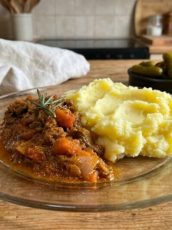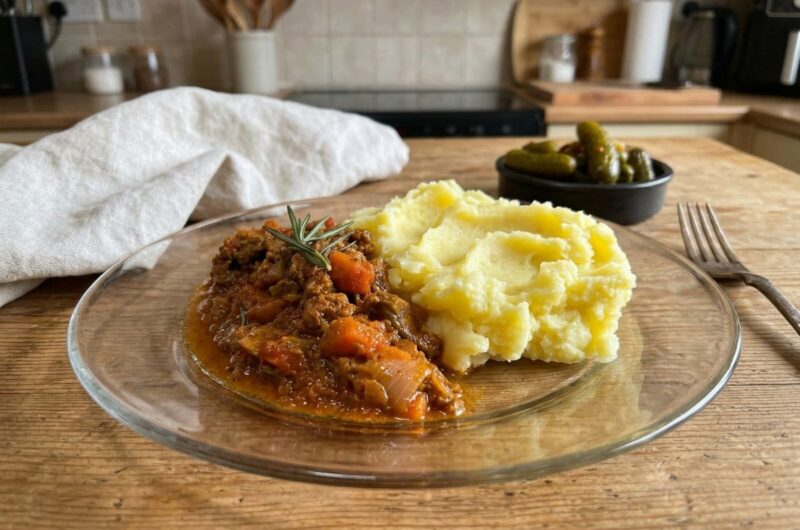
High Protein Beef Stew with Creamy Mashed Potatoes is a satisfying homemade meal that brings together tender pieces of beef, fresh vegetables, aromatic herbs, and a rich tomato-based broth. Served over a bed of smooth, buttery mashed potatoes, this traditional comfort food makes an excellent choice for family dinners, weekend meals, and chilly evenings. The combination of protein-rich beef and filling potatoes creates a hearty dish that offers plenty of flavour in every spoonful. Slow simmering allows the beef to become tender while the onions, carrots, garlic, thyme, and tomatoes develop a delicious savoury taste. Whether you are preparing a relaxed family dinner or cooking several portions for meal preparation, this beef stew recipe is a practical and delicious addition to your regular meal rotation.
What Makes This High Protein Beef Stew So Delicious?
The appeal of this beef stew comes from the balance of simple ingredients and satisfying textures. Lean beef provides the main source of protein and develops a tender consistency as it cooks gently in vegetable broth and crushed tomatoes. Onions and carrots contribute natural sweetness, while garlic and thyme add an aromatic depth that makes the gravy especially enjoyable. The addition of bay leaves provides another layer of flavour without making the dish overly complicated. Instead of relying on complicated cooking techniques or hard-to-find ingredients, this recipe uses everyday kitchen staples to create a wholesome and flavourful meal. When served with creamy mashed potatoes, the savoury stew becomes even more satisfying because the potatoes absorb the delicious cooking liquid.
Why Beef Stew Is Perfect for Family Dinner
A homemade beef stew is one of those dependable meals that can bring everyone together around the dinner table. It is filling, comforting, and easy to serve in individual bowls or on a large family platter. The combination of beef, carrots, onions, and potatoes provides different textures and flavours, making every serving enjoyable. Another advantage is that most of the cooking happens in one large pan or Dutch oven, which means fewer dishes to wash afterward. The ingredients are also relatively straightforward, so you do not need advanced cooking skills to prepare a successful meal. This recipe makes four servings, making it suitable for a small family or for anyone who wants to prepare dinner with a few portions left over for another day.
Choosing the Right Beef for a Tender Stew
Choosing suitable beef is important when preparing a flavourful homemade stew. This recipe uses 2.2 pounds of lean beef cut into cubes, allowing the pieces to cook evenly and absorb the flavours of the broth, tomatoes, and seasonings. Cutting the meat into reasonably similar-sized pieces helps prevent some portions from becoming tender much earlier than others. Before adding the beef to the pan, pat the cubes dry with kitchen paper if necessary. Removing excess surface moisture helps the meat brown more effectively when it comes into contact with the hot olive oil. During the initial cooking stage, turn the beef pieces so that different sides develop a light brown colour. This simple step helps build a savoury foundation for the stew and improves the overall flavour of the finished dish.
The Importance of Browning the Beef Before Simmering
Browning the beef is a useful preparation step because it creates deeper savoury flavours before the liquid ingredients are introduced. Begin by heating the extra virgin olive oil in a large pan or Dutch oven over medium-high heat. Once the oil is hot, add the cubed beef and cook it for approximately three to four minutes, turning the pieces to brown different sides. The goal is not to cook the beef completely at this stage but to develop a little colour on the outside. Avoid stirring constantly, as the meat needs contact with the hot cooking surface to brown properly. Once the beef has developed a light golden-brown appearance, you can move on to the vegetables and herbs. This early stage gives the stew a more developed taste without requiring complicated techniques.
Fresh Vegetables Bring Natural Flavour to the Stew
Onions, carrots, and garlic are essential ingredients in this recipe because they provide flavour, aroma, and texture. The two large onions become softer as they cook, helping create a delicious base for the broth. Four large carrots add a gentle natural sweetness that balances the savoury beef and crushed tomatoes. Five minced garlic cloves provide a noticeable aromatic quality that works particularly well with thyme. Add the chopped onions, diced carrots, garlic, fresh or dried thyme, and optional bay leaves directly to the pan after browning the beef. Stir everything together for approximately two minutes. This short cooking period allows the vegetables to begin softening and releases the aroma of the garlic and herbs. Keeping the vegetables in the same pan also allows them to combine with the flavour left behind by the beef.
Creating a Rich and Flavourful Beef Stew Broth
The broth is what brings the ingredients together and gives the stew its delicious consistency. This recipe uses four cups of vegetable broth, prepared with one stock cube and water, to provide the liquid needed for simmering. Once the beef and vegetables have been combined, pour the broth into the pan and add a pinch of salt. Stir gently so that the liquid surrounds the meat and vegetables. As the stew cooks, the beef releases its flavour into the broth, while the onions, carrots, garlic, and thyme contribute their own distinctive qualities. The result is a savoury cooking liquid that gradually becomes more flavourful. Keeping the pan covered during the first hour helps retain moisture and allows the beef to cook gently without excessive evaporation.
Why Slow Simmering Makes Beef More Tender
Slow simmering is one of the most important parts of preparing a good beef stew. Once the vegetable broth has been added, cover the pan and reduce the heat to low. Allow the ingredients to simmer gently for approximately one hour, stirring every 20 to 30 minutes. Gentle cooking gives the beef time to soften while allowing the flavours of the vegetables and herbs to blend into the liquid. Avoid allowing the stew to boil aggressively because excessive heat can cause the liquid to evaporate too quickly and make the cooking process difficult to control. If the beef is still firm after the first hour, continue cooking as needed until it reaches a tender consistency. The exact timing can vary depending on the size of the beef cubes and the type of meat used.
Crushed Tomatoes Add Colour and Balanced Flavour
After the beef has simmered for the first hour, add the 14-ounce can of crushed tomatoes. Stir thoroughly to distribute the tomatoes throughout the broth. Tomatoes give the stew a deeper colour and add a gentle acidity that balances the richness of the beef and the sweetness of the carrots and onions. They also help create a more substantial cooking liquid that tastes delicious when spooned over mashed potatoes. Once the tomatoes have been added, cover the pan as needed and continue simmering for another 30 minutes. During this final cooking stage, the beef should continue becoming tender while the ingredients develop a more unified flavour. Before serving, check the consistency of the gravy and taste the seasoning so the finished dish has a balanced savoury profile.
Preparing the Potatoes for Smooth and Creamy Mashed Potatoes
Creamy mashed potatoes are the perfect accompaniment to this homemade beef stew. Their mild flavour and soft texture balance the savoury tomato and vegetable broth, making the complete meal especially satisfying. This recipe calls for 2.2 pounds of potatoes that should be peeled and cut into cubes before cooking. Try to make the pieces reasonably similar in size so they become tender at approximately the same time. Place the potatoes in a pot of salted water and bring them to a boil. Allow them to cook for approximately 15 to 20 minutes, checking their tenderness with a fork. When the potatoes are ready, a fork should slide easily through the centre without much resistance. Properly cooked potatoes are much easier to mash and help create a smoother final texture.
How to Make Buttery Mashed Potatoes Without Lumps
Once the potatoes are fully tender, drain them thoroughly to remove excess cooking water. This step is important because leftover water can make the mashed potatoes thin and reduce their creamy consistency. Add the seven tablespoons of butter and three and a half tablespoons of milk to the hot potatoes. Mash everything together until the mixture becomes smooth and creamy. A traditional potato masher works well for this process, although a potato ricer can also produce a fine texture. Avoid overworking the potatoes because excessive mixing can release too much starch and make them sticky. Add salt according to your taste, keeping in mind that the stew already contains seasoning. The finished mashed potatoes should be soft, buttery, and thick enough to hold their shape when served alongside the beef.
How the Beef Stew and Mashed Potatoes Work Together
The combination of beef stew and mashed potatoes creates a complete comfort-food experience because the two components complement each other so naturally. The beef provides a hearty, savoury centre, while the carrots and onions add sweetness and texture. The tomato-based broth brings everything together with a rich flavour that coats the beef and vegetables. Mashed potatoes provide a smooth and creamy contrast, absorbing the gravy and making every bite more enjoyable. You can place a generous serving of potatoes in the centre of a shallow bowl and spoon the stew over the top. Alternatively, serve the potatoes and beef separately so everyone can decide how much of each component they prefer. Either presentation makes a satisfying meal without requiring additional complicated side dishes.
Simple Serving Ideas for a Beautiful Dinner
Although this beef stew is delicious on its own with mashed potatoes, a few simple serving choices can make the meal even more inviting. Use wide bowls or shallow dinner plates to create enough space for both the creamy potatoes and the tender beef. Add the mashed potatoes first, then spoon the stew beside or over them, making sure each serving includes plenty of gravy, beef, and vegetables. A simple green salad or cooked green vegetable can provide a fresh contrast to the richness of the meal. If desired, you can finish the dish with a little fresh herb garnish, provided it suits your preferences. For family dining, serving the stew and mashed potatoes in separate dishes is another practical option that allows everyone to choose their own portion size.
Preparing Beef Stew in Advance for Easier Meal Planning
One of the best advantages of homemade beef stew is that it can be prepared ahead of time. You can cook the stew earlier in the day or even prepare it the day before you plan to serve it. This makes it especially convenient for busy households, when having dinner ready with minimal last-minute preparation is important. Once the stew has finished cooking, divide it into suitable shallow containers and refrigerate it promptly. Keep the mashed potatoes in a separate container so you can reheat each component according to its needs. When it is time to serve, warm the stew gently in a saucepan, stirring occasionally. If the gravy becomes thicker during refrigeration, add a little suitable liquid and stir until the consistency is comfortable for serving.
How to Store Leftover Beef Stew and Mashed Potatoes
Proper storage helps maintain the quality of your homemade beef stew and mashed potatoes. Allow the cooked food to stop steaming heavily, then transfer it into separate airtight containers and refrigerate within two hours of cooking. Keeping the components separate makes it easier to reheat the correct amount and helps prevent the potatoes from absorbing too much gravy during storage. Refrigerated leftovers are best used within three to four days, although the original recipe recommends a storage period of up to three days. Keep your refrigerator at or below 4°C (40°F). For convenience, divide the food into individual portions before storing it. This makes it easier to take out only what you need rather than repeatedly reheating the entire batch.
Freezing Beef Stew for Longer Storage
If you want to keep the stew for a future meal, freezing is a convenient option. Transfer completely cooled beef stew into freezer-safe containers, leaving a little space at the top for expansion. Label each container with the preparation date so you can keep track of storage time. For the best quality, the original recipe recommends freezing the stew for up to three months. Mashed potatoes can also be frozen separately, although their consistency may change slightly after thawing. When you are ready to use the frozen portions, thaw them in the refrigerator rather than leaving them on the kitchen counter. Reheat the stew and potatoes thoroughly before serving, making sure the food reaches an internal temperature of 74°C (165°F).
Common Mistakes to Avoid When Making Beef Stew
A few small cooking mistakes can affect the final result, but they are easy to avoid with proper preparation. One common problem is cooking the beef at excessively high heat for the entire cooking period. Beef stew benefits from gentle simmering, which gives the meat enough time to become tender. Another mistake is overcrowding the pan during browning, which can prevent the beef from developing colour. Cutting the meat and vegetables into uneven pieces may also lead to inconsistent cooking. For the mashed potatoes, make sure the potatoes are fully tender before draining and mashing them. Removing excess water is equally important because watery potatoes can become difficult to serve. Finally, taste the gravy near the end of cooking rather than adding too much salt at the beginning.
Frequently Asked Questions About High Protein Beef Stew
Can I make beef stew with mashed potatoes ahead of time?
Yes. The beef stew can be prepared ahead and stored in the refrigerator in an airtight container. Reheat it thoroughly before serving, adding a little suitable liquid if the gravy becomes too thick. Mashed potatoes can also be prepared in advance and reheated gently. For the best texture, store both components separately.
Why is my beef still tough after cooking?
Beef may remain tough if it has not cooked long enough for its connective tissue to soften. Continue simmering over low heat and check the meat periodically. Cooking time depends on the beef cut, cube size, and temperature.
How can I make the beef stew gravy thicker?
If the beef is tender but the gravy is too thin, simmer the stew uncovered for a short time to allow excess moisture to evaporate. Alternatively, use a suitable thickener if it is compatible with your recipe. Add it gradually and stir well to prevent lumps.
Can I freeze beef stew and mashed potatoes together?
It is better to freeze them separately. Beef stew generally freezes well, while mashed potatoes can change texture slightly after thawing. Separate storage also makes reheating easier.
What is the best way to reheat leftover beef stew?
Warm the stew in a saucepan over medium-low heat, stirring occasionally until it is steaming hot throughout. Add a little water or suitable stock if the gravy has become too thick. Reheat mashed potatoes separately and stir gently to distribute the heat.
Helpful Notes for the Best Results
For a successful beef stew, give the beef enough time to brown before adding the vegetables and broth. Keep the cooking temperature low during simmering and stir occasionally to prevent the ingredients from sticking to the bottom of the pan. Add the crushed tomatoes after the first hour, as directed, and allow the stew to cook for the additional 30 minutes. For the mashed potatoes, drain the potatoes thoroughly before adding butter and milk. Mash while they are hot to make blending easier, and avoid excessive mixing. Remove the bay leaves before serving. When storing leftovers, refrigerate the beef stew and mashed potatoes separately. These straightforward preparation and storage practices help maintain the flavour, texture, and quality of the finished meal.
Why This Beef Stew Recipe Deserves a Place in Your Meal Rotation
High Protein Beef Stew with Creamy Mashed Potatoes is a practical homemade dinner that combines familiar ingredients with a comforting result. The lean beef, vegetables, herbs, and tomato-based broth create a hearty main course, while the buttery mashed potatoes provide a smooth and satisfying accompaniment. Its preparation is straightforward, the ingredients are easy to find, and the cooking method does not require constant attention. It is also a useful meal for planning ahead because the stew can be refrigerated or frozen for later enjoyment. Whether you are serving it for a family dinner, preparing meals for the week, or simply looking for a filling homemade comfort food recipe, this beef stew offers a delicious way to bring warmth and flavour to your table.
High Protein Beef Stew with Creamy Mashed Potatoes
Description:
A hearty homemade beef stew featuring tender lean beef, onions, carrots, garlic, thyme, and crushed tomatoes simmered in vegetable broth. Served with smooth, buttery mashed potatoes, this comforting dinner is filling, flavourful, and ideal for family meals.
Preparation & Cooking Duration:
- Preparation Time: 20 minutes
- Cooking Time: 1 hour 30 minutes
- Total Time: 1 hour 50 minutes
Serving: 4 servings
Course: Main Course
Cuisine: American
Difficulty: Easy
Ingredients
For the Beef Stew:
- 2.2 lbs lean beef, cubed
- 2 large onions, chopped
- 4 large carrots, diced
- 5 garlic cloves, minced
- 4 cups vegetable broth (1 stock cube + water)
- 1 can (14 oz) crushed tomatoes
- 2 teaspoons fresh thyme or 1 teaspoon dried thyme
- 2 bay leaves (optional)
- 2 tablespoons extra virgin olive oil
For the Creamy Mashed Potatoes:
- 2.2 lbs potatoes, peeled and cubed
- 7 tablespoons butter (just under 1 stick/3.5 oz)
- 3.5 tablespoons milk
- Salt to taste
Step-by-Step Instructions
Step 1: Heat the Olive Oil
Place a large pan or Dutch oven over medium-high heat. Add the 2 tablespoons of extra virgin olive oil and allow it to heat for approximately 30 seconds.
Step 2: Brown the Beef
Add the cubed lean beef to the hot pan. Cook for approximately 3 to 4 minutes, turning the pieces so that different sides become lightly browned.
Step 3: Add the Vegetables and Herbs
Add the chopped onions, diced carrots, minced garlic, thyme, and optional bay leaves. Stir everything together for approximately 2 minutes until the onions begin to soften and the garlic becomes fragrant.
Step 4: Pour in the Vegetable Broth
Add the 4 cups of vegetable broth and a pinch of salt. Stir well to combine the ingredients and ensure the beef and vegetables are surrounded by the liquid.
Step 5: Simmer the Beef Stew
Cover the pan and reduce the heat to low. Simmer gently for approximately 1 hour, stirring every 20 to 30 minutes to prevent sticking.
Step 6: Add the Crushed Tomatoes
After the first hour, add the 14-ounce can of crushed tomatoes. Stir thoroughly and continue simmering for another 30 minutes.
Step 7: Cook the Potatoes
While the stew is cooking, peel and cube the potatoes. Place them in salted water and boil for approximately 15 to 20 minutes, or until completely tender.
Step 8: Prepare the Mashed Potatoes
Drain the cooked potatoes thoroughly. Add the butter and milk, then mash until smooth and creamy. Season with salt to taste.
Step 9: Serve the Beef Stew
When the beef stew is ready, remove the bay leaves. Serve the hot stew over or alongside the creamy mashed potatoes.
Step 10: Store Any Leftovers
Allow the stew and mashed potatoes to cool appropriately before transferring them into separate airtight containers. Refrigerate for up to 3 days or freeze separately for up to 3 months.
Nutritional Information
Per Serving (as listed in the original recipe):
- Calories: 1,138 kcal
- Fat: 78 g
- Carbohydrates: 60 g
- Fiber: 8 g
- Sugar: Not specified
Note: The original nutrition information lists four recipe servings but identifies the nutrition calculation as one serving. The figures above are reproduced as provided and have not been independently recalculated.