Finding a delicious bread recipe that fits a low-carb lifestyle can be challenging, especially when traditional bread contains wheat flour, added sugar, and ingredients that may not suit certain dietary preferences. This Keto Flaxseed Bread is a simple homemade alternative made with whole golden flaxseeds, psyllium husk powder, baking powder, salt, and hot water.
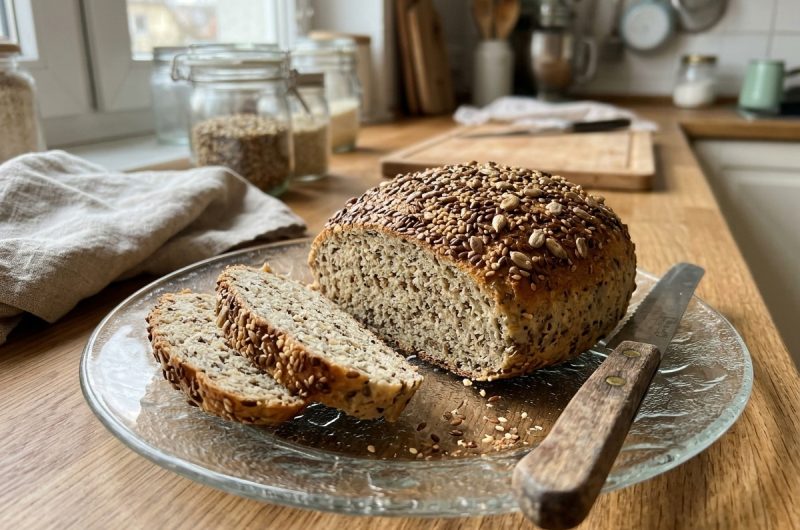
It creates a satisfying loaf with a golden crust, a soft interior, and a naturally nutty flavor that works well for everyday meals.
One of the best things about this low-carb flaxseed bread is that it requires only three main ingredients, along with salt and water. Unlike traditional bread recipes, there is no need for yeast, wheat flour, eggs, milk, or oil.
The dough comes together quickly, making this recipe a convenient option when you want freshly baked bread without spending hours preparing and waiting for it to rise.
This homemade keto bread is also naturally gluten-free, wheat-free, dairy-free, egg-free, and vegan. It is suitable for people following several different eating styles, including low-carb, keto, and plant-based diets. Because flaxseeds contain plenty of dietary fiber, the bread offers a different nutritional profile from ordinary white bread while providing a filling option for breakfast, lunch, or dinner.
What Makes This Low-Carb Flaxseed Bread Special?
There are several reasons why this easy flaxseed bread deserves a place in your homemade bread collection. First, it uses simple pantry ingredients that work together to create a loaf without traditional flour. Ground golden flaxseeds provide the main structure, while psyllium husk powder helps bind the dough and gives it flexibility. Baking powder adds lift, allowing the bread to expand as it cooks.
Another advantage is that the recipe does not require complicated baking techniques. You do not need a stand mixer, bread machine, or special kneading equipment. A grinder, mixing bowl, spoon, and baking sheet are enough to prepare the dough. After combining the ingredients with hot water, you simply shape the mixture and place it in the oven.
The finished bread has a crisp golden exterior and a softer middle. Its mild earthy flavor makes it suitable for both sweet and savory toppings. You can serve it toasted with avocado, spread it with hummus, or use it to prepare sandwiches. It is also a practical choice when you want a homemade bread alternative with very few carbohydrates.
Why Use Golden Flaxseeds for Keto Bread?
Golden flaxseeds are the most important ingredient in this recipe because they replace conventional wheat flour. Once finely ground, they create a flour-like mixture that forms the foundation of the bread. Golden flaxseeds have a mild, slightly nutty flavor that works particularly well in homemade gluten-free baking.
Flaxseeds are also known for their nutritional value. They provide dietary fiber, plant-based protein, and omega-3 fatty acids. These nutrients make them a popular ingredient in many healthy recipes, especially those designed for people looking to include more plant-based foods in their meals.
For this recipe, whole golden flaxseeds are recommended rather than ready-made flaxseed meal. Grinding the seeds immediately before baking helps preserve their natural oils and gives you better control over the texture. The finer the flaxseed powder, the more evenly it can combine with the other ingredients.
Brown flaxseeds can have a stronger flavor, which may affect the overall taste of the bread. For a milder result, golden flaxseeds are the preferred choice. Always check that your seeds smell fresh and have a pleasant nutty aroma before using them.
The Role of Psyllium Husk Powder
Psyllium husk powder is another essential ingredient in this gluten-free keto bread recipe. Traditional bread dough depends on gluten to create elasticity and hold its shape. Since this recipe contains no wheat flour or gluten, psyllium husk helps provide some of the binding properties needed to form a stable loaf.
When psyllium husk powder comes into contact with hot water, it absorbs moisture and develops a gel-like consistency. This helps the flaxseed mixture hold together instead of becoming crumbly. It also makes the dough easier to shape before baking.
Using the correct type of psyllium is important. The recipe calls for psyllium husk powder rather than whole psyllium husks. If you only have whole husks, grind them into a fine powder before measuring. Using whole husks without grinding them may change the texture and affect how the dough holds together.
Psyllium also helps the bread develop a more satisfying interior. It works alongside the ground flaxseeds to create a loaf that can be sliced and used for sandwiches or toast once completely cooled.
Baking Powder and Other Simple Ingredients
Baking powder provides the lift needed to make this yeast-free bread rise during baking. Because the recipe does not contain yeast, there is no need to prepare a starter, proof the dough, or wait for it to double before putting it in the oven.
Salt is included in a small amount to balance the natural flavor of the flaxseeds. Without salt, homemade bread can taste flat, even when it contains flavorful ingredients. The small quantity used here helps bring out the nutty characteristics of the golden flaxseeds.
Hot water brings all the dry ingredients together and creates the correct dough consistency. It is important to use hot water rather than cold water because the psyllium needs sufficient moisture to develop its binding texture. Pour the water over the dry mixture and stir until everything is evenly combined.
These ingredients demonstrate how a few basic pantry staples can produce a useful homemade bread alternative without complicated substitutions or additional flour.
How to Make Keto Flaxseed Bread
Prepare the Oven and Baking Tray
Begin by preheating your oven to 356°F (180°C). A convection oven or an oven with a fan is recommended because it helps distribute heat more evenly throughout the baking process. This can make a difference when preparing flourless bread, which needs consistent heat to cook properly.
Line a baking sheet with parchment paper or a silicone baking mat. This prevents the dough from sticking and makes it easier to transfer the finished loaf. Preparing the baking tray before mixing the dough also saves time because the mixture can be shaped and baked as soon as it is ready.
Grind the Golden Flaxseeds
Place the whole golden flaxseeds into an electric spice grinder, coffee grinder, or small blender. Process them until they become a fine, flour-like powder. Try to avoid leaving large pieces of seeds because unevenly ground flaxseeds can affect the structure of the finished loaf.
A fine texture is especially important for gluten-free bread because there is no wheat gluten to hold everything together. If the mixture contains large pieces, the bread may develop air pockets or weak areas during baking.
Transfer the freshly ground flaxseed meal into a medium or large mixing bowl. If necessary, sift the mixture and grind any larger pieces again. This extra attention helps create a more consistent dough.
Combine the Dry Ingredients
Add the psyllium husk powder, baking powder, and salt to the ground flaxseeds. Stir everything together using a spoon until the dry ingredients are evenly distributed.
Make sure there are no large clumps of psyllium powder remaining in the bowl. Even distribution helps the dough absorb water consistently and improves the texture of the finished bread.
If you are using whole psyllium husks instead of powder, grind them separately after grinding the flaxseeds. Measure the powder only after grinding to maintain the correct proportions for the recipe.
Add Hot Water and Form the Dough
Pour the hot water into the bowl with the dry ingredients. Stir immediately until the mixture begins to thicken and form a dough. The psyllium husk will absorb moisture, while the ground flaxseeds help create a firm and workable consistency.
Allow the mixture to cool slightly before handling it with your hands. Once it is comfortable to touch, gently knead the dough for a few seconds until it comes together. Avoid excessive kneading because working the mixture for too long can affect its final texture.
The dough should be moist enough to hold its shape without becoming overly wet or sticky. Adding too much water can make the loaf difficult to shape and may prevent it from baking properly.
Shape the Flaxseed Bread
Transfer the prepared dough onto the lined baking sheet. Use your hands to shape it into a round disk, keeping the thickness reasonably even so the bread cooks consistently.
Lightly wet the top surface of the dough with a little water. Sprinkle additional whole flaxseeds over the surface if desired. This creates a simple decorative finish and adds a little extra texture to the crust.
You can also shape the dough into smaller rolls or baguette-style portions if you prefer individual servings. However, smaller portions may require a shorter baking time, so check them regularly as they cook.
Bake Until Golden and Firm
Place the baking tray in the preheated oven and bake the bread for approximately 45 to 50 minutes. During baking, the dough should expand and develop a golden brown exterior.
The exact cooking time can vary depending on your oven and the thickness of the loaf. Some ovens may require a little additional time, so look for a firm, well-browned crust rather than relying only on the clock.
Once baked, remove the bread from the oven and carefully transfer it to a wire cooling rack. Allow it to cool completely before slicing. This step is important because the inside needs time to settle and develop a stable texture.
How to Serve Keto Flaxseed Bread
This homemade low-carb bread is versatile enough to enjoy with many different meals. One of the easiest ways to serve it is toasted with avocado. The creamy avocado complements the nutty flavor of the flaxseeds and creates a satisfying breakfast or light lunch.
You can also spread hummus over a slice for a simple savory snack. The slightly crisp crust works well with creamy spreads, making it a convenient option when you want something quick between meals.
For sandwiches, allow the bread to cool completely before cutting it into slices. Add your favorite fillings, such as lettuce, tomatoes, cucumber, cheese, or other suitable ingredients. Its sturdy texture makes it useful for simple open-faced sandwiches as well.
Another delicious serving idea is to enjoy toasted slices alongside soups and stews. The bread can be used for dipping, making it a practical alternative to conventional wheat bread when preparing a low-carb meal.
Tips for Making the Best Keto Flaxseed Bread
Use Fresh Golden Flaxseeds
Freshness makes a noticeable difference in the taste of this bread. Flaxseeds contain natural oils that can become rancid over time, producing an unpleasant bitter flavor. Before grinding, smell the seeds and check that they have a fresh, mild, nutty aroma.
Grind the Seeds Finely
A fine flaxseed powder is important for creating a loaf that holds together properly. If the seeds remain too coarse, the bread may develop large air pockets or separate internally during baking. Grind the seeds thoroughly and sift the powder if needed.
Measure Ingredients Carefully
Accurate measurements help maintain the correct balance between the flaxseeds, psyllium husk powder, and water. For the best results, use the metric measurements provided in the recipe card. Remember that grinding whole flaxseeds increases their volume, so measuring the whole seeds before grinding is important.
Use Hot Water Immediately
The recipe depends on hot water to bring the dough together and activate the moisture-absorbing properties of psyllium husk. Heat the water until hot and pour it over the dry ingredients without unnecessary delay.
Avoid Overworking the Dough
Unlike conventional wheat dough, this mixture does not need extended kneading. Mix the ingredients until combined and gently knead for no more than about 30 seconds. Excessive handling may result in a dense loaf that does not rise as expected.
Allow the Bread to Cool Completely
Resist the temptation to slice the bread immediately after baking. Cooling allows the interior to firm up, making it easier to cut clean slices without crumbling or sticking.
Is Keto Flaxseed Bread Gluten-Free?
Yes, this recipe is naturally gluten-free because it does not contain wheat flour, barley, rye, or other gluten-containing grains. Instead, whole golden flaxseeds provide the flour-like base, while psyllium husk powder helps bind the mixture.
It is also free from dairy, eggs, and yeast, making it suitable for many people who avoid these ingredients. If you need to avoid cross-contamination, check the packaging of your baking powder and psyllium husk to ensure they are produced in a suitable gluten-free environment.
How Many Carbs Are in Each Slice?
According to the supplied recipe information, one slice contains approximately 0.6 grams of net carbohydrates when the loaf is divided into 11 slices. This makes it a particularly low-carb bread option compared with many conventional bread varieties.
Flaxseeds contain dietary fiber, which contributes to their nutritional profile. The combination of fiber and plant-based nutrients makes this bread a useful addition to a carefully planned low-carb meal.
Keep in mind that nutritional values can vary depending on ingredient brands, slice thickness, and serving size. For accurate tracking, use the nutritional information calculated from the exact ingredients and measurements used in your kitchen.
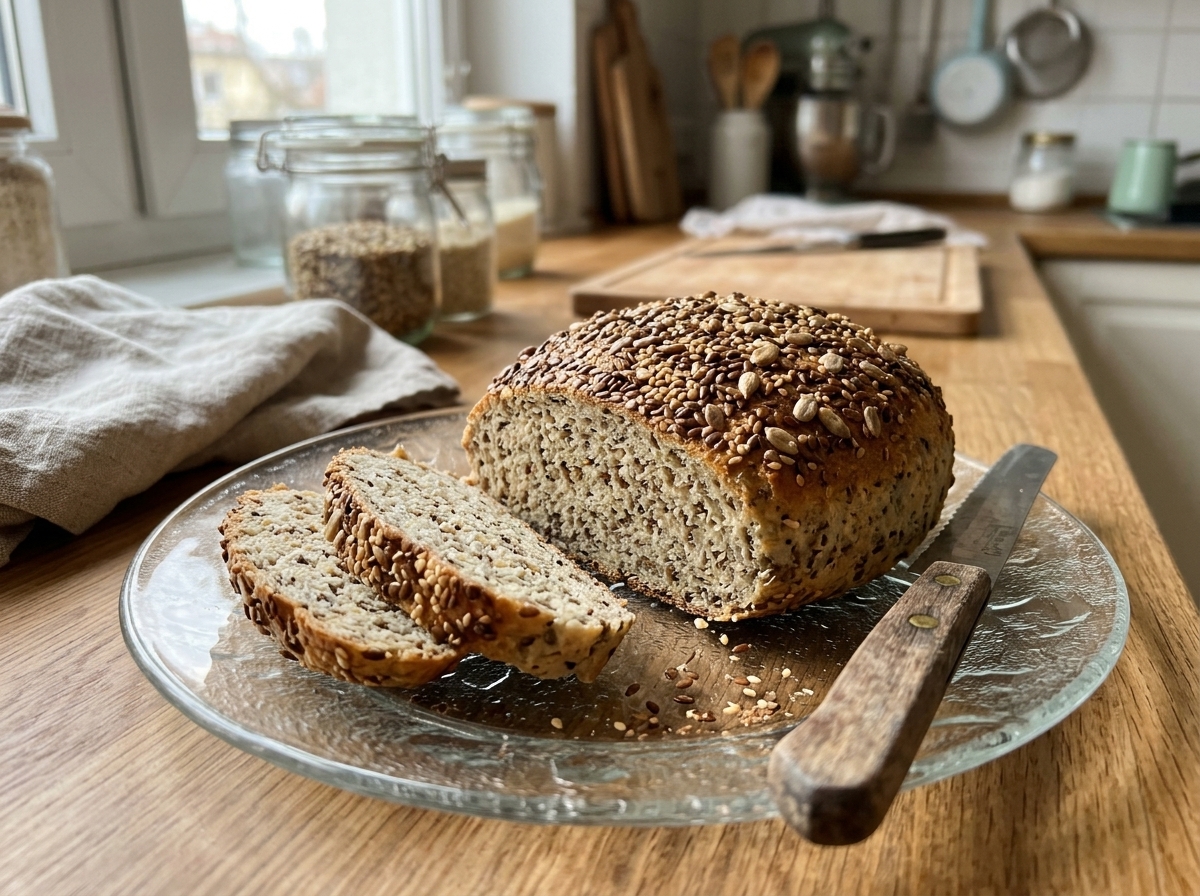
Keto Flaxseed Bread
This easy homemade keto flaxseed bread is made with golden flaxseeds and psyllium husk powder.
11
servings10
minutes50
minutes128
kcal1
hourIngredients
1½ cups (240 g) whole golden flaxseeds
4 tablespoons (40 g) psyllium husk powder
2 teaspoons baking powder
½ teaspoon salt
1⅓ cups (320 ml) hot water
Directions
- Preheat the Oven
Preheat the oven to 356°F (180°C). Line a baking sheet with parchment paper or a silicone baking mat. - Grind the Flaxseeds
Grind the whole golden flaxseeds in a coffee grinder or small blender until they become a fine powder. Transfer to a large mixing bowl. - Mix the Dry Ingredients
Add psyllium husk powder, baking powder, and salt. Stir until all the ingredients are evenly combined. - Prepare the Dough
Pour in the hot water and mix with a spoon. Once cool enough to handle, gently knead for up to 30 seconds until a dough forms. - Shape the Bread
Transfer the dough to the prepared baking sheet and shape it into a round disk. Lightly wet the surface and sprinkle with additional whole flaxseeds if desired. - Bake Until Golden
Bake for approximately 45–50 minutes, or until the bread has expanded and developed a golden brown crust. - Cool and Slice
Transfer the baked bread to a wire rack and allow it to cool completely before slicing and serving.
Notes
- Use freshly ground whole golden flaxseeds instead of store-bought flaxseed meal.
- Grind flaxseeds into a very fine powder for better bread structure.
- If using whole psyllium husks, grind them before measuring.
- Use hot water to achieve the correct dough consistency.
- Avoid kneading the dough for more than 30 seconds.
- A convection oven is recommended for a better texture.
- Allow the bread to cool completely before slicing.
- Store in an airtight container in the refrigerator for up to 7 days.
- Freeze for up to 3 months for longer storage.
Nutrition Facts
- Calories: 128kcal
- Fat: 9g
- Carbohydrates: 0.57g
- Protein: 4g