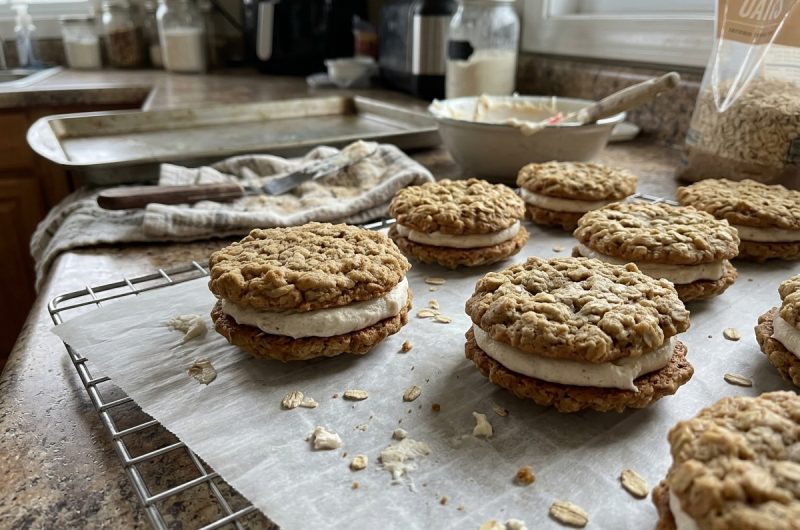
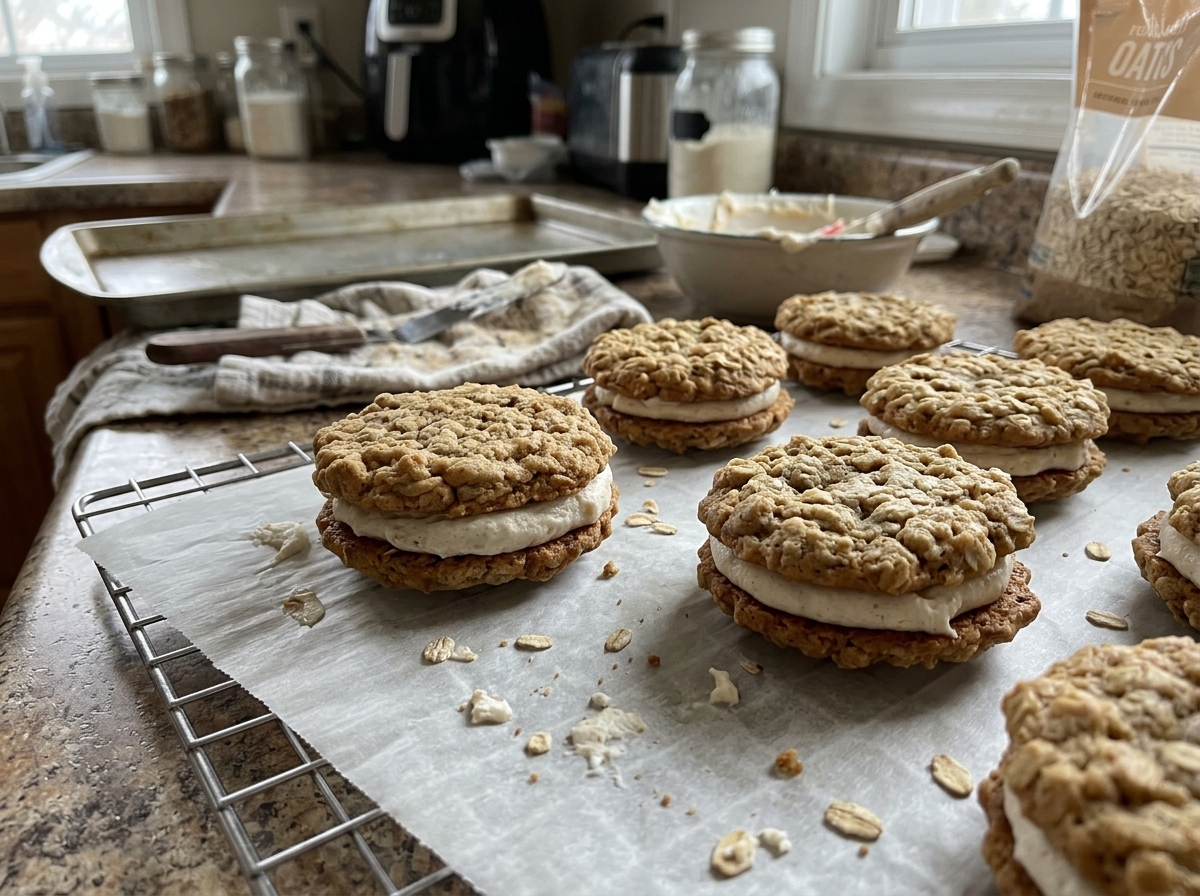
Sourdough oatmeal cream pies are a homemade version of the classic oatmeal sandwich cookies, featuring two soft, chewy oatmeal cookies filled with smooth vanilla buttercream. These cookies combine the comforting flavors of brown sugar, cinnamon, molasses, and toasted butter to create a rich, old-fashioned dessert. Adding sourdough discard brings extra moisture and subtle flavor, making these oatmeal cream pies a delicious way to use leftover starter while baking something special for family and friends.
The secret to making excellent oatmeal cream pies is getting the texture right. The cookies should be thick enough to hold their shape but tender enough to bite through easily. Rolled oats provide a pleasant chew, while brown sugar and molasses contribute sweetness and a deep caramel-like flavor. Brown butter adds a nutty aroma that complements the cinnamon and vanilla frosting. Once the cookies have cooled, a generous layer of buttercream transforms them into satisfying sandwich treats.
These homemade oatmeal cream pies are inspired by the familiar packaged cookies many people remember from childhood, but preparing them from scratch gives you control over their flavor and texture. The recipe uses everyday baking ingredients alongside sourdough discard, so it is a practical option for home bakers who regularly maintain a sourdough starter. Whether you serve them as an afternoon snack, pack them for a gathering, or enjoy one with a cup of coffee, these cookies make a delightful homemade dessert.
What Makes These Oatmeal Cream Pies Special?
Soft and Chewy Oatmeal Cookies
The oatmeal cookies are designed to remain soft rather than becoming crisp or brittle. Rolled oats provide structure and chewiness, while the combination of brown sugar, granulated sugar, and molasses helps create a tender texture. Baking the cookies only until their edges turn lightly golden is particularly important because they continue to set as they cool. Removing them from the oven at the right moment helps prevent the dry, crunchy texture that can make sandwich cookies difficult to enjoy.
Rich Brown Butter Flavor
Brown butter is one of the most distinctive ingredients in this recipe. Heating butter until its milk solids turn golden brown develops a warm, toasted flavor that ordinary melted butter cannot provide. This nutty taste works especially well with oatmeal, cinnamon, and brown sugar, creating cookies that taste more complex than a standard oatmeal biscuit. Using brown butter in the frosting as well gives the filling a matching depth of flavor, allowing the cookies and cream layer to complement each other beautifully.
A Useful Recipe for Sourdough Discard
If you bake sourdough bread regularly, you may have leftover starter that would otherwise be discarded during feeding. Sourdough discard oatmeal cookies offer a practical way to use it in a sweet recipe. The discard contributes moisture and a mild fermented flavor that blends with the other ingredients. You do not need to rely on it to make the cookies rise like bread because baking soda provides the leavening needed for this cookie dough. Active sourdough starter can also be used in place of discard, according to the original recipe.
Homemade Vanilla Buttercream Filling
The filling gives these oatmeal cream pies their classic sandwich-cookie appearance. Powdered sugar creates a smooth, sweet buttercream, while milk helps adjust its consistency. Vanilla extract provides familiar bakery-style flavor, and a small amount of cinnamon connects the frosting to the spiced oatmeal cookies. Preparing the frosting with cooled, solidified brown butter helps it become light and fluffy when whipped. The finished filling should be soft enough to pipe but firm enough to remain between the cookies.
How to Make Brown Butter
Heat the Butter Slowly
Cut the butter into cubes and place it in a saucepan over medium heat. A light-colored saucepan is especially helpful because it makes the changing color of the milk solids easier to see. Stir frequently as the butter melts, foams, and begins to change color. Avoid leaving the pan unattended because the butter can progress from golden brown to burnt quite quickly.
Watch for a Nutty Aroma
As the water evaporates and the milk solids toast, the butter will develop a golden-brown color and a nutty aroma. The original recipe indicates that this process generally takes around five to eight minutes, although the exact time depends on the pan and heat level. Once the solids are golden brown and the foam begins to settle, remove the pan from the heat to prevent further browning.
Divide the Butter for the Cookies and Frosting
The recipe calls for 114 grams of butter in the cookies and another 114 grams in the frosting. Brown the full quantity together, then weigh the finished butter and divide it evenly between the two components. Browning removes some water, so the final weight may be lower than the starting weight. Refrigerate the portion intended for frosting until it becomes solid, while allowing the cookie portion to cool slightly before mixing it with the sugars.
Tips for Perfect Homemade Oatmeal Cream Pies
Avoid Overbaking the Cookies
The most important tip for soft oatmeal cream pies is to remove the cookies from the oven when their edges are lightly golden. The centers may look slightly underdone, but the residual heat will help them finish setting. Baking until the centers appear completely firm can make the cookies too crunchy after cooling. Since oven temperatures and baking sheets vary, begin checking the cookies around the ten-minute mark and adjust the timing only when necessary.
Shape the Cookies While They Are Warm
For oatmeal cream pies that look neat and uniform, you can shape the cookies immediately after removing them from the oven. Place a cup or the rim of a canning jar around a warm cookie and gently rotate it in a circular motion. The movement brings the edges into a round shape while the cookie is still flexible. Work carefully to avoid breaking the delicate edges, and allow the cookies to cool fully before filling them.
Let the Brown Butter Cool Before Mixing
Brown butter contributes excellent flavor, but using it while it is too hot can affect the consistency of the cookie dough. Allow the butter to cool slightly before combining it with the sugars and other ingredients. For the frosting, refrigerate the reserved brown butter until it has solidified. Properly cooled butter is easier to whip into a fluffy filling and helps the finished buttercream hold its shape between the oatmeal cookies.
Chill the Dough for a Longer Fermentation
Although these sourdough oatmeal cream pies do not require chilling, you can refrigerate the prepared dough for a longer fermentation if desired. The original recipe suggests chilling it for at least 12 hours before baking. This option is useful when you want to prepare the dough ahead of time or explore a deeper sourdough flavor. Keep the dough covered in the refrigerator and bake it according to the recipe instructions when ready.
How to Store Oatmeal Cream Pies
Storing at Room Temperature
Store freshly assembled oatmeal cream pies in an airtight container to help keep the cookies from drying out. The original recipe recommends keeping them on the counter for up to two days before transferring them to the refrigerator. Store the container in a cool, dry location away from direct sunlight or heat. Keeping the cookies covered also helps protect the buttercream from picking up odors or becoming exposed to dust and moisture.
Refrigerating the Cream Pies
For storage beyond the recommended room-temperature period, place the oatmeal cream pies in an airtight container in the refrigerator. Separate layers with parchment paper if needed to prevent the cookies from sticking together. When you want to serve them, allow them to sit briefly at room temperature so the cookies and frosting soften slightly. This makes the buttercream easier to bite through and allows the brown butter flavor to become more noticeable.
Freezing for Later
These homemade oatmeal cream pies can be frozen either assembled or as separate cookies. To freeze unfilled cookies, place them in a freezer-safe bag or airtight container for up to three months. For assembled cream pies, wrap each sandwich individually before placing them in a freezer-safe bag. The original recipe recommends freezing assembled pies for up to two months. Label the containers with the date so you can keep track of storage time.
Frequently Asked Questions
Can I Use Active Sourdough Starter Instead of Discard?
Yes. The original recipe allows active sourdough starter as a substitute for sourdough discard. Both can provide moisture and sourdough flavor to the dough. For the best consistency, use the same quantity specified in the recipe and avoid making additional ingredient changes at the same time. Remember that the starter’s hydration can influence the dough, so a starter that is unusually thick or thin may produce a slightly different result.
Do I Have to Make the Buttercream Filling?
The buttercream is what turns these oatmeal cookies into traditional cream pies, but you can enjoy the cookies on their own if you prefer. Without the filling, they make soft sourdough oatmeal cookies that are suitable for a snack or a simple dessert. If you decide to omit the frosting, there is no need to assemble the cookies into sandwiches. Follow the same baking instructions and allow the cookies to cool before serving.
Is Browning the Butter Necessary?
No. Browning the butter is optional, although it gives both the cookies and frosting their distinctive nutty flavor. Regular butter can be used if you want to save time or prefer a milder taste. Keep in mind that the brown butter version has a deeper, toasted flavor that pairs especially well with cinnamon, oats, and molasses. If you choose regular butter, make sure it is prepared in a suitable consistency for the component you are making.
Can I Prepare the Cookie Dough in Advance?
Yes. The dough can be prepared ahead and refrigerated for at least 12 hours for the longer-fermentation option described in the original recipe. Keep it covered so it does not dry out or absorb refrigerator odors. When you are ready to bake, portion the dough and follow the recipe’s baking directions, checking the cookies carefully for doneness. Chilled dough may behave somewhat differently in the oven, so use the lightly golden edges as your main visual guide.
Sourdough Oatmeal Cream Pie Recipe
These sourdough oatmeal cream pies feature soft, chewy oatmeal cookies flavored with brown butter, cinnamon, and molasses.
12
servings30
minutes10
minutes408
kcal40
minutesIngredients
- For the Oatmeal Cookies
114 grams butter (½ cup)
110 grams brown sugar (½ cup)
100 grams granulated sugar (½ cup)
120 grams sourdough discard (½ cup)
1 egg (50 grams)
5 grams vanilla extract (1 teaspoon)
10 grams molasses (½ tablespoon)
1 gram cinnamon (½ teaspoon)
135 grams rolled oats (1½ cups)
210 grams all-purpose flour (1½ cups)
3 grams salt (½ teaspoon)
5 grams baking soda (1 teaspoon)
- For the Brown Butter Frosting
114 grams butter (½ cup)
240 grams powdered sugar (2 cups)
30 grams milk (2 tablespoons)
2 grams vanilla extract (½ teaspoon)
1 gram cinnamon (½ teaspoon)
1 gram salt (¼ teaspoon)
Directions
- Brown the butter:
Cut all the butter into cubes and place it in a saucepan over medium heat. Stir frequently until the butter melts, foams, and develops golden-brown milk solids with a nutty aroma, approximately 5–8 minutes. Weigh the finished butter and divide it equally between the cookie dough and frosting. Refrigerate the frosting portion until solidified. - Preheat the oven:
Heat the oven to 375°F. Line two large baking sheets with parchment paper or silicone baking mats. - Mix the sugars and butter:
Combine the cookie portion of the brown butter with the brown sugar and granulated sugar in a large bowl. - Add the wet ingredients:
Mix in the sourdough discard, egg, vanilla extract, and molasses until evenly incorporated. - Combine the dry ingredients:
In a separate bowl, stir together the cinnamon, rolled oats, all-purpose flour, salt, and baking soda. Add this mixture to the wet ingredients and stir until combined. - Shape the cookies:
Use a two-tablespoon scoop to portion the dough into evenly sized balls. Arrange 12 portions on each prepared baking sheet, leaving space between them. Gently flatten each ball with your palm. - Bake:
Bake for 5 minutes, then switch the baking sheets between oven racks. Bake for another 5 minutes, or until the edges are lightly golden. Avoid overbaking to maintain a soft, chewy texture. - Cool:
Leave the cookies on the baking sheets for a couple of minutes, then transfer them to a wire rack. Allow them to cool completely before adding frosting. - Prepare the frosting:
Combine the solidified brown butter, powdered sugar, milk, vanilla extract, cinnamon, and salt in a mixing bowl. Whip until the frosting becomes light and fluffy. - Assemble the cream pies:
Transfer the frosting to a piping bag or a zip-top bag with the corner cut off. Pipe frosting onto the flat side of one cooled cookie, then place another cookie on top to form a sandwich. Repeat with the remaining cookies and filling.
Notes
- For round cookies, gently rotate a cup or the rim of a canning jar around each cookie immediately after baking.
- Do not overbake; the cookies will continue to set as they cool.
- Cool the cookies completely before adding the frosting.
- For longer fermentation, cover the dough and refrigerate it for at least 12 hours before baking.
- Store in an airtight container at room temperature for up to 2 days, then refrigerate.
- Freeze unfilled cookies for up to 3 months or assembled cream pies for up to 2 months.
Nutrition Facts
- Calories: 408kcal
- Fat: 17g
- Carbohydrates: 61g
- Fiber: 2g
- Sugar: 38g
- Protein: 4g