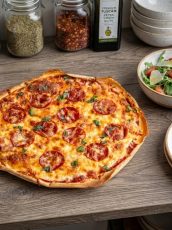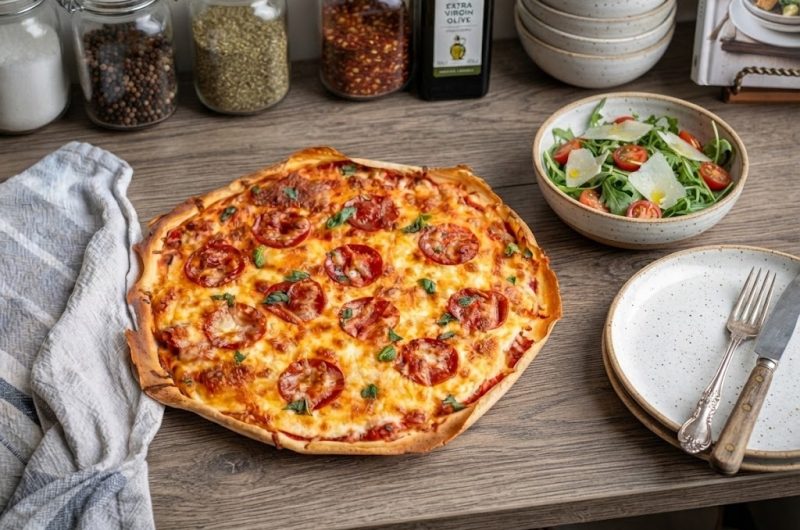
If you are looking for an easy homemade pizza crust that does not require kneading, yeast, or a long rising time, this sourdough discard pizza crust is a wonderfully simple option. Made with just sourdough discard, olive oil, Italian seasoning, and salt, this thin crust comes together quickly and develops a crisp, lightly browned texture when baked on a properly preheated cast iron skillet or pizza stone.
It is especially useful when you have extra sourdough starter that needs to be used instead of thrown away.
Unlike traditional sourdough pizza dough, this recipe does not require hours of fermentation or advance preparation. There is no need to mix flour and water, knead the dough, wait for it to rise, or shape a stretchy ball of dough. Instead, sourdough starter is spread directly onto a scorching-hot baking surface, where it begins cooking immediately. The result is a thin and crispy sourdough pizza crust that can be finished with your favorite sauce, cheese, vegetables, herbs, or cooked meats.
Why This Sourdough Discard Pizza Crust Works
The simplicity of this recipe is one of its biggest advantages. Traditional homemade pizza dough can be delicious, but it usually requires several ingredients and some planning. This sourdough discard version takes a completely different approach. The starter itself provides the main structure for the crust, while olive oil helps with browning and adds richness. A small amount of salt and Italian seasoning gives the otherwise simple crust a savory flavor that works beautifully with classic pizza toppings.
The most important part of the method is using a very hot cast iron skillet or pizza stone. Preheating the baking surface creates the immediate heat needed to cook the thin layer of sourdough starter and helps the bottom become crisp rather than soft. Once the starter touches the hot surface, it begins to bake right away. This is exactly what you want, so there is no need to worry if you hear sizzling or notice the edges beginning to set immediately.
A Practical Way to Use Sourdough Discard
If you regularly maintain a sourdough starter, you probably know that discard can accumulate quickly. Instead of throwing it away, recipes such as this one provide an easy way to turn leftover starter into something useful and delicious. Sourdough discard pizza crust is particularly convenient because it does not require the discard to be at a specific stage of fermentation.
You can use unfed discard or active sourdough starter for this recipe. Cold starter taken directly from the refrigerator can also work, which makes this a convenient option for busy days. Having a container of discard available means you can prepare a quick pizza-style meal without beginning a traditional dough recipe several hours ahead.
What You Need for the Crust
The ingredient list is intentionally short. Sourdough discard forms the foundation of the crust, while olive oil is divided between the baking surface and the top of the starter. Salt adds essential seasoning, and Italian seasoning contributes familiar pizza-shop flavors without requiring a long list of dried herbs.
Because there are so few ingredients, their condition can make a noticeable difference. Use sourdough discard with a pleasant fermented aroma and a consistency that can be spread across the hot baking surface. If your starter is unusually thick, spreading it carefully may take a little more effort. The exact quantity of starter may also need to vary depending on the size of your skillet or pizza stone.
Choosing the Right Baking Surface
A cast iron skillet or pizza stone is essential for this particular technique. The baking surface needs to become extremely hot before the starter is added. A regular cool baking pan does not provide the same immediate heat, and the starter may stick or remain softer than intended.
A 12-inch cast iron skillet works well with the quantities provided in the recipe card. If you use a different size baking surface, you may need to adjust the amount of sourdough discard so that it spreads into a thin, even layer. A thinner layer generally produces a crispier crust, while a thicker layer will remain softer and more substantial in the center.
How to Make Sourdough Discard Pizza Crust
Begin by preheating your oven with the cast iron skillet or pizza stone inside. The goal is to have the baking surface thoroughly heated before the sourdough starter touches it. This step should not be rushed because the intense initial heat is one of the main reasons this quick pizza crust develops a crisp bottom.
Once the oven and baking surface are hot, carefully remove the skillet or stone. Add approximately one teaspoon of olive oil and spread it over the surface as needed. Then spoon the sourdough discard onto the hot baking surface. Work carefully because the pan will be extremely hot.
Spread the starter into a thin layer, keeping the desired pizza shape in mind. It does not need to look perfectly round or perfectly uniform. The starter will begin cooking as soon as it contacts the hot surface, so work reasonably quickly while spreading it. Once the crust has been formed, drizzle the remaining olive oil over the surface and sprinkle it with salt and Italian seasoning.
Return the crust to the oven and bake until it becomes crisp and releases easily from the baking surface. This first bake takes approximately 10 minutes, although the exact time can vary depending on the thickness of the crust and your oven. Look for a browned, set surface and edges that can be lifted without the crust tearing apart.
Adding Pizza Sauce and Toppings
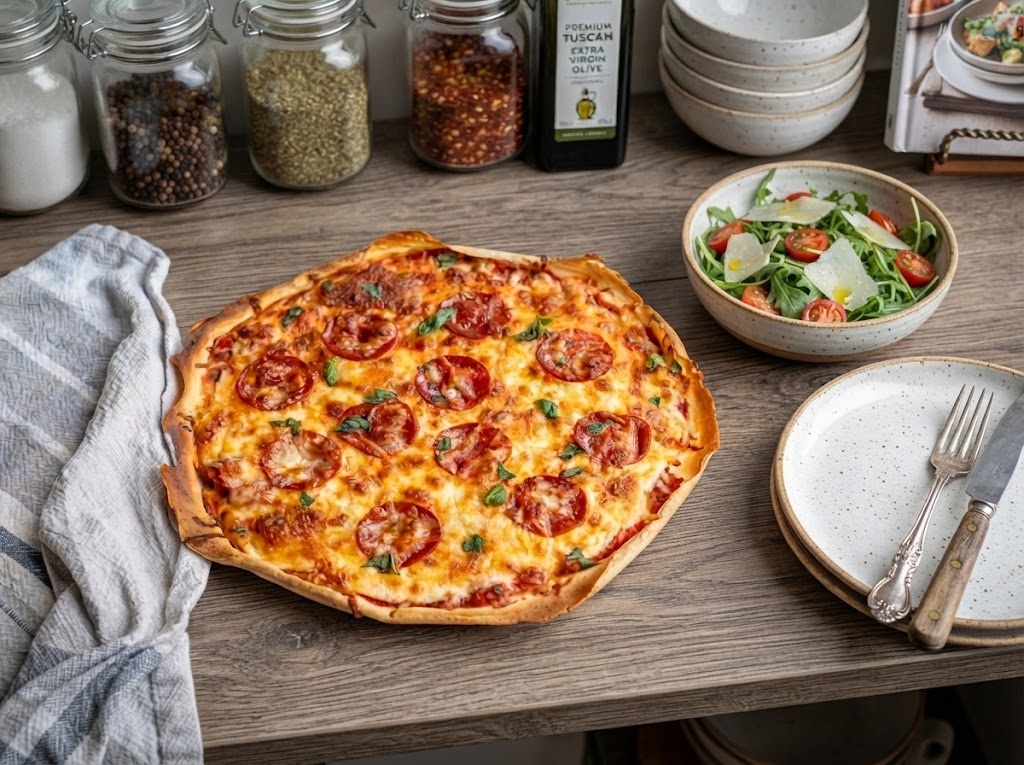
After the first bake, transfer the crust from the skillet to a baking sheet if you are using a cast iron skillet. At this point, you can add your preferred pizza toppings. Classic choices include pizza sauce, mozzarella cheese, thinly sliced tomatoes, fresh basil, pepperoni, sautéed vegetables, or cooked meat.
There is one important consideration when adding toppings. A very wet sauce can soften this thin sourdough crust, even after the initial baking stage has produced a nicely browned surface. For that reason, use sauce moderately and avoid soaking the crust. A lighter layer of sauce allows the crust to retain more of its crisp texture while still providing plenty of flavor.
After adding the toppings, return the pizza to the oven and bake for another 8 to 10 minutes. The pizza is ready when the cheese is melted and bubbly and the toppings are heated through. If you prefer a more deeply browned cheese topping, you can watch the pizza closely during the final minutes and remove it when it reaches the level of browning you prefer.
Easy Topping Ideas
One of the best things about this sourdough discard pizza crust is its flexibility. You can keep the toppings simple with cheese and fresh herbs, or create a more substantial meal with vegetables and cooked meat. Thinly sliced tomatoes pair naturally with the Italian seasoning in the crust, while fresh basil adds a bright finish.
Pepperoni is another classic choice, especially when you want a familiar homemade pizza flavor. For a vegetable version, try preparing your vegetables while the crust is undergoing its first bake. Mushrooms, peppers, onions, and other vegetables can be cooked separately before being added to the pizza. This keeps the final baking stage short and helps prevent excess moisture from making the crust soggy.
Tips for a Crisp Sourdough Pizza Base
The first and most important tip is to preheat the baking surface thoroughly. A scorching-hot cast iron skillet or pizza stone gives the starter an immediate burst of heat and helps establish the crisp bottom that makes this recipe work. If the baking surface is not hot enough, the crust may take longer to set and can be more difficult to remove.
Another useful tip is to spread the starter relatively thinly. The thickness of the crust has a direct effect on its final texture. A thin layer will generally become crisp around the edges and underneath, while a thicker layer will produce a softer, chewier center. Adjust the amount according to the size of your baking surface and the texture you prefer.
It is also helpful to prepare your toppings before the crust is ready for its second bake. Since the first baking stage takes only about 10 minutes, having vegetables chopped and meats cooked beforehand allows you to assemble the pizza immediately. This makes the recipe especially practical for a quick lunch or dinner.
How to Prevent a Soft Crust
The biggest challenge with this style of pizza is moisture. Because sourdough starter creates a delicate thin crust, adding a large amount of watery sauce can make it softer than expected. Even if the crust is already browned and crisp after its first bake, too much sauce can reduce that crisp texture during the final bake.
Use a moderate amount of sauce and choose toppings that have been properly drained or cooked when necessary. Fresh vegetables with high water content can release moisture while baking, so slicing them thinly and avoiding excessive quantities can help. If you sauté vegetables first, allow excess moisture to cook away before putting them on the pizza.
Can You Use Active Sourdough Starter?
Yes. This recipe can be prepared with either active sourdough starter or unfed sourdough discard. The method does not depend on the starter rising in the traditional way because the starter is spread directly onto the hot baking surface rather than being shaped into a conventional fermented dough.
For convenience, many home bakers can simply use discard from the refrigerator. This makes the recipe particularly useful when you need a fast meal and do not have time to prepare traditional sourdough pizza dough. There is no need to wait for the starter to become bubbly before beginning.
Sourdough Discard Pizza for Busy Days
Traditional sourdough pizza is rewarding, but it requires planning. You may need to feed the starter, prepare the dough, allow it to ferment, and then shape it before baking. This quick sourdough discard crust removes much of that preparation. From start to finish, the listed cooking schedule takes about 22 minutes, making it suitable for a simple meal when time is limited.
The recipe is also easy to customize for different preferences. One person can enjoy a cheese pizza, another can choose pepperoni, and someone else can load their crust with vegetables. Because the crust itself is so simple, the toppings can completely change the finished meal without requiring a different base recipe.
Frequently Asked Questions
Can I use sourdough discard straight from the refrigerator?
Yes. Unfed sourdough discard can be used, and refrigerated starter is convenient for this recipe. It does not need to be freshly fed or actively bubbling because the recipe does not depend on a traditional rise.
Can I make this crust without a cast iron skillet?
This particular method is designed for a cast iron skillet or pizza stone because the hot surface is important for developing the crust. Using a regular cool baking pan may produce different results and can increase the chance of sticking or a softer base.
Why did my sourdough pizza crust become soft?
Excess moisture is a common reason. Too much pizza sauce or watery toppings can soften the thin crust. Use sauce sparingly, drain wet toppings when appropriate, and cook vegetables before adding them if they release significant moisture.
How thin should the crust be?
The starter should be spread into a thin, even layer across the hot baking surface. The exact thickness is flexible, but thinner layers generally become crispier. Avoid making the layer excessively thick because the center may remain soft while the edges brown.
Can I add toppings after the first bake?
Yes. The crust is partially baked first and then topped before returning to the oven. This two-stage method helps the base become crisp before the sauce, cheese, and other toppings are added.
Sourdough Discard Skillet Pizza
A quick and simple sourdough discard pizza crust made with sourdough starter, olive oil, Italian seasoning, and salt.
8
servings2
minutes20
minutes51
kcal22
minutesIngredients
2 teaspoons olive oil, 9 grams, divided into two portions
1 ½ cups sourdough discard, 375 grams
A pinch of Italian seasoning
A pinch of salt
Directions
- Preheat a pizza stone or cast iron skillet in the oven to 425°F (220°C).
- Once the oven and baking surface are thoroughly hot, carefully remove the baking vessel from the oven.
- Drizzle approximately 1 teaspoon of olive oil over the hot cast iron skillet or pizza stone.
- Spoon the sourdough starter onto the hot, oiled surface.
- Carefully spread the starter into a thin, even layer, shaping it according to the size of your baking surface.
- Drizzle the remaining 1 teaspoon olive oil over the top of the sourdough crust.
- Sprinkle the surface with a pinch of salt and Italian seasoning.
- Return the crust to the oven and bake for approximately 10 minutes, or until the crust is crisp and releases easily from the baking surface.
- If using a cast iron skillet, carefully remove the crust and transfer it to a baking sheet.
- Add your preferred pizza sauce and toppings.
- Return the topped pizza to the oven and bake for another 8–10 minutes, or until the cheese is melted and bubbly.
- Remove from the oven, slice, and serve hot.
Notes
- The amount of sourdough discard needed depends on the size of your skillet or pizza stone. The quantities listed here are based on a 12-inch cast iron skillet.
- Both unfed sourdough discard and active, bubbly starter can be used.
- Refrigerated sourdough starter can be used directly for convenience.
- Italian seasoning is optional, but it adds a classic savory pizza flavor.
- A properly preheated cast iron skillet or pizza stone is essential for achieving a crisp crust.
- Avoid using too much pizza sauce because excess moisture can soften the thin crust.
Nutrition Facts
- Total number of serves: 1
- Calories: 51kcal
- Fat: 1g
- Carbohydrates: 9g
- Fiber: 1g
- Protein: 1g