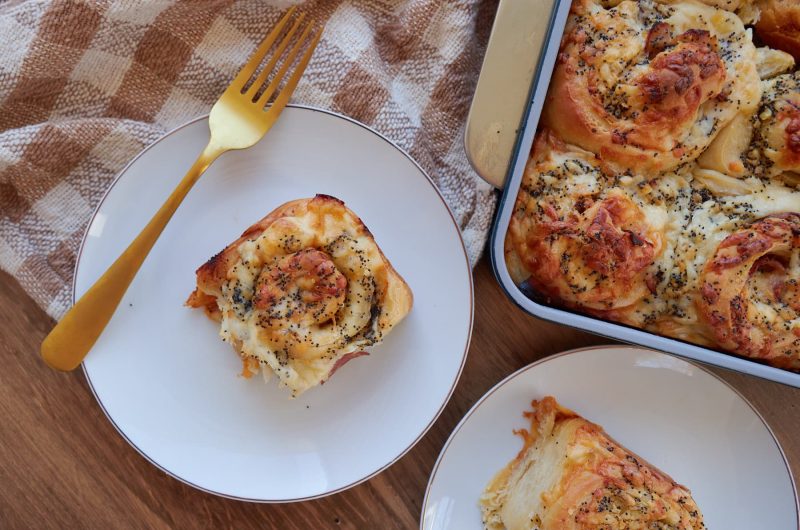
Sourdough Ham and Cheese Rolls are a delicious savory baking recipe made with soft homemade sourdough dough, sliced ham, shredded Gruyère cheese, Dijon mustard, and a buttery Worcestershire topping. The rolls bake into a golden, tender bread with melted cheese tucked throughout every spiral and a flavorful finish over the top. They are ideal when you want something more substantial than ordinary dinner rolls but easier to serve than a full loaf of stuffed bread. The dough uses an active sourdough starter along with milk, butter, egg, sugar, salt, and all-purpose flour, creating a soft texture that works especially well with the rich filling. With twelve rolls in a 9 x 13-inch pan, this recipe is suitable for family meals, brunches, parties, holidays, and casual gatherings. The original recipe lists a 30-minute preparation time, 40-minute baking time, about 7 hours of rising time, and 12 finished rolls.
Why These Sourdough Ham and Cheese Rolls Work So Well
The appeal of these homemade ham and cheese rolls comes from the combination of a soft sourdough base and a savory, cheesy center. Instead of relying on a plain bread dough, the recipe uses milk, melted butter, egg, and sugar to create a richer dough with a tender texture. The sourdough starter provides the fermentation needed for the dough to rise, while the filling adds plenty of savory flavor. Ham provides a salty, meaty layer, and Gruyère melts into the dough as the rolls bake. Dijon mustard brings a sharp note that helps balance the richness of the butter, ham, and cheese. The topping adds another layer of flavor through Worcestershire sauce, poppy seeds, Dijon mustard, onion powder, and melted butter. Because the finished rolls are baked together in a 9 x 13-inch pan, the sides remain soft while the exposed tops become beautifully golden.
How to Prepare the Sourdough Starter
The first important step is making sure the sourdough starter is active enough to raise the dough. About four hours before preparing the rolls, the supplied recipe calls for feeding the starter using a 1:1:1 ratio. This means combining 70 grams of sourdough starter with 70 grams of all-purpose or bread flour and 70 grams of water. The mixture should be covered and left at around 80°F until it becomes bubbly and doubles in size. If your starter is already active and ready to bake with, this feeding step can be skipped. For an overnight schedule, the recipe provides another option: feed the starter 10–12 hours ahead using a 1:5:5 ratio of 20 grams starter, 100 grams flour, and 100 grams water. The overnight starter should remain around 70–72°F until bubbly and doubled. This preparation is important because the strength of the starter directly affects how successfully the dough rises.
Making the Soft Sourdough Roll Dough
Once the starter is active, the dough comes together with a straightforward mixture of milk, melted butter, egg, sugar, salt, active sourdough starter, and all-purpose flour. For the regular same-day method, the milk is warmed to 100°F before it is added. If using the overnight timeline, the milk should instead be warmed only to room temperature. The ingredients can be mixed in a stand mixer fitted with a dough hook or by hand in a large mixing bowl. When using a stand mixer, the dough is mixed on low speed for approximately three to five minutes until it pulls away from the bowl and becomes a smooth, soft ball. For a hands-on method, mix with a Danish dough whisk or your hands until the dough comes together, then transfer it to a lightly floured work surface and knead for about five minutes. The goal is a soft, smooth dough. If it remains excessively sticky, the original instructions allow a small amount of extra flour to be added until the dough becomes manageable.
The First Rise: Same-Day or Overnight Sourdough Method
After mixing, the dough needs its first fermentation, which is one of the most important stages of this sourdough recipe. Transfer the dough to a medium bowl or a 2-quart straight-edge container, cover it, and allow it to rise until doubled in size. For a same-day schedule, the recipe recommends keeping the dough at approximately 80°F for four to five hours. This warmer environment encourages the dough to ferment and expand within a shorter period. An overnight method is also provided for people who prefer to prepare the dough in the evening and continue the recipe the following day. For this option, cover the dough and let it rise for approximately eight to twelve hours at an ideal temperature of 68–72°F. Rather than focusing only on the clock, watch the dough itself. The supplied instructions use doubling in size as the key indicator that the first rise is complete. A properly fermented dough should be noticeably larger and ready to roll out for the filling stage.
Rolling Out the Dough for the Ham and Cheese Filling
Once the dough has doubled, gently punch it down and transfer it to a lightly floured work surface. Use a rolling pin to shape it into a large rectangle measuring approximately 11 x 18 inches. Keeping the dough in a broad rectangle makes it easier to distribute the filling evenly and create twelve similar rolls. Spread 113 grams of softened butter over the entire surface, followed by 15 grams of Dijon mustard. Try to cover the dough evenly so the flavor is present throughout the finished rolls. The butter contributes richness and helps create a tender interior, while Dijon mustard adds a savory sharpness that works particularly well with ham and Gruyère. At this stage, the dough should remain easy to handle without becoming overly thin. A reasonably even rectangle also makes the next cutting and rolling stage much simpler. Once the butter and mustard are distributed, the dough is ready for its generous layer of ham and cheese.
Adding Ham and Gruyère Cheese
The filling is what turns this fermented bread dough into hearty sourdough ham and cheese rolls. Arrange approximately 226 grams of ham over the mustard-coated dough, positioning the slices so they slightly overlap rather than leaving large empty spaces. The overlapping arrangement helps create a consistent ham layer inside each roll. Once the ham is in place, sprinkle 400 grams of shredded Gruyère cheese evenly over the top. Gruyère is especially suitable here because it melts into a smooth, rich layer as the rolls bake. The combination of salty ham, creamy melted cheese, buttery dough, and Dijon mustard gives every spiral a strong savory character. Distributing the filling as evenly as possible is useful because the dough will be divided into twelve strips. When each strip contains a balanced amount of ham and cheese, the finished rolls are more consistent in size, texture, and flavor from the first roll to the last.
Cutting and Shaping the Twelve Rolls
After the filling has been added, the rectangle is divided into twelve strips along the long side. The supplied instructions recommend using a pizza cutter to make twelve strips, each approximately 1.5 inches wide. Cutting with a pizza cutter allows the dough to separate cleanly without pulling too much on the soft filling. Once the strips have been cut, roll each one up individually. The result should resemble a savory spiral roll, with layers of dough, ham, and Gruyère tucked inside. Place the shaped rolls into a greased 9 x 13-inch pan. Arranging them together gives the rolls support as they rise and bake. They will expand during the second rise and should eventually become puffy enough to fill the pan. Try to position the rolls neatly so there is enough room for them to grow without overcrowding them during shaping.
The Second Rise for Light and Fluffy Rolls
The second rise gives the shaped sourdough ham and cheese rolls their final lift before baking. Cover the pan and place it somewhere warm, allowing the rolls to rise for an additional one to three hours. The key visual sign is that the rolls should become puffy and fill the pan. Because sourdough fermentation can vary according to starter strength and room temperature, the appearance of the dough is more useful than simply relying on a fixed number of minutes. A warm environment helps the rolls rise more efficiently, while cooler conditions can lengthen the process. The supplied notes recommend a warm range of 68–72°F for an overnight rise and approximately 80°F for a same-day rise. If the room is too cool, the source suggests using a bread mat or proofing box to maintain warmth. Most importantly, the starter should be strong and doubled before preparing the dough, because a weak starter may not provide enough rise.
Making the Savory Butter Topping
While the shaped rolls are completing their second rise, prepare the simple savory topping. Combine 5 grams of Worcestershire sauce, 9 grams of poppy seeds, 15 grams of Dijon mustard, 2 grams of onion powder, and 57 grams of melted butter in a small bowl. Stir until the ingredients are well combined and the mixture is evenly blended. This topping is a useful finishing element because it adds flavor directly to the surface of the rolls rather than leaving the cheese and ham to provide all of the seasoning. Worcestershire sauce contributes a deep savory note, Dijon mustard adds brightness, poppy seeds provide texture, and onion powder rounds out the mixture. Melted butter brings everything together and helps the topping spread over the rolls. Once the mixture is ready, spoon it over each roll before baking. This ensures that the buttery sauce reaches the tops and settles into the crevices of the dough.
Baking the Sourdough Ham and Cheese Rolls
When the rolls have finished their second rise and the topping has been added, preheat the oven to 350°F. Bake the rolls for approximately 40 minutes, or until their internal temperature reaches 190°F. The combination of the hot oven and enriched sourdough dough allows the bread to cook through while the Gruyère melts inside the spirals. During baking, the rolls should develop a golden surface while remaining soft and tender within. Checking the internal temperature provides a more reliable indication of doneness than judging color alone, particularly because the topping can influence the appearance of the surface. Once the rolls reach 190°F internally, remove them from the oven and allow them to settle before serving. The finished result is a pan of warm, savory rolls with a soft bread texture, melted cheese, flavorful ham, and a buttery mustard topping.
How to Make These Rolls Ahead of Time
These sourdough ham and cheese rolls can be prepared ahead when you want fresh-baked rolls without completing every stage immediately before serving. According to the supplied notes, one option is to let the rolls finish their second rise, cover them, and place them in the refrigerator until you are ready to bake. This method is recommended for only a few hours. For a longer refrigeration period, allow the shaped rolls to complete approximately 80% of their second rise before covering and refrigerating them for up to 12 hours. When you are ready to bake, remove the pan from the refrigerator and allow the rolls to come back toward room temperature before baking as directed. This approach can be particularly convenient when planning a meal around a busy schedule. The important point is to account for the additional time needed for the chilled dough to warm before it goes into the oven.
Storage and Reheating Notes
Leftover Sourdough Ham and Cheese Rolls can be stored in an airtight container or covered with plastic wrap and refrigerated for up to five days. This makes the recipe practical for preparing a larger batch when you want savory bread available for several meals. When reheating, the supplied instructions recommend placing the rolls in a 350°F oven and heating them until the cheese becomes melty and the rolls are warmed through. Oven reheating is especially useful for this recipe because it helps restore the soft bread texture while warming the cheese and filling. Keeping the rolls covered during storage helps protect them from drying out in the refrigerator. If you are preparing them for a gathering, the make-ahead instructions provide another useful option by allowing the shaped rolls to be refrigerated before baking. Together, the storage and make-ahead methods make these rolls suitable for both planned occasions and everyday leftovers.
Notes for Better Sourdough Ham and Cheese Rolls
For the best result, pay attention to fermentation temperature and starter activity rather than treating the rise times as completely fixed. A strong, bubbly starter that has doubled in size is essential because the dough depends on it for fermentation and lift. The recipe gives two main fermentation approaches: a warmer same-day method and a cooler overnight method. If the kitchen is not warm enough, maintaining a suitable dough temperature can help the fermentation stay on track. During shaping, spread the butter and Dijon mustard evenly before adding the ham and Gruyère so the filling is distributed throughout the twelve rolls. When cutting the dough, aim for twelve similar strips so the rolls bake at roughly the same rate. Finally, use the internal temperature of 190°F as the final baking guide. These details help create rolls that are soft, flavorful, evenly filled, and properly baked from the center outward.
What to Serve with Ham and Cheese Sourdough Rolls
These savory sourdough rolls are flexible enough to serve in several ways. Their combination of bread, ham, and melted Gruyère makes them substantial enough for breakfast, brunch, lunch, or a casual dinner. They can be placed on a serving platter as a warm side dish alongside soups, salads, roasted vegetables, or other main dishes. They can also work as a satisfying addition to a holiday spread where guests can take individual rolls directly from the pan. Because each roll contains a generous filling of ham and cheese, they do not require complicated accompaniments. A simple meal can be built around them with a fresh salad or warm soup. Their soft texture and savory topping also make them suitable for sharing at gatherings. The twelve-roll yield makes the recipe especially convenient when several people need to be served from one baking pan.
Nutrition Information
The supplied recipe provides nutritional information calculated per one roll. Each serving is listed as containing 574 calories, 51 grams of carbohydrates, 22 grams of protein, and 31 grams of fat. It also lists 18 grams of saturated fat, 2 grams of polyunsaturated fat, 9 grams of monounsaturated fat, and 1 gram of trans fat. The recipe gives 106 milligrams of cholesterol and 925 milligrams of sodium per roll, along with 201 milligrams of potassium and 2 grams of fiber. Sugar is listed at 6 grams, while vitamin A is 851 IU, vitamin C is 0.1 milligrams, calcium is 396 milligrams, and iron is 3 milligrams. These figures are supplied with the original recipe and are automatically calculated, so they should be treated as an approximation rather than a laboratory measurement. Nutritional values can vary depending on the exact ingredients and brands used.
Sourdough Ham and Cheese Rolls
Description:
Soft and fluffy sourdough rolls filled with ham and shredded Gruyère cheese, layered with butter and Dijon mustard, then finished with a savory Worcestershire, poppy seed, mustard, onion powder, and melted butter topping. The rolls are baked together in a 9 x 13-inch pan until golden and cooked through.
Preparation & Cooking Duration:
Preparation: 30 minutes
Cooking: 40 minutes
Rise Time: 7 hours
Total Time: 8 hours 10 minutes
Serving:
12 rolls
Ingredients
Feed Sourdough Starter
- 70 grams sourdough starter, ¼ cup
- 70 grams all-purpose or bread flour, ½ cup
- 70 grams water, ¼ cup
Dough
- 310 grams milk, warmed to 100℉, 1¼ cup
- 57 grams butter, melted, ¼ cup
- 1 large egg, 50 grams
- 50 grams sugar, ¼ cup
- 10 grams salt, 2 teaspoons
- 200 grams active sourdough starter, scant 1 cup
- 650 grams all-purpose flour, 4⅔ cup
Filling
- 113 grams butter, ½ cup
- 15 grams dijon mustard, 1 Tablespoon
- 226 grams ham, about 16 slices (8 oz)
- 400 grams Gruyere cheese, shredded, about 4 cups
Topping
- 5 grams worcestershire sauce, 1 teaspoon
- 9 grams poppy seeds, 1 Tablespoon
- 15 grams dijon mustard, 1 Tablespoon
- 2 grams onion powder, 1 teaspoon
- 57 grams butter, melted, 4 Tablespoons
Step-by-Step Instructions
1. Activate the sourdough starter:
About 4 hours before making the rolls, feed the sourdough starter using 70 grams sourdough starter, 70 grams all-purpose or bread flour, and 70 grams water. Cover and leave it at 80°F until bubbly and doubled in size. If the starter is already active and ready to bake with, skip this step.
2. Use the overnight starter option if needed:
For an overnight schedule, feed the starter 10–12 hours in advance using a 1:5:5 ratio: 20 grams starter, 100 grams flour, and 100 grams water. Leave it at 70–72°F until bubbly and doubled.
3. Mix the dough:
Place the milk, melted butter, egg, sugar, salt, active sourdough starter, and all-purpose flour into a stand mixer bowl or large mixing bowl. For an overnight dough schedule, warm the milk only to room temperature instead of 100°F.
4. Knead the dough:
Using a stand mixer and dough hook, mix on low speed for 3–5 minutes until the dough pulls away from the bowl and forms a smooth, soft ball. For hand mixing, use a Danish dough whisk or your hands, then knead on a lightly floured surface for about 5 minutes. If the dough is too sticky, add a little extra flour until it comes together.
5. Complete the first rise:
Place the dough in a medium bowl or 2-quart straight-edge container. Cover and let it rise at 80°F for 4–5 hours for the same-day method, or let it rise overnight at 68–72°F for 8–12 hours. The dough should double in size.
6. Roll out the dough:
Punch down the risen dough and roll it into an approximately 11 x 18-inch rectangle on a lightly floured surface. Spread the softened butter and Dijon mustard evenly over the dough.
7. Add the ham and cheese:
Arrange the ham over the dough, slightly overlapping the slices. Sprinkle the shredded Gruyère cheese evenly over the ham.
8. Cut and shape the rolls:
Using a pizza cutter, cut the dough along the long side into twelve strips, approximately 1.5 inches wide. Roll each strip into a spiral and place the rolls in a greased 9 x 13-inch pan.
9. Let the shaped rolls rise:
Cover the pan and place it in a warm location. Allow the rolls to rise for 1–3 hours, until they become puffy and fill the pan.
10. Prepare the topping:
In a small bowl, combine the Worcestershire sauce, poppy seeds, Dijon mustard, onion powder, and melted butter. Mix well, then spoon the topping over each roll.
11. Bake:
Preheat the oven to 350°F. Bake the rolls for approximately 40 minutes, or until their internal temperature reaches 190°F.
12. Serve and store:
Serve the rolls warm. For storage, place them in an airtight container or cover them with plastic wrap and refrigerate for up to 5 days. Reheat in a 350°F oven until warmed through and the cheese is melty.
Notes
- Make sure the sourdough starter is strong, bubbly, and doubled in size before using it.
- For an overnight rise, keep the dough ideally between 68–72°F.
- For the same-day rise, the recipe recommends approximately 80°F.
- If the room is too cool, a bread mat or proofing box can be used to help maintain a suitable temperature.
- For make-ahead preparation, the shaped rolls can be refrigerated after the second rise for a few hours.
- For a longer refrigerated period, allow the rolls to complete about 80% of their second rise before refrigerating for up to 12 hours. Bring them toward room temperature before baking.
- For storage, refrigerate baked rolls in an airtight container or covered with plastic wrap for up to 5 days.
- Reheat refrigerated rolls at 350°F until the cheese is melty and the rolls are warmed through.
Nutritional Information
Per 1 roll:
- Calories: 574 kcal
- Carbohydrates: 51 g
- Protein: 22 g
- Fat: 31 g
- Saturated Fat: 18 g
- Polyunsaturated Fat: 2 g
- Monounsaturated Fat: 9 g
- Trans Fat: 1 g
- Cholesterol: 106 mg
- Sodium: 925 mg
- Potassium: 201 mg
- Fiber: 2 g
- Sugar: 6 g
- Vitamin A: 851 IU
- Vitamin C: 0.1 mg
- Calcium: 396 mg
- Iron: 3 mg
Nutrition information is automatically calculated and should be considered an approximation.