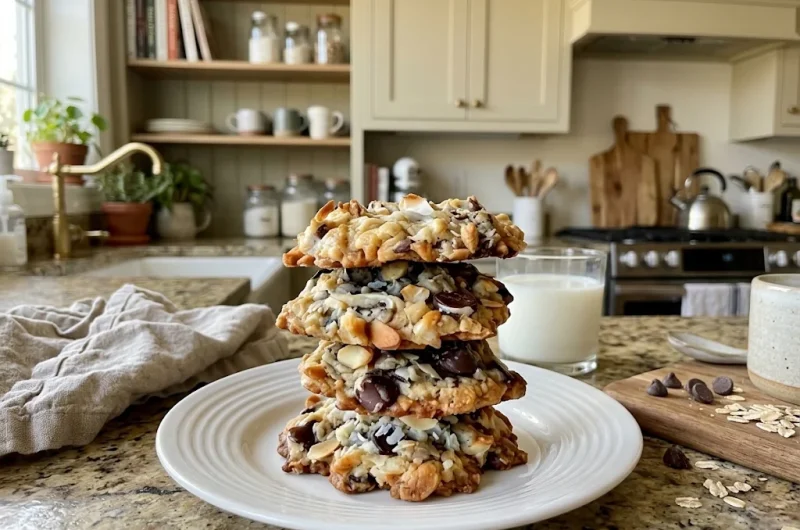
Almond Coconut Chocolate Chip Cookies are a delicious twist on traditional chocolate chip cookies, combining the rich taste of butter, sweet coconut, crunchy sliced almonds, and generous amounts of semi-sweet chocolate chips.
Every cookie delivers a satisfying mixture of soft, chewy texture and slightly crisp edges, making them a wonderful homemade treat for anyone who enjoys classic cookies with extra flavor. The combination of almond and coconut extracts gives these cookies a distinctive aroma that makes them especially appealing.
If you love Almond Joy candy bars, coconut desserts, and freshly baked chocolate chip cookies, this recipe brings all three favorites together in one delicious dessert. The sliced almonds add a pleasant crunch, while sweetened shredded coconut provides a naturally sweet, chewy texture. Semi-sweet chocolate chips balance the sweetness and create rich chocolate flavor in every bite. These cookies are easy to prepare using familiar baking ingredients and can be ready in approximately 25 minutes.
Unlike ordinary chocolate chip cookies, this almond coconut version has several different textures and flavors working together.
The butter creates a rich foundation, brown sugar contributes moisture and a caramel-like taste, and granulated sugar helps produce lightly crisp edges. Almond and coconut extracts replace the usual vanilla flavor, giving the cookie dough a more distinctive character. Whether served with coffee, milk, or as an afternoon snack, these homemade cookies are a delicious addition to any dessert table.
What Makes Almond Coconut Chocolate Chip Cookies Special?
The appeal of these cookies comes from the combination of ingredients rather than complicated baking techniques. Traditional chocolate chip cookies are already popular because of their buttery flavor and chocolate-filled centers, but adding almonds and coconut makes them even more interesting. Each ingredient contributes something different, creating a cookie that tastes familiar while offering a little extra sweetness and texture.
Sliced almonds provide a delicate nutty flavor and a satisfying crunch that contrasts beautifully with the soft cookie dough. Shredded coconut adds a slightly chewy texture and a sweet tropical taste. Semi-sweet chocolate chips bring rich chocolate flavor without making the entire cookie overly sweet. Together, these ingredients create a dessert inspired by the familiar flavor combination found in Almond Joy candy bars.
Another important detail is the use of almond extract and coconut extract. These concentrated flavorings give the cookies a stronger aroma and help bring out the natural flavors of the almonds and coconut. Instead of relying on vanilla extract alone, this recipe uses both extracts to create a more recognizable almond-coconut flavor. The result is a batch of homemade cookies that feels a little different from the everyday chocolate chip variety.
This Almond Coconut Cookie Recipe
One reason to make these almond coconut chocolate chip cookies is how quickly they come together. The preparation takes approximately 15 minutes, followed by around 8 to 10 minutes of baking for each tray, depending on the size of the cookies. There is no complicated decorating process, special equipment, or lengthy preparation required. A stand mixer, mixing bowls, baking sheet, and a few basic kitchen utensils are enough to get started.
The recipe also makes a generous batch, producing approximately five dozen small cookies or three dozen large cookies. This makes it suitable for family gatherings, holiday baking, parties, lunchbox treats, or sharing with friends. You can prepare smaller cookies for easy snacking or make larger portions when you want a more substantial dessert.
Another advantage is the variety of textures. The edges become lightly golden during baking, while the centers remain tender. Almond slices add crunch, coconut contributes chewiness, and melted chocolate chips provide a rich finish. These different elements make every bite enjoyable, especially when the cookies are served slightly warm.
How to Make Almond Coconut Chocolate Chip Cookies
Step 1: Prepare the Oven and Baking Sheet
Begin by preheating your oven to 350°F (175°C). Preparing the oven before mixing the ingredients allows it to reach the correct temperature while the cookie dough is being made. Line a baking sheet with parchment paper or a silicone baking mat. You can also lightly coat the baking sheet with cooking spray if you prefer.
Having the baking sheet ready makes the process easier once the dough is mixed. Make sure there is enough room between the cookies because they will spread slightly as they bake. For small cookies, arrange approximately 12 portions on each tray. Larger cookies need additional space, so around eight portions per tray is a suitable amount.
Step 2: Cream the Butter and Sugars
Place the softened butter, granulated sugar, and brown sugar into the bowl of a stand mixer fitted with the paddle attachment. Beat the ingredients until the mixture becomes light and fluffy. This step helps distribute the sugars throughout the butter and creates a smooth base for the remaining ingredients.
Avoid rushing this stage because the texture of the butter mixture affects the finished cookies. Stop occasionally to scrape the sides and bottom of the mixing bowl with a spatula. This ensures that all the ingredients are incorporated evenly and prevents pockets of unmixed butter or sugar from remaining in the dough.
Step 3: Add the Egg and Extracts
Add one large egg to the creamed butter mixture, followed by the almond extract and coconut extract. Mix until everything is thoroughly combined. The egg should disappear into the mixture, while the extracts distribute their flavor throughout the dough.
Scrape the bowl again if necessary. A well-combined butter mixture helps create cookies with a consistent flavor and texture. The combination of almond and coconut extracts will already give the dough a pleasant aroma before the dry ingredients are added.
Step 4: Combine the Dry Ingredients
In a separate mixing bowl, stir together the all-purpose flour, salt, and baking soda. Mixing these ingredients separately helps distribute the salt and baking soda evenly throughout the flour. This prevents concentrated areas of either ingredient from affecting the taste or texture of individual cookies.
Gradually add the dry mixture to the butter mixture. Mix on low speed until the ingredients are just combined, which should take approximately one minute. Avoid overmixing because excessive mixing can develop the gluten in the flour and produce tougher cookies. Stop as soon as no large areas of dry flour remain.
Step 5: Fold in the Almonds, Coconut, and Chocolate Chips
Add the sliced almonds, sweetened shredded coconut, and semi-sweet chocolate chips to the cookie dough. If you want a more attractive appearance, reserve a small amount of each ingredient to place on top of the dough portions before baking.
Mix gently on low speed for approximately 30 seconds, or until the additions are evenly distributed. If the dough looks crumbly and does not hold together, add one tablespoon of milk and mix gently until it comes together. The milk is optional and should only be used when needed.
The finished dough should be thick enough to scoop and shape. You should be able to see pieces of almonds, coconut, and chocolate throughout the mixture. Even distribution is important because these ingredients provide the flavor and texture that make this recipe different from ordinary chocolate chip cookies.
Step 6: Shape the Cookie Dough
Use a cookie scoop or spoon to divide the dough into individual portions. Arrange the dough balls on the prepared baking sheet, leaving approximately two inches between each portion. This spacing gives the cookies enough room to spread during baking without merging into one another.
For smaller cookies, place around 12 dough balls on each baking sheet. For larger cookies, use approximately eight portions. If desired, gently press a few reserved almond slices, coconut pieces, and chocolate chips onto the tops. This simple step gives the finished cookies a more attractive appearance and makes their ingredients easy to recognize.
Step 7: Bake Until the Edges Turn Lightly Golden
Place the baking sheet in the preheated oven and bake the cookies for approximately 8 to 10 minutes. Baking time can vary depending on the size of the dough portions and your oven. Smaller cookies generally require less time, while larger cookies may need the full baking period.
Watch the edges carefully as the cookies approach the end of their baking time. Remove them when the edges are just beginning to brown. The centers may still look slightly soft, but they will continue to set as the cookies cool. Baking until the entire cookie becomes dark brown can result in a drier texture.
Step 8: Cool and Serve
Allow the freshly baked cookies to rest on the baking sheet for approximately one minute. This short resting period helps them become firm enough to transfer without breaking. Carefully move the cookies to a wire cooling rack and let them cool completely.
If you enjoy soft chocolate chip cookies, you can serve a few while they are still slightly warm. The chocolate chips will remain deliciously soft, and the coconut and almonds will provide a pleasant contrast. For a firmer texture, allow the cookies to cool completely before storing or serving.
Tips for Perfect Almond Coconut Chocolate Chip Cookies
Measure the Flour Correctly
Accurate flour measurement makes a noticeable difference in cookie texture. Too much flour can create dry dough that struggles to hold together. Stir the flour first, spoon it into your measuring cup, and level it with a straight edge. This method helps prevent adding more flour than the recipe requires.
Use Softened Butter
Room-temperature butter combines more easily with the sugars and produces a smoother mixture. Butter that is too cold may not cream properly, while melted butter can change how the cookies spread. Allow the butter to soften naturally before beginning the recipe.
Avoid Overmixing
Once the flour has been added, mix only until the ingredients are combined. Overmixing can make cookies tougher than intended. The same approach applies when adding the almonds, coconut, and chocolate chips. Gentle mixing helps distribute the additions without unnecessarily working the dough.
Watch the Baking Time
These cookies should be removed when their edges are just beginning to turn brown. The centers may appear slightly underbaked, but they will firm up during cooling. This helps preserve a tender center and prevents the finished cookies from becoming overly crisp.
Add Extra Toppings
Reserving a few almonds, chocolate chips, and coconut pieces allows you to decorate the dough portions before baking. This is optional, but it gives the cookies a more appealing homemade bakery-style appearance.
How to Store Homemade Almond Coconut Cookies
Once the cookies have cooled completely, place them in an airtight container and keep them at room temperature. Proper storage helps preserve their flavor and prevents them from becoming dry. Avoid sealing the cookies while they are still warm because trapped steam can create excess moisture and affect their texture.
These almond coconut chocolate chip cookies can be stored at room temperature for up to one week. Keep the container in a cool, dry place away from direct sunlight and heat. If you are preparing the cookies for a gathering, storing them properly will help maintain their delicious flavor until serving time.
Frequently Asked Questions
Can I Make These Cookies Without Refrigerating the Dough?
Yes. This recipe is prepared without requiring a refrigeration period. Once the dough is mixed, you can scoop the portions and bake them immediately. This makes the recipe especially convenient when you want homemade cookies without waiting for chilled dough.
Why Is My Cookie Dough Crumbly?
Cookie dough can sometimes appear crumbly if the flour measurement is slightly high or the mixture needs additional moisture. The recipe includes one tablespoon of milk as an optional addition. Add it only when necessary and mix gently until the dough comes together.
Can I Use Large or Small Cookie Portions?
Yes. The recipe produces approximately five dozen small cookies measuring around 2½ inches or three dozen larger cookies. Remember that cookie size affects baking time, so keep an eye on the edges and remove the cookies when they just begin to brown.
How Long Do These Cookies Take to Make?
The preparation time is approximately 15 minutes, and baking takes around 8 to 10 minutes per tray. The total listed preparation and cooking time is approximately 25 minutes, although baking multiple trays separately may increase the overall time.
How Should I Know When the Cookies Are Done?
Look for lightly browned edges while the centers remain soft. The cookies do not need to become completely firm in the oven. They will continue setting during the short resting period on the baking sheet and while cooling on a wire rack.
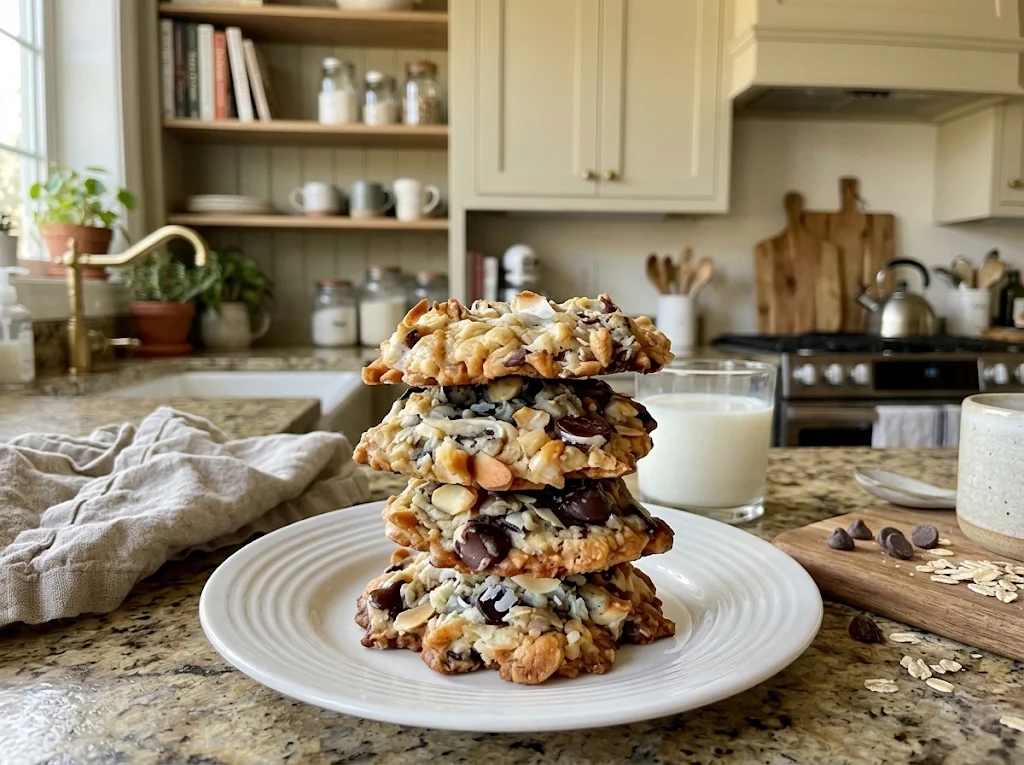
Almond Coconut Chocolate Chip Cookies Dessert
Soft and chewy chocolate chip cookies filled with crunchy sliced almonds, sweetened shredded coconut, and semi-sweet chocolate chips. Almond and coconut extracts create a delicious Almond Joy-inspired flavor.
1
servings15
minutes10
minutes25
minutesIngredients
1 cup (226 g) butter, room temperature
¾ cup (150 g) granulated sugar
1 cup (200 g) brown sugar, gently packed
1 large egg
2 teaspoons almond extract
2 teaspoons coconut extract
3 cups (360 g) all-purpose flour, stirred, spooned, and leveled
1 teaspoon salt
1 teaspoon baking soda
1 cup sliced almonds
1 cup (120 g) sweetened shredded coconut
2 cups (340 g) semi-sweet chocolate chips (12 oz bag)
1 tablespoon milk, if needed
Directions
- Preheat the oven: Set the oven to 350°F (175°C). Prepare baking sheets with parchment paper, a silicone baking mat, or cooking spray.
- Cream butter and sugars: Beat the softened butter, granulated sugar, and brown sugar until light and fluffy.
- Add egg and extracts: Mix in the egg, almond extract, and coconut extract. Scrape the sides of the bowl to combine everything evenly.
- Mix dry ingredients: In another bowl, combine the flour, salt, and baking soda.
- Make the dough: Gradually add the dry mixture to the butter mixture. Mix on low speed until just combined.
- Add the fillings: Mix in the sliced almonds, shredded coconut, and chocolate chips. Reserve a little of each for topping if desired. If the dough is crumbly, add one tablespoon of milk and mix gently.
- Shape the cookies: Scoop the dough into balls and arrange them approximately two inches apart on the prepared baking sheets. Use 12 portions for small cookies or eight for large cookies per tray.
- Bake: Bake for 8–10 minutes, until the edges are just beginning to brown.
- Cool: Leave the cookies on the baking sheet for one minute, then transfer them to a wire rack to cool completely.