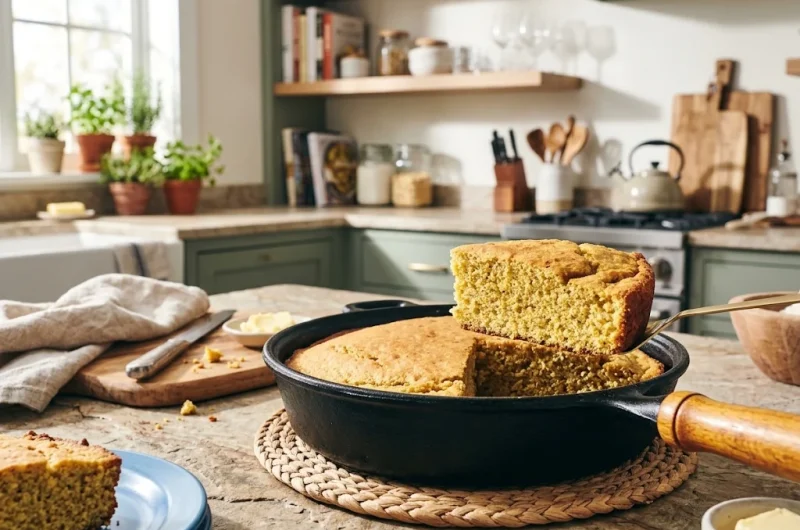
If you enjoy homemade cornbread but want something with more flavor and a better texture, this sourdough discard cornbread is worth adding to your baking list. Made with unfed sourdough starter, yellow cornmeal, simple pantry ingredients, and rich browned butter, this recipe produces a deliciously tender cornbread with slightly crisp edges and a beautiful golden finish. The sourdough discard adds a gentle tang that balances the sweetness, creating a more interesting flavor than traditional cornbread.
Baked in a cast iron skillet, this homemade cornbread develops a lightly crisp crust while staying soft and moist inside. The browned butter adds a warm, nutty aroma that complements the natural sweetness of the cornmeal. Unlike some cornbread recipes that turn out dry or crumbly, this version combines flour, cornmeal, milk, eggs, and sourdough discard to create a balanced texture that is easy to slice and serve.
One of the best things about this recipe is how quickly it comes together. You do not need to prepare an active sourdough starter or wait for the dough to ferment. Unfed sourdough starter works perfectly, making this an excellent way to use leftover discard from your regular sourdough feeding routine. With approximately 15 minutes of hands-on preparation and 15 minutes of baking, you can have fresh, homemade cornbread ready for the table.
What Makes This Sourdough Cornbread Special?
Traditional cornbread is a popular homemade bread known for its simple ingredients, slightly sweet flavor, and crumbly texture. Adding sourdough discard introduces another layer of flavor without making the preparation complicated. The natural acidity of the starter gives the cornbread a mild tang that works especially well with the sweetness of granulated sugar and the rich taste of butter.
Another feature that makes this recipe stand out is the use of browned butter. Instead of simply melting butter, it is heated until the milk solids turn golden brown and release a toasted, nutty aroma. This small technique makes a noticeable difference in the finished bread. It adds depth and richness while helping create a flavorful crust around the edges.
The cast iron skillet also plays an important role. When properly heated, it helps the batter begin cooking as soon as it enters the pan. This encourages a lightly crisp bottom and beautifully browned edges. The center remains soft and tender, giving every slice a satisfying contrast of textures.
Why Use Sourdough Discard in Cornbread?
Sourdough discard is the portion of starter removed during regular feeding. Many home bakers save it for pancakes, crackers, muffins, biscuits, and other baked goods rather than throwing it away. Because discard already contains fermented flour and water, it brings a subtle sourdough flavor to recipes that do not require a long fermentation process.
In this cornbread recipe, the discard contributes moisture and a mild tang. It also works alongside the other ingredients to create a tender crumb. The flavor is not strongly sour, so even people who do not usually enjoy traditional sourdough bread can appreciate this recipe.
You can use unfed sourdough starter directly from the refrigerator, provided it is healthy and has been stored properly. There is no need to feed it, wait for it to rise, or activate it before preparing the batter. This makes sourdough discard cornbread a practical choice for anyone who regularly maintains a sourdough starter.
How to Make Sourdough Discard Cornbread
Preparing this homemade sourdough cornbread is straightforward. The key is to prepare the browned butter first, combine the dry and wet ingredients separately, and avoid overmixing once the batter comes together.
Step 1: Prepare the Cast Iron Skillet and Brown the Butter
Place the butter in a 10-inch cast iron skillet and put the skillet inside a cold oven. Set the oven temperature to 425°F. Allow the butter to melt and brown gradually as the oven preheats. This process generally takes around 15 to 20 minutes.
During heating, the butter will first melt, then foam as its water evaporates. Eventually, the milk solids will settle and turn golden brown. Watch for darker golden specks and a nutty smell. Carefully remove the hot skillet from the oven once the butter reaches this stage.
Step 2: Combine the Dry Ingredients
While the butter is browning, prepare a large mixing bowl. Add the all-purpose flour, yellow cornmeal, granulated sugar, baking powder, table salt, and baking soda. Whisk everything together until the ingredients are evenly distributed.
Combining the dry ingredients separately helps prevent concentrated pockets of baking powder or baking soda in the finished bread. It also makes the final mixing process quicker and easier. Make sure the cornmeal is evenly incorporated before moving to the next step.
Step 3: Mix the Wet Ingredients
In another bowl, combine the unfed sourdough discard, milk, and eggs. Whisk until the mixture becomes smooth and consistent. Breaking up any thick portions of starter makes it easier to combine with the dry ingredients later.
Using room-temperature ingredients can make mixing easier, although the recipe does not require a special preparation period. The important thing is to create a well-blended mixture before adding it to the flour and cornmeal.
Step 4: Add the Browned Butter
After removing the skillet from the oven, let it rest for approximately two to three minutes. Carefully pour most of the browned butter into the wet ingredient mixture while stirring continuously.
Leave a generous tablespoon of butter in the skillet. Swirl the pan gently so the remaining butter coats the bottom and sides. This creates a flavorful coating that helps prevent sticking while encouraging a golden, crisp crust.
Stir the browned butter into the wet ingredients until everything is evenly combined. Avoid pouring extremely hot butter into the mixture without stirring, as you want to incorporate it smoothly.
Step 5: Prepare the Cornbread Batter
Pour the wet ingredients into the bowl containing the flour and cornmeal mixture. Stir until the ingredients are combined and no large dry pockets remain. The batter should look evenly mixed, but there is no need to continue stirring once everything has come together.
Overmixing can affect the final texture and make the cornbread less tender. A gentle mixing approach helps maintain a soft interior while allowing the baking powder and baking soda to do their work during baking.
Step 6: Transfer the Batter to the Skillet
Carefully transfer the prepared batter into the butter-coated cast iron skillet. Use a spatula to spread it evenly across the pan so the batter reaches the edges.
An even layer helps the cornbread bake consistently. Since the skillet is already warm, handle it carefully and use suitable oven mitts to avoid burns. The remaining browned butter will help create the flavorful crust that makes skillet cornbread so appealing.
Step 7: Bake Until Golden Brown
Return the skillet to the preheated 425°F oven. Bake for approximately 15 minutes, or until the cornbread is set, the edges are golden brown, and the surface has developed a light brown color.
Oven performance can vary, so check the bread near the end of the baking time. If the edges are already brown but the top still looks pale, place the skillet under the broiler briefly for approximately two to three minutes. Watch closely because the top can brown quickly.
Step 8: Cool and Serve
Remove the skillet from the oven and allow the cornbread to cool briefly before slicing. Serving it warm is a wonderful way to enjoy its soft center, crisp edges, and rich browned-butter flavor.
You can also allow it to reach room temperature before serving. Cut it into wedges and enjoy it alongside your favorite meals. Fresh cornbread tastes especially good with a little butter, honey, or jam.
What to Serve with Sourdough Discard Cornbread
Homemade skillet cornbread is versatile enough to accompany many different meals. Its slightly sweet flavor and buttery crust make it a natural partner for hearty dishes, especially meals with rich sauces or savory seasonings.
Serve a warm slice with vegetable soup, tomato soup, chili, or a bowl of homemade stew. The bread can be used to soak up flavorful broth and sauces, making it a satisfying addition to lunch or dinner. It also works well alongside roasted vegetables, grilled chicken, and other simple main dishes.
For breakfast or an afternoon snack, try serving cornbread with butter, honey, or fruit jam. The browned butter already gives it a rich flavor, so even a simple topping can make each slice feel special. You can also enjoy it on its own with a cup of tea or coffee.
Tips for Making the Best Sourdough Cornbread
Use the Correct Sourdough Starter
Use unfed sourdough discard rather than an actively refreshed starter. The recipe is designed to use leftover starter without requiring additional fermentation. Make sure the discard has been stored safely and does not show signs of spoilage.
Watch the Butter Carefully
Browned butter adds wonderful flavor, but it can burn if left unattended. Look for golden-brown milk solids and a nutty aroma. Remove it from the oven as soon as it reaches the desired color.
Avoid Overmixing the Batter
Mix the wet and dry ingredients only until combined. Excessive mixing can develop gluten in the flour and affect the tenderness of the finished cornbread. A few small lumps are preferable to an overworked batter.
Use a Cast Iron Skillet
A 10-inch cast iron skillet is ideal for this recipe. It distributes heat effectively and helps create crisp, flavorful edges. The browned butter coating also improves the texture and makes serving easier.
Check the Top Before Removing the Bread
The edges may become golden before the center and top develop enough color. If necessary, use the broiler briefly to improve the surface color. Keep a close eye on the skillet to prevent burning.
Frequently Asked Questions
Can I Use Sourdough Discard Straight from the Refrigerator?
Yes. Unfed sourdough discard can be used directly from the refrigerator as long as it is healthy and properly stored. There is no need to feed it or wait for it to become active before preparing the cornbread batter.
Does Sourdough Discard Cornbread Taste Sour?
No, the sourdough flavor is generally mild. The discard adds a gentle tang that balances the sweetness of the sugar and richness of the browned butter. The finished cornbread tastes savory, slightly sweet, and buttery rather than strongly sour.
Can I Make This Cornbread Without a Cast Iron Skillet?
A cast iron skillet is recommended because it creates the signature crisp edges and helps brown the bottom. However, this recipe is specifically developed for a 10-inch skillet, so changing the baking pan may affect the final texture and baking time.
Why Is My Cornbread Dry or Crumbly?
Dry cornbread can result from inaccurate flour measurements, overbaking, or excessive mixing. Measuring the ingredients carefully and checking the bread near the end of the baking time can help produce a softer result. The sourdough discard, milk, eggs, and butter all contribute to moisture.
How Do I Know When Cornbread Is Fully Baked?
The cornbread should be set in the center, with golden edges and a lightly browned top. The approximate baking time is 15 minutes, but oven temperatures can vary. If the surface needs more color after the edges have browned, broil briefly while watching carefully.
Sourdough Cornbread Brown Homemade Recipe
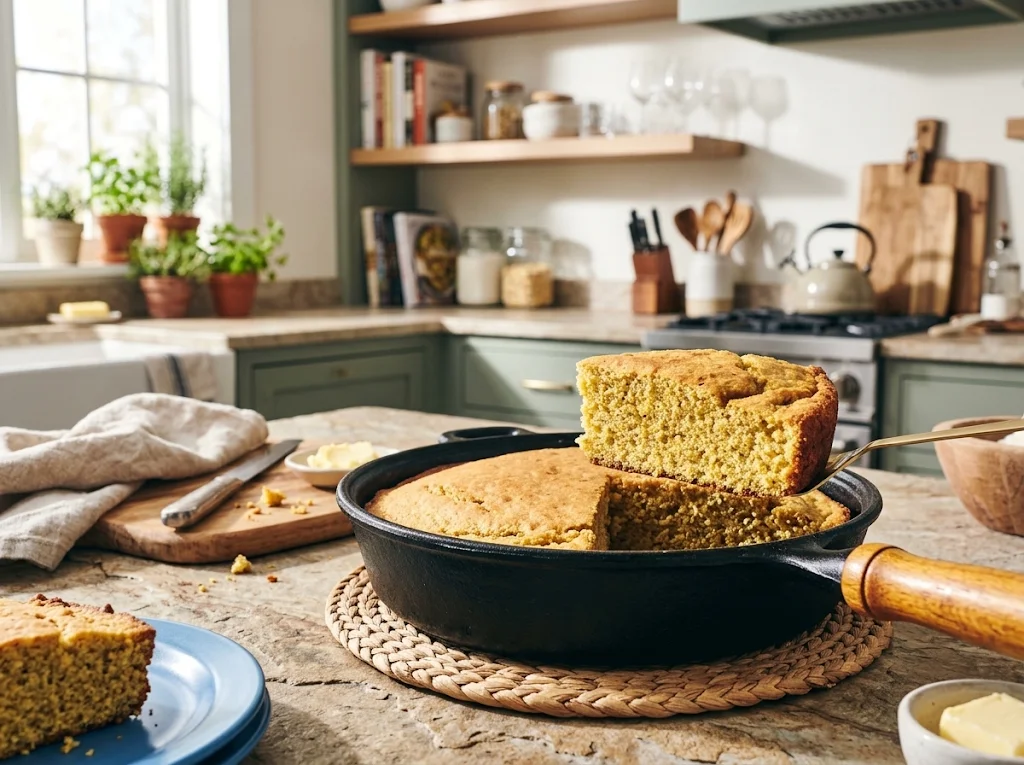
A tender homemade sourdough discard cornbread featuring yellow cornmeal, mildly tangy sourdough starter, and rich browned butter. Baked in a cast iron skillet for crisp golden edges and a soft, flavorful center.
1
servings15
minutes15
30
minutesIngredients
8 tablespoons (113g) unsalted butter
1 1/4 cups (150g) all-purpose flour
1 cup (138g to 156g) yellow cornmeal
1/3 cup (66g) granulated sugar
2 teaspoons baking powder
1 teaspoon table salt
1/2 teaspoon baking soda
1 cup (227g to 241g) unfed sourdough starter discard
1/3 cup (76g) milk, whole milk preferred
2 large eggs
Directions
- Preheat and brown the butter: Place butter in a 10-inch cast iron skillet. Put it in a cold oven and set the temperature to 425°F. Allow the butter to melt and brown as the oven heats, approximately 15–20 minutes.
- Mix dry ingredients: In a large bowl, whisk together flour, cornmeal, sugar, baking powder, salt, and baking soda.
- Mix wet ingredients: In a separate bowl, whisk together sourdough discard, milk, and eggs until smooth and evenly combined.
- Add browned butter: Carefully remove the skillet from the oven. Let it cool for 2–3 minutes. Pour most of the browned butter into the wet ingredients while stirring, leaving approximately one generous tablespoon in the skillet.
- Combine the batter: Stir the wet ingredients into the dry ingredients until evenly combined. Avoid overmixing.
- Transfer to skillet: Pour the batter into the prepared cast iron skillet and spread it into an even layer.
- Bake: Return the skillet to the oven and bake for approximately 15 minutes, until the cornbread is set with golden edges and a lightly browned surface
- Broil if needed: If the edges are brown but the top remains pale, broil for approximately 2–3 minutes until golden. Watch carefully.
- Cool and serve: Remove from the oven and allow the cornbread to cool briefly in the skillet. Serve warm or at room temperature.