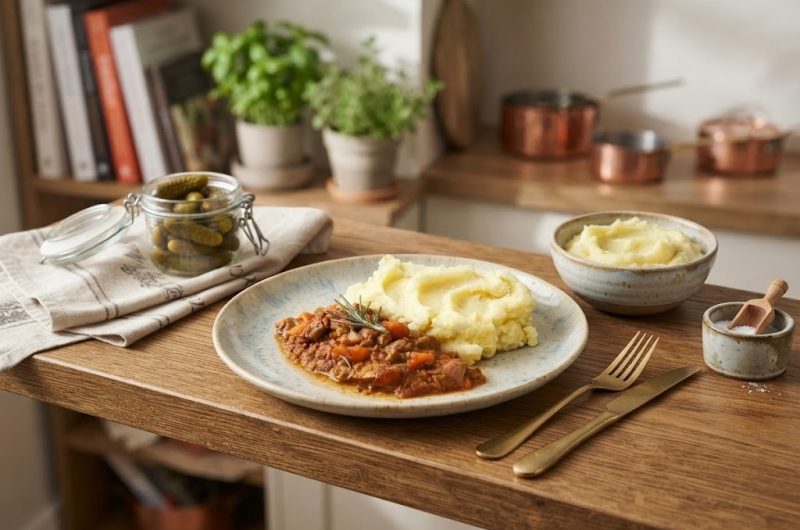
When you need a comforting dinner that feels homemade without requiring complicated cooking techniques, this hearty beef stew with creamy mashed potatoes is an excellent choice. Tender beef, sweet carrots, onions, garlic, tomatoes, and fresh herbs slowly cook together in a rich vegetable broth, creating a deeply satisfying stew that pairs beautifully with smooth, buttery mashed potatoes. It is the kind of classic family meal that fills the kitchen with an inviting aroma and makes an ordinary evening feel a little more special.
This easy beef stew is especially useful for busy households because most of the cooking happens in one large pan or Dutch oven. Once the beef and vegetables are prepared, the stew can gently simmer while you take care of other things.
The potatoes can be cooked separately at the same time, making the entire meal practical for weeknight dinners. With straightforward ingredients and simple preparation, this recipe is suitable for home cooks who want a hearty meal without complicated steps or specialist equipment.
Why This Beef Stew Works So Well
A good beef stew depends on building flavor gradually, and this recipe does that with a small number of familiar ingredients. The beef is lightly browned first, giving it a savory exterior before it begins simmering with onions, carrots, garlic, thyme, and vegetable broth. The crushed tomatoes are added later in the cooking process, bringing acidity and a gentle tomato richness without overwhelming the other ingredients.
The vegetables also play an important role in the finished dish. Onions become soft and flavorful as they cook, while carrots contribute natural sweetness and a pleasant texture. Garlic and thyme add depth, while bay leaves provide an additional layer of background flavor during the slow simmer. Together, these ingredients create a warm and satisfying beef stew that tastes like it has been cooking for much longer than the amount of active preparation actually requires.
The mashed potatoes provide the perfect contrast to the rich stew. Creamy potatoes absorb the flavorful broth, creating a comforting combination in every spoonful. Butter adds richness, while milk helps produce a softer, smoother texture. The result is a classic comfort-food dinner that combines tender beef, vegetables, savory sauce, and creamy mashed potatoes on one plate.
Choosing and Preparing the Beef
Lean beef works particularly well for this recipe because it provides substantial pieces of meat without excessive surface fat. Cutting the beef into evenly sized cubes helps the pieces cook at a similar rate, so you can achieve a consistent texture throughout the stew. Patting the beef dry before cooking can also help it develop better contact with the hot pan.
The first cooking stage is important because browning gives the beef a more developed savory flavor. The original method cooks all the beef cubes together rather than requiring several batches. Although this may result in slightly less browning than a traditional batch-searing method, it makes the recipe faster and more convenient while still giving the beef a pleasant seared surface.
Once the beef has browned, it remains in the pan as the vegetables are added. This means the flavors from the beef continue to mingle with the onions, carrots, garlic, and herbs. Keeping everything together also makes cleanup easier, which is particularly helpful when preparing dinner on a busy evening.
Building the Flavor of the Stew
After the beef has had a chance to brown, the chopped onions, diced carrots, minced garlic, thyme, and bay leaves are added directly to the pan. Stirring these ingredients for a couple of minutes allows the onions to soften slightly while the garlic becomes fragrant. This short step helps establish the aromatic base of the stew before the liquid is introduced.
Vegetable broth then brings everything together. As the mixture gently simmers, the broth absorbs the flavors from the beef and vegetables. Keeping the heat low is important because a gentle simmer allows the ingredients to cook gradually without causing the liquid to evaporate too quickly. Stirring every 20 to 30 minutes also helps prevent the ingredients from sticking to the bottom of the pan.
The crushed tomatoes are added after the first hour of simmering. This creates a slightly richer and more rounded sauce during the final stage of cooking. Allowing the stew to continue simmering for another 30 minutes gives the tomatoes time to blend with the broth, vegetables, herbs, and beef. By the time the stew is finished, the ingredients should come together into a rich, comforting mixture with tender vegetables and flavorful beef.
Making Creamy Mashed Potatoes
While the stew cooks, the mashed potatoes can be prepared. Peel and cube the potatoes into reasonably even pieces so that they cook at approximately the same rate. Place them in salted water and boil until they are tender enough to mash easily. Depending on the size of the potato pieces, this generally takes around 15 to 20 minutes.
Once tender, drain the potatoes thoroughly before mashing them. Excess water can make mashed potatoes thinner and less creamy, so allowing the potatoes to drain properly helps produce a better texture. Add the butter and milk while the potatoes are still warm, then mash until smooth.
The amount of milk can be adjusted only within the original recipe’s stated ingredient quantity, while salt can be added according to taste. For a richer mashed potato texture, the butter should be incorporated evenly throughout the potatoes. Avoid overworking the potatoes, as excessive mashing can sometimes make them heavier rather than light and creamy.
How to Serve Beef Stew with Mashed Potatoes
For the classic presentation, spoon a generous portion of creamy mashed potatoes onto each plate or into a serving bowl, then ladle the beef stew over the top. The stew’s flavorful liquid naturally works its way into the potatoes, making the combination especially satisfying.
You can also serve the mashed potatoes alongside the stew rather than underneath it. This allows each person to choose the amount of stew and potato in every bite. Either presentation works well for a family dinner, casual gathering, or comforting weekend meal.
Because the stew contains beef, carrots, onions, and tomatoes while the mashed potatoes provide a creamy base, the dish already feels substantial. There is no need for complicated side dishes. A simple serving arrangement keeps the focus on the main meal and makes dinner preparation easier.
Getting the Best Flavor from the Beef
The most important technique for maximizing flavor is giving the beef enough time in the hot oil to develop some color. The recipe specifically allows the beef to be cooked all at once, which is convenient when you want to keep preparation simple. Turning the cubes during cooking helps expose different surfaces to the heat.
If the beef does not brown deeply, the finished stew can still be flavorful because the meat continues cooking with the vegetables, broth, tomatoes, and herbs. The long, gentle simmer is what brings the components together. The goal is not to create a complicated cooking process but to make the most of a few straightforward techniques.
Seasoning should also be checked during cooking. Since vegetable broth can vary in salt content, tasting the stew as it simmers is useful. Add salt according to your preference rather than assuming every batch will need exactly the same amount.
Easy Meal Prep and Leftovers
One of the biggest advantages of this beef stew recipe is that it works well as a make-ahead meal. The stew can be prepared in advance and stored for another dinner, making it particularly useful for busy weeks. In fact, dishes like this often become even more convenient the following day because the flavors have had additional time to come together during storage.
For proper storage, allow both the stew and mashed potatoes to cool completely before transferring them into airtight containers. Keeping them separate is helpful because the potatoes can be reheated without becoming overly saturated with stew liquid, while the stew can be warmed independently.
The refrigerated leftovers can be stored for up to three days according to the recipe instructions. When reheating the stew, use the stove and warm it gently. The mashed potatoes can be reheated in the microwave, with a splash of milk if necessary to help restore their creamy consistency.
Freezing the Beef Stew and Mash
This recipe can also be useful for freezer meal preparation. Both the stew and mashed potatoes can be frozen separately for up to three months. Separating the components makes storage and reheating more manageable and gives you more control over the final texture.
When freezing, use suitable airtight containers and leave enough room for the food to expand. Once you are ready to use the frozen portions, thaw them safely before reheating. Warm the stew on the stove and reheat the mashed potatoes in the microwave, adding a small splash of milk if the potatoes need help becoming creamy again.
Freezing individual portions can make this meal especially convenient. Instead of preparing dinner from scratch after a busy day, you can simply reheat a prepared serving and have a filling homemade meal ready with much less work.
Why This Is a Great Weeknight Dinner
This beef stew with mashed potatoes combines several qualities that make a home-cooked dinner practical: simple ingredients, straightforward preparation, one main cooking pot, and excellent leftovers. The active preparation is relatively short compared with the total cooking time, allowing the stew to simmer while you handle other tasks.
It is also a comforting meal that suits different occasions. Serve it for a relaxed family dinner, prepare it ahead for busy weekdays, or freeze portions for later. The combination of savory beef stew and buttery mashed potatoes is familiar, filling, and easy to enjoy.
With tender beef, carrots, onions, garlic, tomatoes, herbs, and a creamy potato mash, this recipe delivers plenty of flavor without requiring complicated culinary techniques. It is a practical choice for anyone looking for an easy beef stew recipe with mashed potatoes that can be prepared, stored, and reheated with minimal effort.
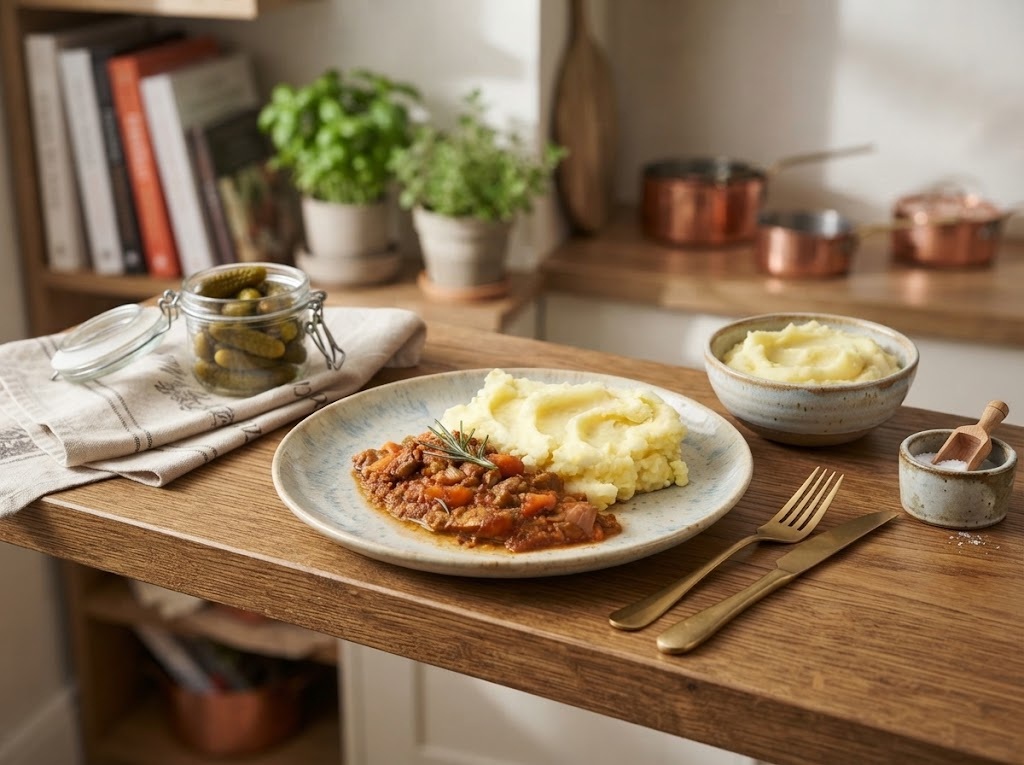
High Protein Beef Stew With Creamy Mashed Potatoes
A comforting homemade beef stew made with lean beef, onions, carrots, garlic, vegetable broth, crushed tomatoes, thyme, and bay leaves, served over creamy mashed potatoes prepared with butter and milk.
4
servings20
minutes1
hour30
minutes1138
kcal1
hour50
minutesIngredients
- Stew
2.2 lbs lean beef cubed
2 large onions chopped
4 large carrots diced
5 garlic cloves minced
4 cups vegetable broth 1 stock cube + water
1 can 14 oz crushed tomatoes
2 teaspoon fresh thyme or 1 teaspoon dried
2 bay leaves optional
2 tablespoon olive oil extra virgin
- Mash
2.2 lbs potatoes peeled and cubed
7 tablespoon butter (just under 1 stick/3.5 oz )
3.5 tablespoon milk
Salt to taste
Directions
- Heat 2 tablespoons of extra virgin olive oil in a large pan or Dutch oven over medium-high heat. Allow the oil to heat for approximately 30 seconds.
- Add all the cubed lean beef to the pan. Cook for about 3 to 4 minutes, turning the pieces so they become lightly browned on different sides.
- Add the chopped onions, diced carrots, minced garlic, thyme, and bay leaves, if using, directly over the beef. Stir everything together for approximately 2 minutes, allowing the onions to soften and the garlic to become fragrant.
- Pour the vegetable broth into the pan and add a pinch of salt. Stir the ingredients together so the beef and vegetables are surrounded by the broth.
- Cover the pan and reduce the heat to low. Allow the stew to simmer gently for 1 hour. Stir every 20 to 30 minutes to help prevent the ingredients from sticking.
- After the first hour, add the crushed tomatoes. Stir well and continue simmering the stew for another 30 minutes.
- While the stew is cooking, peel and cube the potatoes. Place them in salted water and boil for approximately 15 to 20 minutes, or until tender.
- Drain the cooked potatoes thoroughly. Add the butter and milk, then mash until the potatoes are smooth and creamy. Season with salt to taste.
- When the beef stew is ready, remove the bay leaves. Serve the hearty stew over or alongside the creamy mashed potatoes.
- For leftovers, allow the stew and mashed potatoes to cool completely before transferring them to separate airtight containers. Refrigerate for up to 3 days or freeze separately for up to 3 months.
Nutrition Facts
- Total number of serves: 1
- Calories: 1138kcal
- Fat: 78g
- Carbohydrates: 60g
- Fiber: 8g
- Sugar: 10g
- Protein: 50g