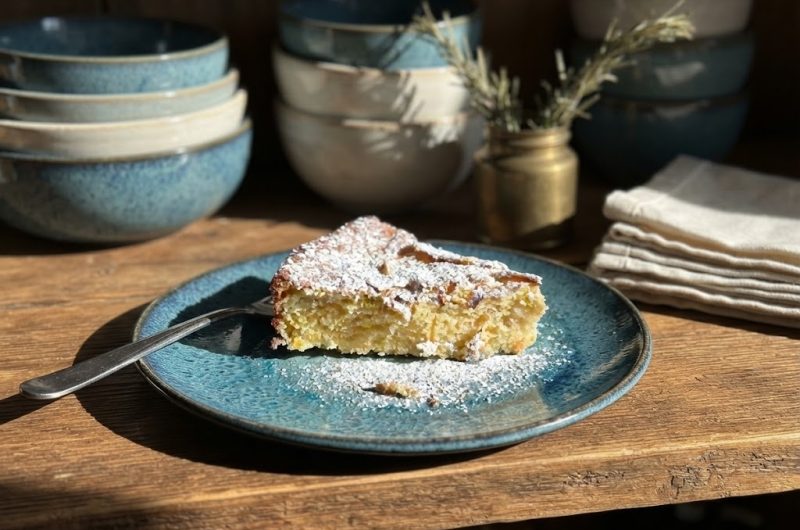
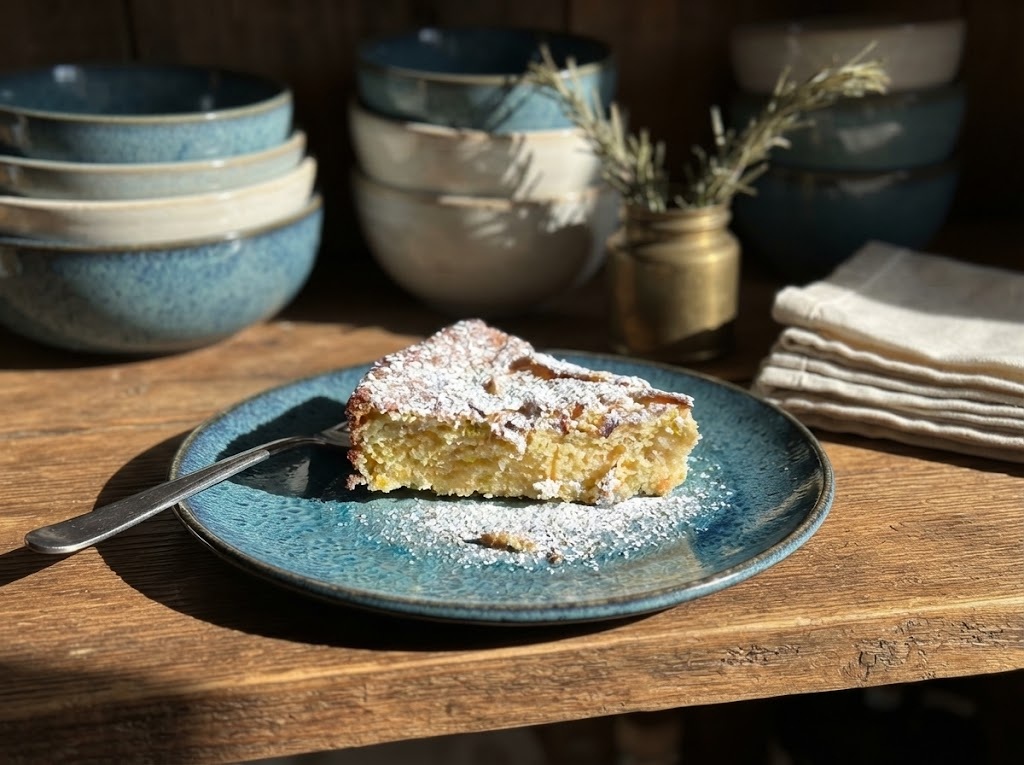
This lemon yogurt cake is a tender, naturally gluten-free dessert made with almond flour, Greek yogurt, fresh lemon juice, and plenty of fragrant lemon zest. The combination creates a cake that is soft and moist without feeling heavy, while the bright citrus flavor keeps every bite fresh and inviting. A delicate layer of sliced almonds on top adds pleasant crunch, and a light dusting of confectioner’s sugar gives the finished cake a simple, elegant appearance.
Unlike cakes made primarily with wheat flour, this almond flour lemon cake has a naturally delicate texture and a subtle nutty flavor. Greek yogurt adds moisture and a gentle tang that works beautifully with fresh lemon. The result is a homemade dessert that feels special enough for a celebration but simple enough to serve with coffee or tea on an ordinary afternoon. If you enjoy easy lemon desserts, this recipe is an excellent addition to your baking collection.
Why This Lemon Yogurt Cake Works So Well
The appeal of this Greek yogurt lemon cake comes from the balance between its ingredients. Almond flour provides richness and a tender crumb, while Greek yogurt contributes moisture and structure. Fresh lemon zest supplies aromatic citrus oils, and lemon juice gives the cake its unmistakable brightness. Separating the eggs is another important part of the method because whipped egg whites are gently folded into the batter, helping create a lighter texture.
The cake is also naturally gluten-free because almond flour is used instead of traditional wheat flour. However, the type of almond flour matters considerably. Finely ground blanched almond flour produces a smoother and more delicate crumb, allowing the cake to remain tender after baking. The combination of almond flour and Greek yogurt makes this cake satisfying without requiring a complicated frosting or elaborate decoration.
The Fresh Lemon Flavor
Fresh lemon is the defining ingredient in this dessert, so using both lemon zest and lemon juice gives the best flavor. Lemon zest contains aromatic oils that provide an intense citrus fragrance, while lemon juice contributes the tartness that balances the sweetness of the sugar. Together, they create a bright lemon flavor that tastes much fresher than relying on lemon flavoring alone.
Two lemons are used for both zest and juice, with the recipe calling for enough juice to make one-quarter cup. Zesting the lemons before juicing them is the easiest approach because whole lemons are simpler to handle and grate. When zesting, try to remove only the yellow outer layer and avoid the white pith underneath, which can add unwanted bitterness.
Almond Flour Creates a Tender Crumb
One of the most distinctive features of this gluten-free lemon cake is its use of almond flour. Almond flour is made from finely ground almonds and gives baked goods a naturally soft, rich texture. It also adds a mild nutty flavor that pairs especially well with lemon. For this recipe, finely ground blanched almond flour is important because it helps maintain the light, smooth texture expected from the finished cake.
Almond flour does not behave exactly like wheat flour, so choosing the right variety makes a noticeable difference. Blanched almond flour is made from almonds with their skins removed, producing a finer and lighter ingredient. Coarser almond meal or unblanched almond flour can create a denser, grainier texture. Following the specified ingredient carefully will help the cake bake evenly and maintain its tender crumb.
Why Greek Yogurt Is Important
Greek yogurt does more than simply add moisture to the batter. Its thick consistency contributes richness and helps give the cake enough structure to hold together after baking. Its natural tanginess also complements the lemon, preventing the dessert from tasting overly sweet. This is particularly useful in a simple cake where there is no frosting or filling to provide additional contrast.
For this recipe, Greek yogurt should be used exactly as specified. Regular yogurt is thinner and contains a different consistency, which can affect the structure and texture of the batter. The thick Greek yogurt helps create the moist but sturdy interior that makes this lemon yogurt cake so enjoyable. Keeping the yogurt cold until needed is fine, but bringing the eggs and butter to room temperature is especially helpful for creating a smooth batter.
Preparing the Cake Batter
Start by preheating the oven to 325°F and preparing a 9-inch springform pan. Greasing or spraying the pan helps prevent sticking and makes it easier to release the finished cake. Because this is a relatively delicate almond flour cake, preparing the pan properly is an important step. A springform pan is particularly convenient because the removable sides allow the cake to be released without turning it upside down.
The butter, sugar, coarse salt, and vanilla extract are first creamed together until the mixture becomes very light and fluffy. This process takes about five minutes in a stand mixer, and scraping the sides of the bowl during mixing helps ensure that everything is incorporated evenly. The egg yolks are then added individually, allowing each yolk to blend into the mixture before the next is added.
Greek yogurt is incorporated next, followed by the lemon zest and juice. The almond flour is then mixed into the batter. At this stage, the mixture should be smooth and well combined. Avoid unnecessary overmixing once the flour has been incorporated. The goal is to combine the ingredients thoroughly while maintaining the delicate structure developed during the earlier stages of preparation.
Folding in the Whipped Egg Whites
The egg whites are beaten separately until stiff peaks form. This step is important because the whipped whites provide additional air and help keep the cake from becoming excessively dense. When the whites reach stiff peaks, they should hold their shape when the beaters are lifted from the bowl.
The egg whites should be folded gently into the almond batter rather than stirred aggressively. Folding preserves as much of the incorporated air as possible. Work carefully until the white streaks have disappeared and the batter looks evenly combined. Once the egg whites are incorporated, transfer the batter to the prepared springform pan and smooth the surface.
Adding the Almond Topping
Sliced almonds are scattered evenly over the top of the cake before baking. They add a subtle roasted-nut flavor and a pleasant contrast to the soft interior. As the cake bakes, the almonds become lightly toasted and contribute an attractive golden finish.
There is no need for a complicated glaze or frosting. Once the cake has cooled, a simple dusting of confectioner’s sugar provides enough sweetness and decoration. This minimalist finish allows the lemon flavor and almond topping to remain the focus of the dessert.
Baking the Lemon Yogurt Cake
The cake should bake in a preheated 325°F oven for approximately 50 to 55 minutes. The exact baking time can vary slightly between ovens, so visual cues are useful. The cake should look puffed and golden, and the center should be set rather than visibly jiggly. If the surface begins becoming too dark before the center has finished baking, loosely place a piece of foil over the top.
Avoid opening the oven repeatedly during baking because sudden temperature changes can interfere with the cake’s rise. Instead, begin checking toward the end of the recommended baking period. When properly baked, the cake should have a lightly golden exterior and a tender, moist interior.
Cooling and Serving
Once the cake comes out of the oven, allow it to cool for about 10 minutes before releasing the sides of the springform pan. This short resting period allows the structure to settle and makes handling easier. After removing the sides, allow the cake to cool for at least another 30 minutes before adding confectioner’s sugar.
This easy lemon cake with almond flour can be served on its own, making it convenient for breakfast-style treats, afternoon tea, coffee breaks, or dessert. Its fresh citrus flavor also makes it suitable for spring and summer gatherings. Although it looks elegant enough for entertaining, the preparation remains straightforward enough for everyday baking.
When to Serve Lemon Yogurt Cake
There is no need to reserve this cake for a particular holiday or celebration. Its bright lemon flavor makes it particularly appealing during warmer months, while its rich almond flour base makes it comforting during cooler weather as well. Serve a slice alongside coffee, tea, or another favorite drink for a simple afternoon dessert.
The cake can also be included on a dessert table for birthdays, brunches, family gatherings, or casual dinners. Because it does not require frosting, decorating, or complicated finishing techniques, it can be prepared without spending additional time on presentation. A dusting of confectioner’s sugar and the toasted sliced almonds provide a polished appearance with very little effort.
Storage Instructions
This lemon yogurt cake should be stored in the refrigerator. Because the recipe contains Greek yogurt and has a moist, tender texture, refrigeration helps keep it fresh. Store the cooled cake in a suitable airtight container or cover it well before placing it in the refrigerator.
When ready to serve, allow the cake to sit briefly before eating if you prefer a slightly softer texture. The chilled cake remains moist and flavorful, and the lemon flavor continues to complement the nutty almond flour base. Proper storage also helps prevent the cake from absorbing unwanted odors from other foods in the refrigerator.
Frequently Asked Questions
Is lemon yogurt cake gluten-free?
Yes, this recipe is naturally gluten-free because almond flour is used instead of wheat flour. However, when preparing food for someone with a gluten allergy or celiac disease, check the packaging of all ingredients and avoid cross-contact with gluten-containing products.
Can regular yogurt be used instead of Greek yogurt?
The recipe specifically calls for Greek yogurt, and regular yogurt should not be substituted. Greek yogurt is thicker and contributes important moisture and structure to the cake. Using a thinner yogurt can alter the consistency of the batter and the final texture.
What type of almond flour should I use?
Finely ground blanched almond flour is recommended. It is made from skinless almonds and produces a smoother, more delicate crumb. Almond meal and coarser unblanched almond flour can make the cake denser and grainier.
How do I know when the cake is finished?
The cake should be puffed, golden, and set in the center. It should not have a noticeable jiggle when gently checked. If the top is browning too quickly while the center still needs time, loosely cover the cake with foil for the remaining baking period.
How should this cake be stored?
Store the lemon yogurt cake in the refrigerator after it has cooled. Keep it covered or place it in an airtight container to help maintain its moisture and protect it from absorbing other refrigerator odors.
Gluten Free Lemon Yogurt Cake
A tender, moist, naturally gluten-free lemon yogurt cake made with finely ground almond flour, Greek yogurt, fresh lemon juice, and lemon zest.
6
servings20
minutes50
minutes1
hour10
minutesIngredients
1 cup granulated sugar
1/2 cup unsalted butter at room temperature
1/4 tsp coarse salt
1 1/2 tsp vanilla extract
2 lemons, zested and juiced (to make 1/4 cup lemon juice)
4 large eggs at room temperature and separated
1 cup Greek Yogurt
2 cups almond flour
1/2 cup sliced almonds
confectioner’s sugar for dusting
Directions
- Preheat the oven to 325°F. Grease or spray a 9-inch springform pan thoroughly.
- Add the granulated sugar, room-temperature butter, coarse salt, and vanilla extract to a stand mixer. Cream the mixture for about 5 minutes, or until it becomes very light and fluffy. Scrape the sides of the bowl as needed.
- Add the egg yolks one at a time, mixing well after each addition. Scrape down the bowl between additions so the ingredients are evenly incorporated.
- Add the Greek yogurt and beat for approximately 1 minute, until the mixture is smooth and well combined.
- Mix in the lemon zest and the lemon juice. Add the almond flour and mix until incorporated into the batter.
- In a separate clean bowl, beat the egg whites until they form stiff peaks.
- Gently fold the whipped egg whites into the almond batter. Work carefully to retain as much of the air from the egg whites as possible.
- Transfer the batter to the prepared springform pan and smooth the surface evenly.
- Sprinkle the sliced almonds over the top of the batter.
- Bake for 50–55 minutes, or until the cake is puffed, golden, and set in the center. The center should not jiggle noticeably.
- If the cake begins to brown too quickly near the end of baking, loosely tent the top with foil to prevent excessive browning.
- Remove the cake from the oven and let it cool for 10 minutes. Release the sides of the springform pan.
- Allow the cake to cool for at least 30 additional minutes before dusting the top with confectioner’s sugar.
- Store the cooled lemon yogurt cake in the refrigerator.