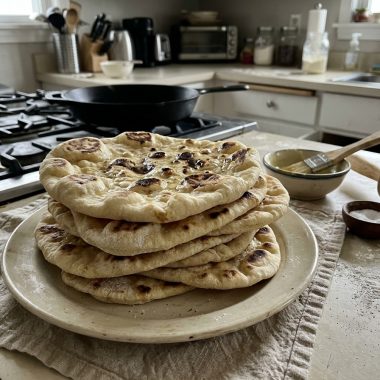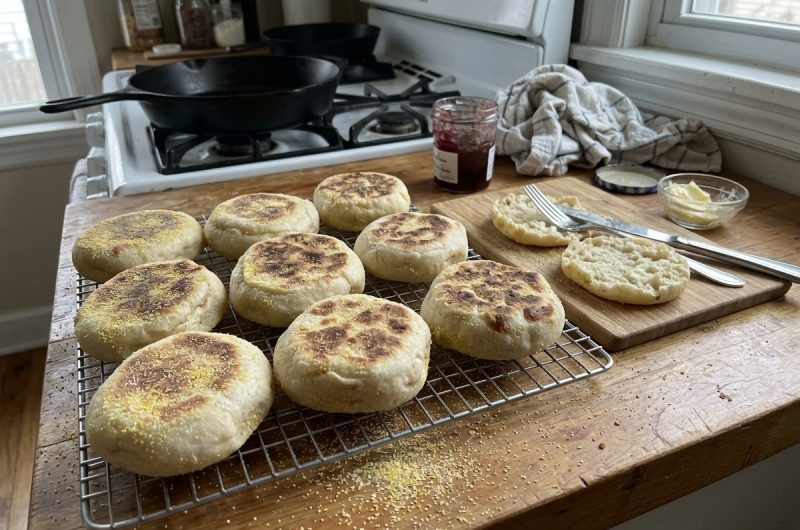
Homemade English muffins are a delicious addition to breakfast and brunch, especially when served warm with butter, fruit jam, or honey. These soft, golden muffins have a lightly crisp exterior and a tender interior filled with the little holes commonly known as nooks and crannies.
When toasted, those small pockets hold melted butter beautifully, making every bite satisfying. With simple pantry ingredients and an easy stovetop cooking method, you can prepare fresh English muffins at home without special equipment or complicated baking techniques.
This easy English muffin recipe is suitable for beginners who want to try making homemade bread without using an oven. The dough comes together with flour, yeast, water, sugar, oil, and salt, creating a soft texture that becomes light and airy as it rises.
Instead of baking the muffins, you cook them in a covered frying pan, skillet, or griddle over medium-low heat. This method gives the muffins their characteristic golden surfaces while allowing the centers to cook thoroughly.
One of the best things about homemade English muffins is that you can control their freshness, texture, and flavor. Store-bought muffins are convenient, but making your own allows you to enjoy them straight from the pan. The process takes approximately two hours and fifteen minutes, including preparation, rising, and cooking. Although most of that time requires little hands-on effort, the result is a batch of ten homemade muffins that you can enjoy throughout the week or freeze for later.
Why You Will Love This English Muffin Recipe
This homemade English muffin recipe uses everyday ingredients and a straightforward preparation method. You do not need a stand mixer, dough hooks, an oven, or traditional English muffin rings. A mixing bowl, spoon, clean work surface, and frying pan are enough to get started. The dough can be kneaded by hand, making this recipe especially useful for anyone who wants to learn basic bread-making techniques without investing in additional kitchen equipment.
Another reason to try these muffins is their versatility. Their mild flavor works equally well with sweet and savory toppings, so you can serve them in different ways depending on the occasion. Spread toasted halves with butter and jam for a quick breakfast, add eggs and cheese for a filling morning sandwich, or use the muffins as a base for mini pizzas. Their sturdy yet tender texture makes them suitable for both simple snacks and more elaborate brunch dishes.
The relatively short rising time also makes this recipe practical for home cooks with busy schedules. Some traditional English muffin recipes use overnight fermentation, but this version can be prepared in a little over two hours. The dough needs approximately one hour for its first rise and another twenty minutes after shaping. These periods give the yeast time to develop the structure needed for soft, airy muffins without requiring an entire day of preparation.
What Makes English Muffins Different from Regular Muffins?
English muffins are small, round yeast breads cooked on a griddle or stovetop rather than prepared from a quick batter and baked in an oven. American-style muffins, such as blueberry or chocolate chip muffins, usually contain baking powder or baking soda and have a cake-like texture. English muffins rely on yeast for their rise, which produces a bread-like interior that becomes pleasantly chewy when toasted.
Their signature texture is another important difference. Properly prepared English muffins have uneven pockets throughout the inside, creating the familiar nooks and crannies that hold butter, jam, and other toppings. The outside is lightly browned, while the center remains soft enough to split apart easily. Using a fork instead of a knife helps preserve the irregular interior structure, allowing more space for melted butter and spreads to settle into every bite.
English muffins are also particularly convenient because they can be prepared ahead of time. Once cooled, they can be stored in an airtight container or frozen for longer storage. You can toast them whenever you need a quick breakfast, making them a useful homemade alternative to packaged breakfast bread. Their neutral flavor also means that one batch can serve several purposes, from breakfast sandwiches to afternoon snacks and easy family meals.
Tips for Soft and Fluffy English Muffins
Keep the Dough Soft
The consistency of the dough is one of the most important factors in achieving light, fluffy English muffins. Although sticky dough can be challenging to handle at first, adding too much flour will make it heavy and difficult to expand. Dust your hands and work surface lightly when needed, and add extra flour gradually. The dough should become smoother during kneading without losing its softness. This balance helps the muffins rise properly and develop a tender interior.
Maintain the Correct Cooking Temperature
Cooking temperature can determine whether your English muffins turn out evenly cooked or overly browned on the outside. Medium-low heat gives the centers enough time to cook before the surfaces become too dark. Keeping the pan covered also helps distribute the heat. If your muffins are browning too quickly, lower the temperature and allow them to cook more slowly. If they are pale after the recommended cooking time, adjust the heat slightly for the remaining minutes.
Use a Fork to Split the Muffins
For the traditional English muffin texture, avoid cutting straight through the middle with a knife. Instead, insert a fork around the edges and gently work your way around the muffin until the two halves separate. You can also use your fingers to pull the halves apart carefully. This technique creates an uneven surface with plenty of small pockets, allowing butter, jam, and other toppings to collect in the nooks and crannies.
Easy English Muffin Variations
Cinnamon Raisin English Muffins
For a lightly sweet breakfast option, add one teaspoon of ground cinnamon and half a cup of raisins to the dough before the first rise. Mix the additions evenly throughout the dough so the flavor is distributed in every muffin. These cinnamon raisin English muffins are especially delicious when toasted and served with butter or cream cheese. They can also be enjoyed with a little honey for extra sweetness.
Orange Cranberry English Muffins
Dried cranberries and fresh orange zest give homemade English muffins a fruity flavor that works well for breakfast or an afternoon snack. Stir half a cup of dried cranberries and one to two teaspoons of orange zest into the dough before its first rise. The cranberries provide a pleasant tartness, while the orange zest adds a bright citrus aroma. Toast the finished muffins lightly and serve them plain or with a little butter.
Warmly Spiced English Muffins
To create a seasonal variation, add one teaspoon of apple pie spice or pumpkin pie spice to the flour mixture. These warm spices complement the mild flavor of the yeast dough without requiring a major change to the recipe. The muffins pair well with butter, honey, or your favorite fruit spread. For a slightly sweeter result, you can also add one to two tablespoons of honey to the yeast mixture, reducing the sugar slightly if you use the larger amount.
Delicious Ways to Serve Homemade English Muffins
Homemade English muffins are easy to incorporate into everyday meals because they work with a wide variety of ingredients. For a simple breakfast, split and toast a muffin, then spread it with butter, jam, or peanut butter. If you prefer something savory, add scrambled eggs, sliced tomatoes, cheese, or avocado. Their small, round shape also makes them useful for breakfast sandwiches that are easy to serve at home or prepare ahead for busy mornings.
For a classic brunch dish, use toasted English muffin halves as the base for Eggs Benedict. Top them with Canadian bacon or another suitable topping, a poached egg, and hollandaise sauce. You can also use them for French toast by dipping the halves into an egg-and-milk mixture before cooking until golden. The bread-like texture provides a satisfying contrast between a lightly crisp surface and a softer center.
English muffins are also an excellent choice for quick mini pizzas. Spread tomato sauce over each half, add shredded cheese and your favorite toppings, and cook until the cheese melts. Another option is an English muffin grilled cheese sandwich, filled with cheese and cooked until the outside becomes crisp. These serving ideas make a single batch useful for breakfast, lunch, snacks, and casual family dinners.
How to Store and Freeze English Muffins
Allow the cooked English muffins to cool completely before storing them. Place them in an airtight container or sealed bag and keep them at room temperature for several days. Avoid sealing them while they are still warm, because trapped steam can create excess moisture and affect their texture. For the best eating experience, toast the muffins shortly before serving. Toasting refreshes the exterior and brings back the contrast between the crisp surface and the soft interior.
For longer storage, homemade English muffins can be frozen for up to three months. Once they have cooled, split each muffin with a fork and place the halves in a freezer-safe bag. Separating the muffins before freezing makes them more convenient to use later because you can remove only the portions you need. Toast the frozen halves directly from the freezer without thawing first, adjusting the toaster setting as needed.
If you plan to make English muffins regularly, freezing individual portions is a useful way to reduce food waste and save time. You can prepare a full batch on the weekend and enjoy freshly toasted muffins throughout the following weeks. Labeling the freezer bag with the preparation date helps you keep track of storage time and use older batches first.
Frequently Asked Questions
Can I Make English Muffins Without Muffin Rings?
Yes, muffin rings are not necessary for this recipe. Shape the dough into round discs by hand and place them on a parchment-lined surface dusted with cornmeal. The dough will hold its shape during the short second rise and stovetop cooking. The finished muffins may have slightly irregular edges, but this does not affect their flavor or texture. Hand-shaping also makes the recipe more accessible because you can prepare it with ordinary kitchen tools.
Why Are My English Muffins Dense?
Dense English muffins can result from inactive yeast, adding too much flour, insufficient rising time, or handling the dough too roughly. Check that your yeast is fresh and that the water is comfortably warm rather than hot. Allow the dough to double in size during the first rise, and keep it soft by adding extra flour sparingly. When shaping the muffins, use gentle movements so you do not remove too much of the air that has developed.
How Do I Get More Nooks and Crannies?
The classic interior develops from the structure of the yeast dough and the way the muffins are cooked. Allow the dough enough time to rise, avoid adding excessive flour, and handle the shaped discs gently. After cooking, split the muffins with a fork rather than slicing them smoothly with a knife. This exposes the irregular interior and creates the characteristic pockets that hold melted butter and spreads.
Can I Prepare the Dough Ahead of Time?
Yes, you can prepare the dough ahead, although the timing will depend on how you store it. For a longer fermentation, cover the dough and refrigerate it rather than leaving it at room temperature for an extended period. Cold dough rises more slowly, so allow time for it to become workable and expand as needed before shaping. Keep an eye on the dough rather than relying entirely on a fixed schedule, since yeast activity varies with temperature and storage conditions.
Can I Freeze Homemade English Muffins?
Yes, these English muffins freeze well for up to three months when stored in a suitable freezer-safe bag or airtight container. Cool them completely and split them before freezing so that the halves are easy to remove individually. You can toast them straight from frozen, which makes them a convenient option for quick breakfasts. Properly sealed storage helps protect the muffins from freezer burn and preserves their flavor.
Do I Have to Use Cornmeal?
Cornmeal is useful because it prevents the dough from sticking and gives the muffins a traditional surface finish, but it is not the only option. Fine polenta or semolina flour can also be used for dusting. All-purpose flour may work if neither is available, although the texture of the outside will be different. Whichever option you choose, use a light coating so that the surface does not become excessively dusty.
Homemade English Muffins Recipe
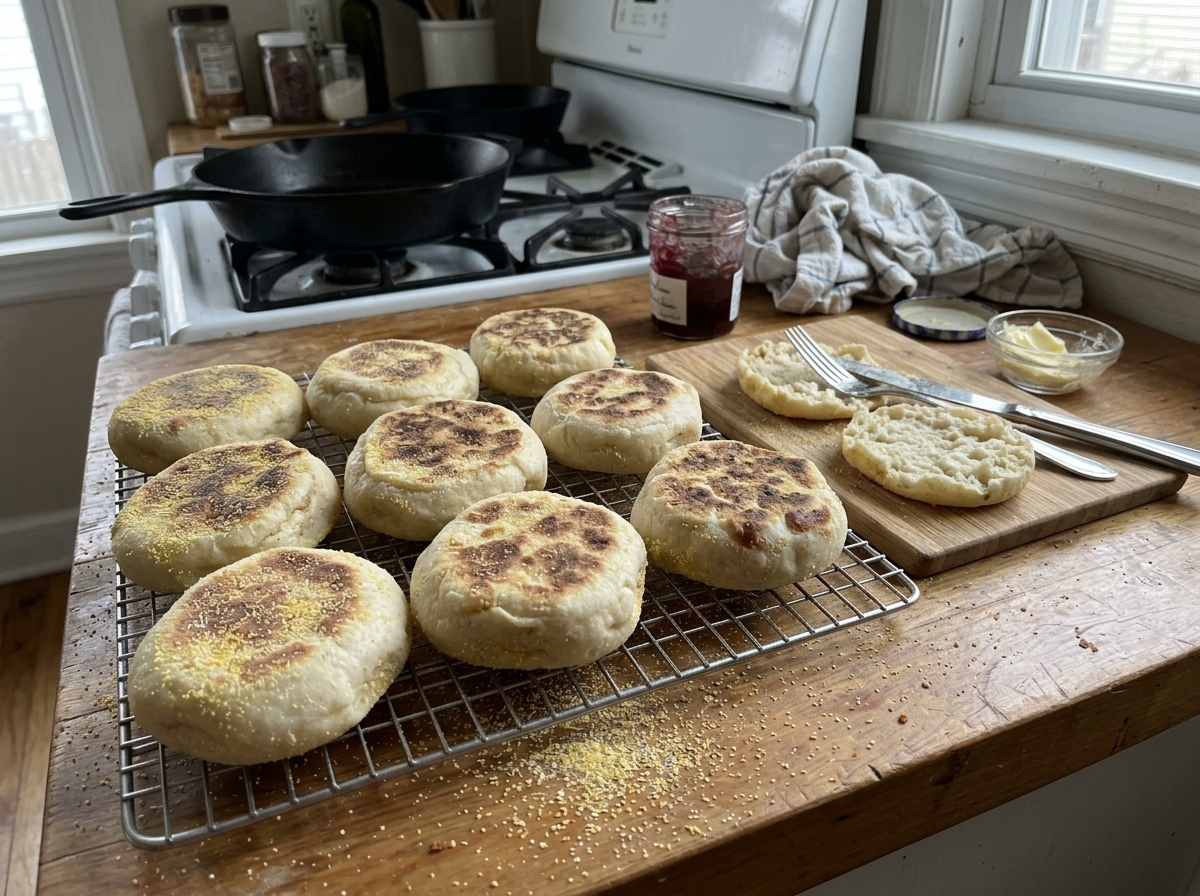
Soft, fluffy homemade English muffins with golden stovetop-cooked surfaces and classic nooks and crannies.
10
servings1
hour40
minutes14
minutes166
kcal1
hour54
minutesIngredients
1 ¼ cups warm water
1 tablespoon sugar (12.5 g)
1 teaspoon instant dry yeast (2.83 g)
2 tablespoons oil (canola, vegetable, or neutral olive oil); melted butter can also be used
2 ¾ cups all-purpose flour, plus up to ¼ cup extra flour (bread flour also works)
1 teaspoon salt, plus an extra pinch if using kosher salt
Cornmeal for dusting (approximately 2–3 tablespoons)
Directions
- Prepare the yeast mixture:
Pour the warm water into a medium-large mixing bowl. Sprinkle the sugar over the water, followed by the instant yeast. Let the mixture stand for 10 minutes until it becomes cloudy and foamy. - Mix the dough:
Add the oil, salt, and flour to the yeast mixture. Stir with a wooden spoon or rubber spatula until combined. Transfer the dough to a lightly floured surface and knead by hand for approximately 5 minutes, adding extra flour sparingly as needed. Keep the dough soft and slightly tacky. - Allow the dough to rise:
Lightly grease a clean bowl and place the dough inside. Cover loosely and let it rise in a warm place for approximately 1 hour, or until doubled in size. - Shape the muffins:
Transfer the risen dough to a lightly floured surface and knead gently a couple of times. Divide into 10 equal portions and roll each portion into a ball. Sprinkle approximately 1 tablespoon of cornmeal over a parchment-lined baking sheet. Place the dough balls on top and flatten them into discs about ¾ inch thick. Lightly spray the tops with oil and sprinkle with additional cornmeal. Cover loosely and let rise for 20 minutes. - Cook the first side:
Heat a large frying pan, griddle, or cast-iron skillet over medium-low heat. Lightly grease the surface and arrange the muffins in the pan, leaving approximately ½ inch between them. Cover and cook for about 9 minutes, until the bottoms are lightly golden. - Cook the second side:
Flip the muffins, cover the pan, and cook for another 5 minutes, until golden and cooked through. If the muffins brown too quickly, lower the heat. If needed, finish cooking in an oven preheated to 350°F (177°C) for 5–10 minutes. An instant-read thermometer should register approximately 200°F (93°C) in the center. - Cool and serve:
Transfer the cooked muffins to a wire rack and let them cool for 10–15 minutes. Split them apart with a fork to create the classic nooks and crannies. Serve toasted with butter, jam, honey, or your favorite toppings.
Notes
- Active dry yeast: Use 1 ¼ teaspoons instead of 1 teaspoon of instant yeast. Dissolve it in the warm water with the sugar before adding the remaining ingredients.
- Flour measurement: Weigh the flour for the most consistent results, or spoon it into a measuring cup and level the top. Add extra flour only when necessary.
- Faster rising: Place the covered dough in a comfortably warm, draft-free location. Avoid excessive heat.
- Flatter muffins: Gently press the muffins with a spatula while cooking if you prefer a denser texture.
- Alternative dusting: Use fine polenta or semolina flour if you do not have cornmeal.
- Storage: Keep completely cooled muffins in an airtight container at room temperature for several days.
- Freezing: Freeze cooled, fork-split muffins in a freezer-safe bag for up to 3 months. Toast directly from frozen.
- Serving ideas: Enjoy with butter and jam, or use the muffins for breakfast sandwiches, Eggs Benedict, mini pizzas, or grilled cheese.
Nutrition Facts
- Calories: 166kcal
- Fat: 3g
- Carbohydrates: 29g
- Fiber: 1g
- Sugar: 1g
- Protein: 4g